
On March 20, 2021, a security camera inside a small fitness room in Barnegat Township, New Jersey, captured footage that would remain unknown to the public for more than three years. There were no dramatic headlines that day, no police officers surrounding the building, and no indication that the images being quietly recorded would later become central evidence in one of the most disturbing child abuse cases in recent American history.
The video showed six-year-old Corey Micciolo struggling to keep up with a moving treadmill while his father, Christopher Gregor, stood nearby. The child repeatedly lost his footing and was thrown from the machine. Instead of ending the exercise, his father repeatedly placed him back on the treadmill.
Less than two weeks later, Corey was dead.
When the footage was finally played before a jury in 2024, it spread rapidly across television networks and social media, provoking outrage around the world. Yet the video represented only a fraction of a much longer story—one involving years of custody disputes, repeated concerns about the child’s safety, conflicting medical testimony and a criminal trial that forced jurors to examine heartbreaking evidence in extraordinary detail.
A Family Divided Long Before the Tragedy
Corey Micciolo was born in 2014 to Christopher Gregor and Breanna Micciolo. His parents separated early in his life, and disagreements regarding custody became increasingly contentious as the years passed.
Court records introduced during later proceedings revealed that Breanna had repeatedly expressed concern about injuries Corey allegedly sustained while visiting his father. According to testimony, she documented bruises, scratches and changes in his behavior that she believed required investigation.
Christopher Gregor consistently denied abusing his son. Throughout the custody proceedings, he maintained that Corey simply experienced the normal bumps and bruises common among active children.
Like many family court disputes, determining what represented ordinary childhood accidents and what might indicate abuse proved extremely difficult. Investigators and child welfare agencies examined various complaints over time, but none resulted in criminal charges before Corey’s death.
Only after the tragedy would those earlier reports receive renewed scrutiny.
The Gym Surveillance Video
On March 20, 2021, Christopher Gregor brought Corey to the fitness center located within his apartment complex.
Security cameras recorded approximately fifteen minutes inside the gym.
The footage later shown during trial depicts Corey attempting to run on a treadmill that prosecutors argued was operating at an unsafe speed for a six-year-old child.
Within moments, Corey loses his balance and is thrown backward from the moving belt.
Instead of stopping the treadmill, Gregor appears to place the child back on the machine.
The sequence repeats multiple times.
At several points Corey falls heavily onto the floor. In other moments he appears reluctant to continue before being directed back toward the treadmill.
Because the cameras recorded only video without audio, viewers cannot hear any conversation between father and son. Nevertheless, prosecutors argued that the visual evidence alone demonstrated reckless treatment of a young child who was clearly unable to keep pace with the machine.
The recording became one of the prosecution’s strongest exhibits because it provided jurors with direct evidence of Christopher Gregor’s behavior only days before Corey’s death.
Why Prosecutors Considered the Footage So Important
Contrary to popular belief, prosecutors never argued that the treadmill itself directly killed Corey.
Instead, they maintained that the recording revealed a broader pattern of physical abuse and an attitude that demonstrated extreme indifference toward the child’s safety.
Witnesses testified that Christopher Gregor believed Corey was overweight and wanted him to become more physically fit, despite the boy being only six years old.
Medical experts explained that forcing a young child to continue intense exercise after repeated falls could produce significant physical stress and increase the risk of injury.
Although the defense challenged this interpretation, the prosecution argued that the video helped jurors understand the relationship between father and son and the manner in which Corey was allegedly treated.
Corey’s Final Hours
On April 2, 2021, approximately two weeks after the treadmill incident, Corey suddenly became gravely ill while in his father’s care.
According to emergency records presented during trial, he developed slurred speech, nausea, difficulty maintaining his balance and signs of severe physical distress.
Christopher Gregor contacted emergency services, and Corey was transported to Southern Ocean Medical Center before being transferred to Jersey Shore University Medical Center, where specialists attempted to save his life.
Despite aggressive treatment, Corey died later that same day.
His death immediately prompted a criminal investigation.
The Medical Evidence
Determining how Corey died became the central issue during the trial.
The prosecution presented forensic pathologists who concluded that the child had suffered blunt force injuries involving multiple areas of his body, including significant injuries affecting his heart and liver. They testified that the pattern of trauma was consistent with repeated physical abuse rather than a single accidental event.
Defense experts disagreed, arguing that the medical findings were open to alternative interpretations and that prosecutors had not conclusively demonstrated that Christopher Gregor’s actions directly caused the fatal injuries.
Over several weeks, jurors heard extensive testimony from physicians, forensic specialists and pediatric experts who analyzed medical imaging, laboratory findings, autopsy results and previous injuries documented before Corey’s death.
The conflicting scientific opinions became one of the most technically complex aspects of the proceedings.
Inside the Trial
Christopher Gregor was charged with murder and child endangerment.
During the trial, prosecutors sought to demonstrate that Corey’s death resulted from an escalating pattern of abuse rather than a single isolated incident.
Jurors reviewed surveillance footage, medical records, photographs, text messages, testimony from investigators, healthcare professionals and family members.
The defense argued that Gregor loved his son and insisted that prosecutors had failed to prove beyond reasonable doubt that he intentionally caused Corey’s death.
As in many complex criminal cases involving medical evidence, much of the trial centered on expert testimony rather than eyewitness accounts.
The jury was ultimately required to decide not only what had happened, but whether the evidence met the legal standard for murder.
Why the Verdict Was Not Murder
In May 2024, after lengthy deliberations, the jury reached a mixed verdict.
Christopher Gregor was acquitted of murder but convicted of aggravated manslaughter and endangering the welfare of a child.
For many observers unfamiliar with American criminal law, the decision seemed confusing.
Under New Jersey law, murder generally requires proof that a defendant purposely or knowingly caused another person’s death.
Aggravated manslaughter requires a different standard. Prosecutors must demonstrate that the defendant acted with extreme recklessness, consciously disregarding a very high risk that death could result from his actions.
The jury concluded that prosecutors had not established intentional murder beyond reasonable doubt but had proven that Gregor’s conduct showed extreme indifference to human life, making him criminally responsible for Corey’s death.
Sentencing
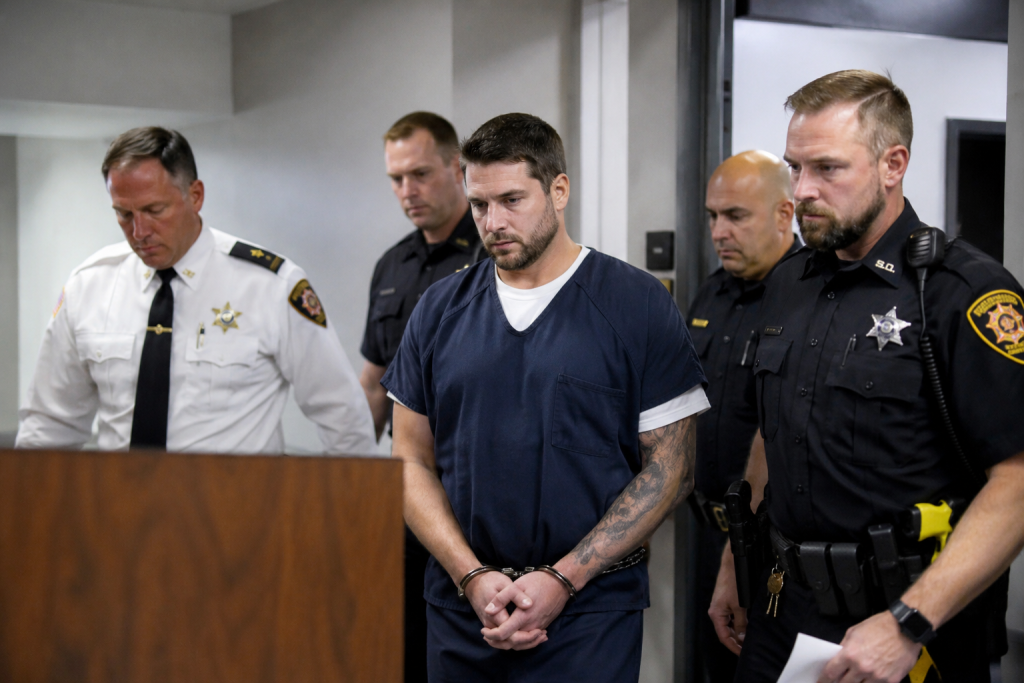
In August 2024, Christopher Gregor was sentenced to twenty-five years in New Jersey state prison.
During sentencing, the judge described the suffering experienced by Corey as devastating and emphasized that children depend entirely upon adults for their safety and protection.
Under New Jersey’s sentencing laws, Gregor will be required to serve most of his sentence before becoming eligible for parole.
A Case That Sparked National Debate
Beyond the courtroom, Corey’s death reignited discussions throughout the United States about child protection, family court proceedings and how allegations of abuse should be evaluated during custody disputes.
Many child advocates argued that repeated reports of unexplained injuries deserve careful attention even when they arise in highly contentious custody battles, where accusations may sometimes be exaggerated or disputed.
Others pointed out the immense difficulty faced by child welfare agencies, which must distinguish between genuine abuse and ordinary childhood injuries while making decisions that can permanently affect families.
The case also prompted renewed discussion about excessive physical discipline, unrealistic expectations placed on young children during athletic training and the importance of recognizing escalating patterns of violence before they become fatal.
Remembering Corey Micciolo
Millions of people first learned Corey’s name because of a short surveillance clip shown repeatedly on television.
But reducing his story to those few minutes overlooks the larger tragedy.
Behind the viral footage was a little boy whose final years were marked by family conflict, repeated concerns about his well-being, medical examinations, legal disputes and a criminal investigation that ultimately ended with his father’s conviction.
The treadmill video remains deeply unsettling because it captured something no child should ever experience: a frightened six-year-old repeatedly falling while the adult responsible for protecting him continued to push him beyond his limits.
Christopher Gregor’s conviction cannot restore the future Corey lost. What remains is a case that continues to be studied by legal experts, child advocates and medical professionals alike—not only because of the disturbing images recorded that day, but because it serves as a reminder that protecting vulnerable children often depends on recognizing warning signs long before a tragedy reaches the courtroom.