
It Happens in Almost Every Kitchen
You finish cooking dinner, the food is still steaming hot, and you hesitate before putting it in the refrigerator.
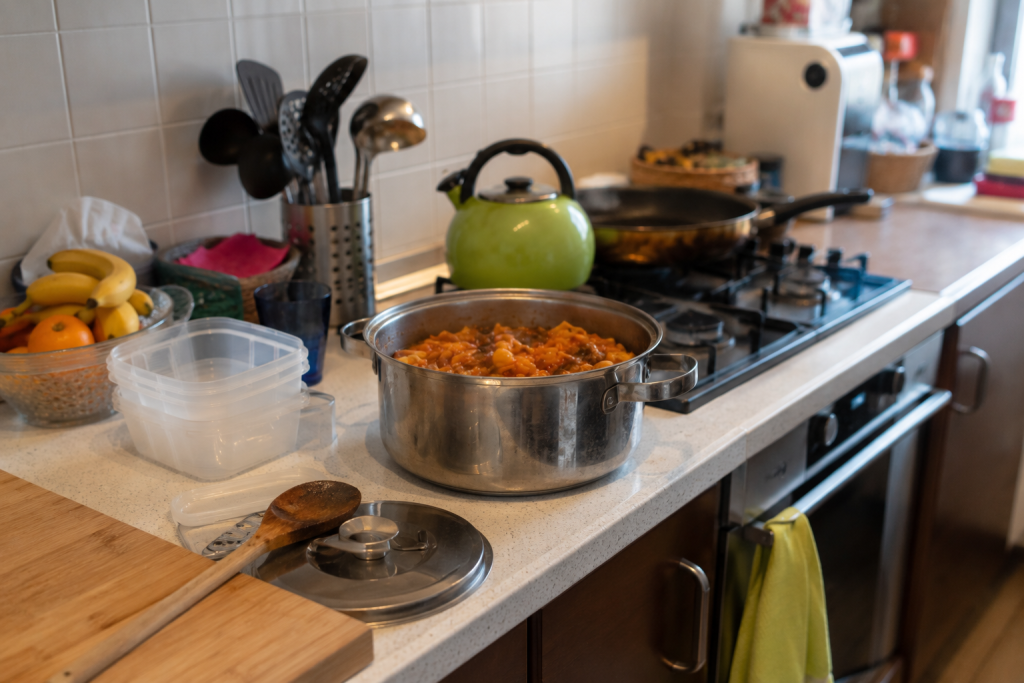
Maybe you’ve always heard that hot food shouldn’t go straight into the fridge. Maybe you want it to cool naturally first. Then life gets in the way—a phone call, a movie, bedtime—and suddenly you realize the pot has been sitting on the stove for hours.
The first question that comes to mind is always the same:
Is it still safe to eat?
The answer isn’t determined by how the food smells or tastes. Instead, it depends on something far less obvious: how long it stayed out and the temperature it was exposed to.
Why Time and Temperature Matter So Much
Cooking destroys most harmful microorganisms, but it doesn’t create a permanently sterile meal.
As food begins to cool, it passes through a temperature range where bacteria multiply rapidly. Food safety experts often refer to this as the “danger zone,” roughly between 40°F and 140°F (4°C to 60°C).
Within this range, bacteria can reproduce surprisingly fast. Some species are capable of doubling in number in less than half an hour under ideal conditions.
That’s why food that looks completely normal can still become unsafe.
The Two-Hour Rule
One of the simplest food safety recommendations is also one of the most important.
Cooked food should generally not remain at room temperature for more than two hours.
If the surrounding temperature exceeds 90°F (32°C)—for example during a heatwave or an outdoor gathering—that window drops to one hour.
These recommendations don’t apply only to meat. Soups, rice, pasta, potatoes, vegetables, casseroles, sauces and dairy-based dishes can all become unsafe if left out too long.
Summer Changes Everything
Many people assume that leaving dinner on the stove overnight is harmless because the kitchen “doesn’t feel that warm.”
Unfortunately, bacteria don’t judge temperature the same way we do.
A room that feels comfortable to people can provide nearly perfect conditions for bacterial growth.
That’s why a pot of stew forgotten overnight in July carries a much higher risk than one left for the same amount of time during a cold winter evening.
The problem is that spoiled food doesn’t always advertise itself. Dangerous bacteria rarely change the appearance, smell or taste of a meal.
Is a Balcony or Porch a Safe Alternative?
The answer depends entirely on the weather.
In colder climates, many people use an enclosed porch, balcony or garage as temporary cold storage during winter. When outdoor temperatures remain close to refrigerator temperatures, this can work reasonably well.
However, the same approach becomes much riskier during spring, autumn or summer.
A cool evening of 50°F (10°C) is not the same as refrigeration, and a summer night that stays around 70°F (21°C) offers almost no protection at all.
Simply being outdoors doesn’t automatically make food safe.
Does Hot Food Really Damage the Refrigerator?
This is one of the oldest kitchen myths still circulating today.
Decades ago, refrigerators were less efficient, and placing a large pot of boiling food inside could temporarily raise the appliance’s internal temperature.
Modern refrigerators are much better at handling this situation.
Instead of leaving food out for several hours, it’s usually safer to let it cool briefly, divide it into smaller containers and refrigerate it while it’s still warm rather than waiting until the next morning.
Why Large Pots Cool So Slowly
One detail many people overlook is how unevenly food cools.
The outside of a large pot may feel cool enough to touch, while the center remains warm for several hours.
That warm interior stays within the bacterial danger zone much longer than most people realize.
Professional kitchens avoid this problem by transferring hot food into shallow containers that cool much faster than deep pots.
Can Refrigeration Fix Food That Was Left Out Too Long?
Unfortunately, no.
Refrigeration slows bacterial growth, but it doesn’t eliminate bacteria that have already multiplied.
More importantly, certain bacteria can produce toxins that remain even after the food is reheated.
In other words, bringing yesterday’s forgotten meal back to a boil isn’t always enough to make it safe again.
When in Doubt, Don’t Rely on Your Senses
People often perform the “smell test” before deciding whether to keep or throw away leftovers.
While unpleasant odors certainly indicate spoilage, the absence of a bad smell doesn’t guarantee safety.
Some of the bacteria responsible for foodborne illness leave no obvious warning signs at all.
That’s why food safety professionals recommend focusing on time and temperature, not appearance.
The Safest Way to Store Cooked Food
Once cooking is finished, allow the food to stop steaming heavily, then transfer large portions into smaller containers.
Refrigerate leftovers within two hours—or sooner during very hot weather.
If a meal has spent many hours sitting at room temperature, especially overnight in warm conditions, it’s generally safer to discard it than risk food poisoning.
A Simple Rule Worth Remembering
Most cases of food poisoning don’t happen because someone knowingly ate spoiled food.
They happen because perfectly normal-looking food spent too much time at the wrong temperature.
The next time you discover a forgotten pot on the stove or a container left on the balcony overnight, don’t judge it by its smell alone.
The safest question isn’t “Does it still look good?”
It’s “How long has it been sitting there, and how warm was it?”
Sometimes, the answer to those two questions is far more important than anything your senses can tell you.