
In July 2017, what began as an ordinary car ride ended in a tragedy that would be replayed and discussed across the internet for years.
Two young women were driving through the Czech Republic when one of them decided to start a Facebook Live broadcast. There was no special occasion to celebrate and no attempt to go viral. Like millions of people at the time, she simply wanted to share a few moments of her day with friends online.
Less than a minute later, the livestream ended abruptly.
Within hours, news of the accident had spread far beyond the Czech Republic. The video was shared across social media, picked up by international media outlets, and eventually became one of the most widely circulated examples of how quickly an ordinary moment can turn into an irreversible tragedy.
Yet as the footage spread, so did misinformation. Over the years, many details surrounding the crash have been exaggerated or repeated without verification. The real story is both simpler and more sobering than many viral posts suggest.
A Routine Drive That No One Expected to Remember
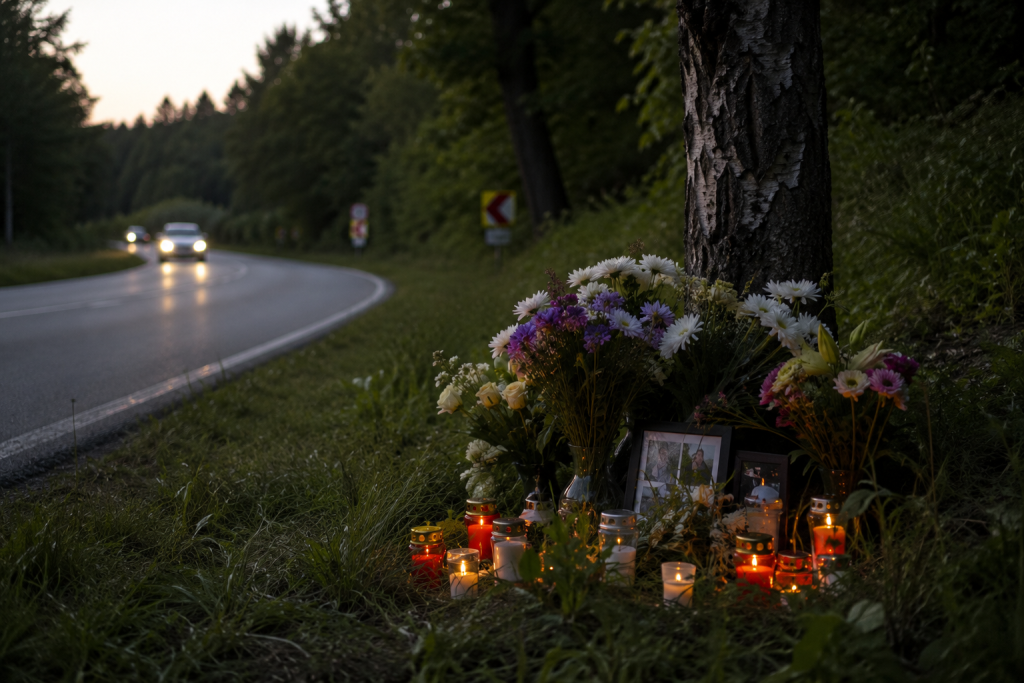
The crash occurred near the village of Obrnice in northwestern Czechia.
Behind the wheel was a 20-year-old woman. Sitting in the passenger seat was her 22-year-old friend, Nikol Barabasová.
Little has been made public about their plans that day. They were not internet personalities or content creators seeking attention. They were simply two friends on what appeared to be an ordinary drive.
At some point during the journey, Nikol began streaming live on Facebook.
The opening moments of the video are remarkably ordinary. The friends appear relaxed, chatting and smiling as the car continues down the road. There is nothing dramatic, no indication that anything is about to go wrong.
Ironically, it is that normality that makes the footage so unsettling today.
The viewers know what is coming.
The people inside the car did not.
Everything Changed Within Seconds
The livestream lasts only a short time.
Without warning, the atmosphere changes. The camera suddenly jolts, frightened voices can be heard, and the broadcast cuts off almost immediately.
Those watching the livestream had no idea what had happened.
Emergency responders later found that the vehicle had left the roadway, struck an obstacle, and rolled over.
Nikol Barabasová died at the scene from her injuries.
The driver survived but suffered serious injuries and required hospital treatment.
A simple livestream had unexpectedly become the final recording of a young woman’s life.
Separating Facts From Online Rumors
As interest in the case exploded, countless versions of the story began circulating online.
One of the most common claims was that the driver had been distracted by her phone while driving.
Publicly available information does not support that conclusion.
The available footage shows that the phone used for the livestream was in the passenger’s hands. Investigators did not publicly conclude that the driver was broadcasting, reading comments, or using a phone at the time of the crash.
Authorities indicated that excessive speed was one of the significant factors in the accident, ultimately leading to the driver losing control of the vehicle.
This distinction matters.
The video captures the moments before the crash, but it does not, by itself, prove what caused it.
When a Tragedy Becomes Internet History
If this accident had happened a decade earlier, it likely would have remained a local news story.
Instead, it unfolded during the rapid rise of social media livestreaming.
Facebook Live had only recently become widely available, and millions of people were using it to share everyday experiences in real time. That context played a major role in why this particular accident attracted so much international attention.
The footage spread quickly across news websites, YouTube channels, and social media platforms.
With every repost, however, new details were added.
Some versions claimed both women were using phones.
Others invented conversations or attributed conclusions to investigators that were never officially reported.
Over time, the viral narrative became increasingly different from the documented facts.
It is a reminder that the internet often preserves dramatic stories more effectively than it preserves accuracy.
Why Speed Remains One of the Greatest Road Risks
Road safety experts have long warned that excessive speed dramatically increases both the likelihood and severity of crashes.
Higher speeds reduce the time available to react, increase stopping distances, and multiply the forces involved in a collision.
Even relatively small increases in speed can significantly affect whether occupants survive an impact.
According to the World Health Organization, road traffic crashes claim approximately 1.2 million lives every year worldwide, with speeding remaining one of the leading contributing factors.
In many serious crashes, investigators find that there is rarely a single cause. Instead, multiple factors combine until a situation becomes impossible to recover from.
The Legacy of a Few Seconds
Nearly a decade later, the livestream continues to resurface across social media, often stripped of context and accompanied by misleading captions.
For many viewers, it is simply another viral video.
For the family and friends of Nikol Barabasová, it represents something entirely different—the final moments of someone they loved.
Perhaps that is the most important lesson this story leaves behind.
The accident is remembered not because it happened on Facebook Live, but because it illustrates how ordinary life can change in an instant. It also reminds us to approach viral stories with caution. The internet is remarkably good at preserving dramatic moments, but far less reliable when it comes to preserving the complete truth behind them.