
In late 1978, two families left the same small hospital in central Florida, each carrying a newborn and believing they were beginning an ordinary family life. Neither had any reason to suspect that the babies in their arms had been given to the wrong parents.
For nearly ten years, the mistake remained hidden. Each child grew up in the other family, surrounded by people who loved her and believed without question that she belonged to them. The truth emerged only after one of the girls, who had lived with a serious congenital heart condition, died at the age of nine.
The case of Kimberly Mays and Arlena Twigg became one of the most widely discussed switched-at-birth stories in the United States. Yet the public fascination was not driven by the hospital error alone. The case forced courts, psychologists and ordinary families to confront a much harder question: when biology and lived experience point in different directions, what truly makes someone a parent?
The story later inspired the 1991 television miniseries Switched at Birth. It should not be confused with the drama series of the same title that premiered in 2011 and featured a deaf teenager who had lost her hearing after meningitis. Those later characters were fictional. Kimberly and Arlena were real children, and their lives unfolded in ways that were far more complicated than any television plot.
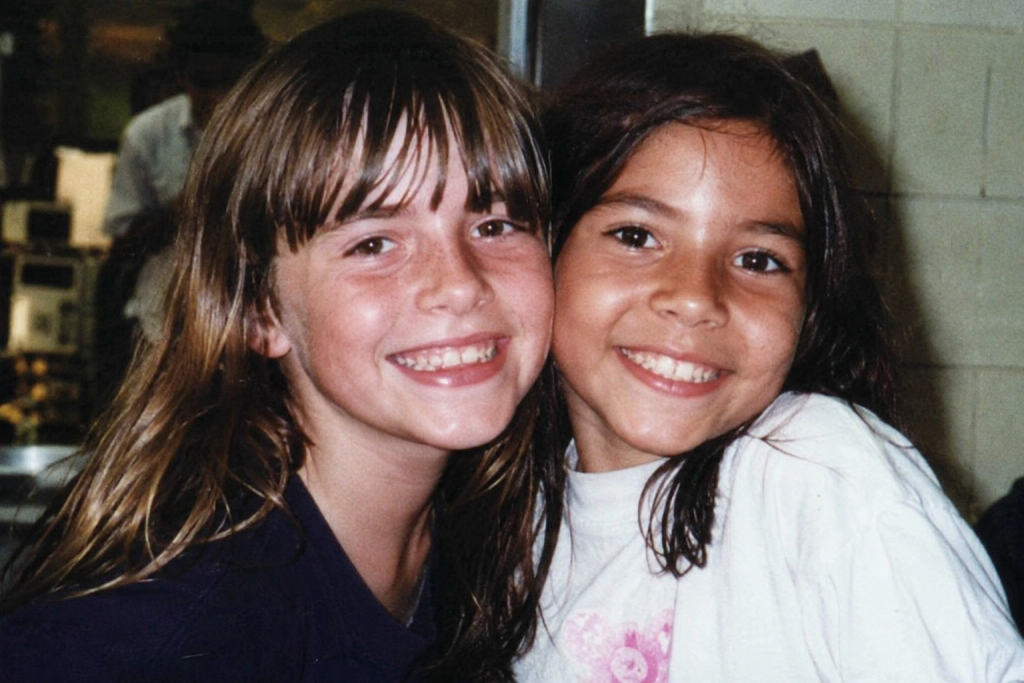
Two Births, Three Days Apart
Regina Twigg gave birth at Hardee Memorial Hospital in Wauchula, Florida, on November 29, 1978. Three days later, on December 2, Barbara Mays delivered another baby girl at the same hospital.
Because the women’s hospital stays overlapped, both newborns were in the facility at the same time. At some point before the families went home, the babies were switched.
Ernest and Regina Twigg left with the biological daughter of Robert and Barbara Mays and named her Arlena. Robert Mays, usually known as Bob, and his wife Barbara took home the biological daughter of the Twigg family and named her Kimberly.
No investigation ever established with certainty how the mistake occurred. There is no confirmed reconstruction showing that identification bracelets were exchanged, that the infants were mixed up in the nursery, or that the error happened during discharge. What later genetic testing proved beyond doubt was that each girl had been raised by the other child’s biological parents.
The absence of a clear explanation created space for darker theories. Years later, a former hospital employee claimed that the switch had been deliberate and that a physician wanted the healthy baby to go to the Mays family, while the critically ill infant was sent home with the Twiggs, who already had several children.
The allegation attracted enormous attention, but it was never proved. Earlier statements by the former employee conflicted with the later version of events, and medical records raised additional questions about her account. Authorities did not find enough evidence to establish that the babies had been exchanged intentionally.
The precise moment and cause of the switch therefore remain unknown.
Kimberly’s Early Childhood and the Loss of Barbara Mays
Kimberly began life in the Mays household, where Bob and Barbara believed she was their biological child. That family, however, was struck by tragedy very early.
Barbara developed ovarian cancer and died in 1981, when Kimberly was about two years old. From that point on, Bob Mays became the central parental figure in her life.
This detail matters because many simplified accounts suggest that Kimberly was raised for nearly a decade by both Bob and Barbara. In reality, she had only limited memories of Barbara and spent most of her early childhood being raised by Bob.
To Kimberly, he was not a temporary guardian or a man who had accidentally received another couple’s child. He was her father in every way she could understand the word. He had remained with her after her mother’s death, built a home around her and shaped the life she knew.
In the Twigg household, Arlena’s childhood followed a very different path. She grew up with several brothers and sisters, but much of her life was defined by a serious congenital heart defect.
Her illness required repeated medical evaluations, treatment and surgery. The Twiggs spent years hoping that doctors could give her a longer and more stable life. They did not know that the child for whom they were fighting so hard was biologically the daughter of the Mays family.
Arlena’s condition was not caused by the switch, nor did it have anything to do with the family that raised her. She had been born with the defect and would have required complex medical care regardless of which parents had taken her home.
The Medical Result That Did Not Make Sense
By 1988, Arlena’s health had deteriorated. During medical testing related to her condition, doctors noticed something that could not be reconciled with the family history: her blood type was genetically incompatible with the blood types of Ernest and Regina Twigg.
Blood-group testing cannot identify biological parents with the precision of modern DNA analysis. It can, however, rule out certain combinations. In Arlena’s case, the results indicated that Ernest and Regina could not both be her biological parents.
At first, the family hoped that the laboratory had made a mistake. The testing was repeated, but the incompatibility remained.
In August 1988, Arlena died at the age of nine from complications related to her heart condition. Her death left the Twiggs with a grief that soon became inseparable from a disturbing new question.
If Arlena was not their biological daughter, where was the child Regina had actually delivered in 1978?
They were mourning the girl they had raised while beginning to understand that another daughter might still be alive somewhere, growing up in a family that knew nothing of the error.
The Search Led to Kimberly Mays
Hospital records soon narrowed the possibilities. Among the births that overlapped with Regina Twigg’s hospital stay, Kimberly Mays emerged as the child most likely to have been involved.
Bob Mays initially resisted genetic testing. His response was not difficult to understand. Kimberly was almost ten years old, saw him as her father and had already lost the woman she believed to be her mother. A DNA test could reveal the truth, but it could also threaten the only family she knew.
From Bob’s perspective, Kimberly was not simply the missing piece in a medical investigation. She was his daughter, the child he had raised alone after his wife’s death and the person around whom his family life had been built.
The disagreement moved into the courts. Even before the genetic relationship was formally confirmed, the case presented judges with a problem for which there was no easy legal formula. Establishing biological parentage was only the beginning. The more difficult questions concerned custody, visitation and the emotional welfare of a child whose life could not simply be reassigned.
Testing eventually confirmed that Bob Mays was not Kimberly’s biological father and that Ernest and Regina Twigg were her biological parents. It also established that Arlena had been the biological daughter of Bob and Barbara Mays.
Science had clarified the girls’ origins. It did not tell anyone what should happen next.
A Ten-Year-Old Learns That Her Family Is Not Biologically Hers
Kimberly was around ten when she learned that the man raising her was not her biological father and that another couple believed she was the daughter they had lost.
For the Twiggs, Kimberly was the child taken from them and found almost a decade later. For Kimberly, Ernest and Regina were strangers who had entered her life at the moment when everything familiar was suddenly being questioned.
She had already lost the woman she remembered as her mother. Now she was being told that Bob, the person who had raised her and remained beside her, was not genetically related to her either.
A biological connection could not instantly create trust, affection or shared memories. Kimberly already had a home, a history and a father. A laboratory result could explain where she came from, but it could not erase the years she had lived.
Bob initially allowed meetings between Kimberly and the Twiggs. The families attempted to build some form of relationship, but the visits did not produce the emotional reunion that many outside observers expected.
The Twiggs wanted a meaningful place in their biological daughter’s life. Kimberly did not view them as parents. Contact became increasingly difficult, and the dispute returned to court as the Twiggs sought broader visitation.
What had begun as a private family tragedy soon became national news.
A Child at the Center of a Public Conflict
As litigation continued, relations between the families deteriorated. Regina Twigg made serious allegations against Bob Mays, including claims that he had been abusive and may have known more about the hospital switch than he admitted. Bob and his attorneys argued that pressure from the biological family was harming Kimberly.
Not every allegation was substantiated, yet each claim generated headlines. Television programs, newspapers and commentators turned the case into a debate about which adults had the stronger claim to the child.
Kimberly risked becoming a symbol rather than being treated as a young person struggling with grief, identity and competing expectations. To some, she was the biological daughter who should be restored to the family that had lost her. To others, she was a child whose emotional stability depended on remaining with the father she knew.
Behind those public positions were two families carrying different but equally real forms of loss.
The Twiggs had raised and buried Arlena, only to learn that she was not their biological child. They had then discovered that their biological daughter was alive but did not recognise them as parents.
Bob Mays had raised Kimberly and then learned that the daughter biologically born to him had died in another household before he ever knew her.
No court ruling could return either family to the life it would have had if the babies had gone home with the correct parents.
The Court Case Described as a “Divorce” From Her Biological Parents
In 1993, when she was 14, Kimberly asked the court to recognise Bob Mays as her legal parent and to protect her from being forced into continued contact with the Twiggs.
The media frequently described the action as a teenager “divorcing” her biological parents. The phrase was memorable, but legally imprecise. Kimberly was not asking the court to change her DNA or deny who had given birth to her. She was asking for control over whether she had to maintain a relationship she did not want.
In August 1993, Judge Stephen Dakan ruled that Kimberly could not be compelled to have contact with Ernest and Regina Twigg. He recognised Bob Mays as her legal and psychological father.
The decision placed significant weight on Kimberly’s expressed wishes and on the bond created through years of daily care. Supporters saw the ruling as a recognition that a child’s emotional security should not be sacrificed simply because genetic testing had revealed a different biological origin.
For the Twiggs, however, the judgment represented another devastating loss. They had been separated from their daughter through no fault of their own and were now legally denied the chance to build the relationship they believed had been taken from them.
The court could decide parental rights. It could not order a teenager to feel love, familiarity or belonging.
Financial Settlements Could Not Restore What Was Lost
Both families pursued legal action against the hospital. Bob and Kimberly Mays reached a settlement valued at more than $6.6 million. Contemporary reports gave different figures for the Twigg family’s settlement, partly because the total depended on whether journalists were referring to immediate payments, structured annuities or projected future value.
The financial awards were substantial, especially for the time, but they could not repair the central damage.
Bob Mays could not meet Arlena, his biological daughter, because she had already died. The Twiggs could not recover Kimberly’s first ten years or become the parents she remembered from childhood. Kimberly could not return to the simpler identity she had possessed before the truth became public.
Money later became another source of difficulty. As an adult, Kimberly said that she had signed away rights to some future payments in exchange for a financial arrangement she later regretted. The settlement that outsiders assumed would guarantee a secure life did not protect her from personal and financial instability.
The case had produced millions of dollars, but not closure.
A Sudden Move to the Biological Family
Only months after winning the right to cut off contact with the Twiggs, Kimberly made a decision that seemed to reverse everything she had argued in court.
In 1994, she left Bob Mays’s home and moved in with her biological parents. She enrolled in a school near their home, and new arrangements concerning guardianship followed.
The move was immediately interpreted by both sides. The Twiggs could see it as evidence that the biological relationship had been obstructed rather than absent. Those who supported Bob could argue that an adolescent’s decision during a period of conflict did not erase the years in which he had been her father.
Neither interpretation captured the full complexity of Kimberly’s position.
She had experienced the death of her mother, the collapse of her understanding of her own birth, years of legal proceedings, public scrutiny and repeated pressure to define which family was truly hers. Moving toward one family and later away from it did not necessarily reflect inconsistency. It could also be understood as the behaviour of a teenager trying to make sense of two incompatible histories.
Kimberly later said that living with the Twiggs did not lead to a lasting closeness with Regina. Her adult life included troubled relationships, financial hardship and continued family tension.
It would be misleading to claim that every later difficulty was caused by the hospital switch. Still, her life showed that a legal victory, a biological reunion and a financial settlement did not produce the neat resolution the public might have expected.
Was the Switch an Accident?
The possibility of an intentional exchange returned to public attention in 1993, when former nurse’s aide Patsy Webb claimed that a doctor had instructed her to switch the babies.
According to her version, the healthy infant was deliberately given to the Mays family, while the critically ill child was sent home with the Twiggs because they already had several children.
The allegation transformed the story from a possible hospital mistake into a suspected conspiracy. Yet serious problems soon emerged.
Webb had previously stated that she did not know how the switch had occurred, and parts of her later account did not match the medical records. Investigators did not find evidence strong enough to prove that a doctor or hospital employee had intentionally exchanged the infants.
No one was convicted of deliberately switching Kimberly and Arlena. The claim remains part of the history of the case, but not an established fact.
Decades later, the only certainty is that the two newborns left the hospital with the wrong families.
DNA Answered One Question and Created Many Others
Genetically, the situation was clear. Kimberly was the biological daughter of Ernest and Regina Twigg. Arlena was the biological daughter of Bob and Barbara Mays.
Emotionally, each girl also belonged to the family that had raised her.
A child’s attachment is formed through repeated experiences of protection, comfort, routine and trust. DNA can establish biological origin, but it cannot recreate birthdays, family rituals, bedtime conversations or years of relying on a particular person for safety.
At the same time, biological parenthood cannot simply be dismissed because the child was raised elsewhere. The Twiggs were deprived of the opportunity to raise their daughter through no decision or failure of their own. Their grief did not become less legitimate because Kimberly did not experience them as parents.
Bob Mays was Arlena’s biological father and Kimberly’s psychological father. Ernest and Regina Twigg were Kimberly’s biological parents and the people who had loved and cared for Arlena throughout her short life.
Each family had lost a child in a different way.
That is why the case resisted simple moral conclusions. There was no clear villain among the parents and no outcome that could make all of them whole.
How Hospitals Identify Newborns Today
The Mays–Twigg case is often mentioned in discussions about hospital identification procedures, although modern safety systems were not created because of this case alone. They developed gradually as technology improved and hospitals adopted stricter standards.
Many maternity units now use matching identification bands for the mother and newborn, often linked by unique numbers or barcodes. Staff verify those identifiers before procedures, transfers and discharge.
Electronic security tags may trigger alarms if a newborn is moved beyond an authorised area. Digital systems also reduce the risk of attaching the wrong medical record, administering medication intended for another patient or releasing a baby to the wrong adult.
These measures address more than the possibility of an accidental switch. They also protect against abduction, treatment errors and failures in documentation.
The story of Kimberly and Arlena remains a powerful reminder that newborn identification is not a minor administrative detail. A mistake lasting only moments can alter multiple lives for decades.
A Story With No True Winner
Arlena died without knowing that the people who had raised her were not her biological parents. She was loved by the Twiggs, and the absence of a genetic connection did not make that love less real.
Bob Mays discovered too late that the child who had spent her life undergoing heart treatment in another family was his biological daughter. He could not recover a single day with her.
Ernest and Regina Twigg found their biological daughter, but they met her as a child with an established identity, a different father and no memories of them. Their attempts to create a relationship were often experienced by Kimberly as pressure rather than reunion.
Kimberly was left between two families, two versions of her own history and two valid but conflicting forms of belonging. Moving toward one family could appear to reject the other, even when she was simply trying to understand her own life.
DNA established who had given birth to each girl. Courts determined legal rights. Financial settlements assigned monetary value to the hospital’s failure.
None of those things could exchange the childhoods back.
To this day, no one can say with certainty who made the original mistake at Hardee Memorial Hospital or exactly how the two babies were switched. What remains is the story of families who learned, in the most painful way possible, that biology can explain where a life begins, but it cannot always decide where a person feels at home.