
For decades, movies have taught us to fear quicksand as one of nature’s deadliest traps. A single careless step, a desperate struggle, and within moments the victim disappears beneath the surface while helpless companions watch in horror.
It’s a gripping scene—but it isn’t how quicksand actually works.
Real quicksand is a genuine natural hazard, yet its danger has far less to do with being swallowed by the earth and far more to do with becoming trapped in an environment where other threats can quickly take over. Understanding the science behind it not only dispels one of cinema’s oldest myths but could also help someone react correctly if they ever encounter it.
Quicksand Isn’t a Special Kind of Sand
Despite its name, quicksand isn’t a unique material. It’s created when fine sand becomes saturated with water until the grains lose the friction that normally holds them together.
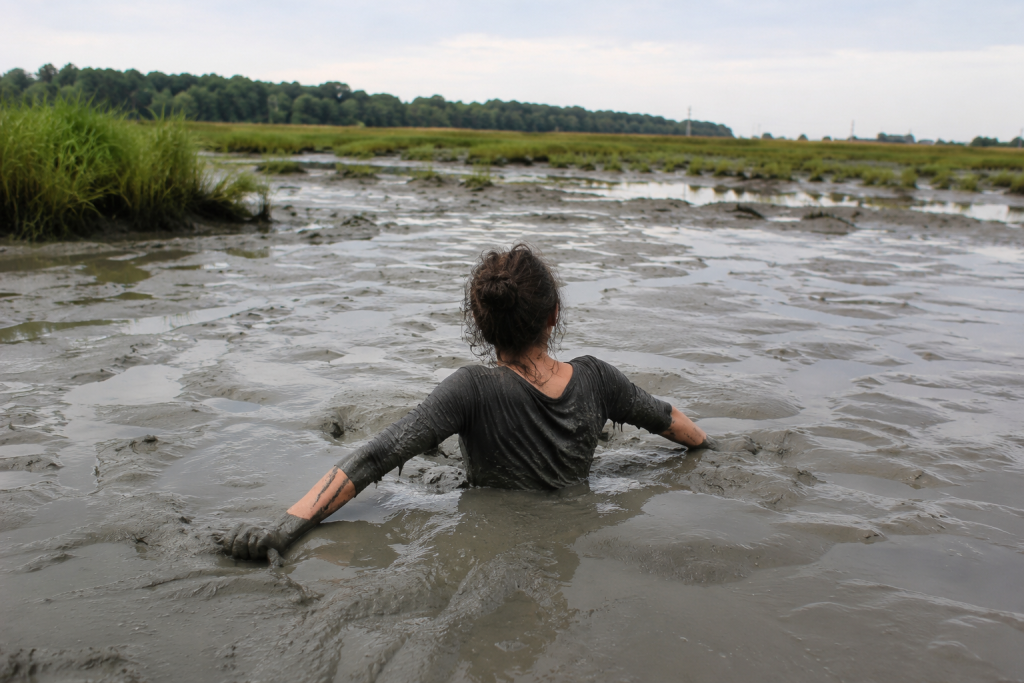
Under ordinary conditions, tightly packed sand easily supports a person’s weight. However, when underground water flows upward or large amounts of water infiltrate the sand, the structure weakens. The grains begin moving independently, creating a dense, unstable mixture that behaves somewhere between a solid and a liquid.
This is why quicksand is commonly found near rivers, marshes, estuaries, wetlands, beaches affected by tides, and areas with underground springs. Contrary to popular belief, deserts are among the least likely places to encounter it because water is an essential ingredient in its formation.
Why It’s So Difficult to Recognize
One of quicksand’s most deceptive characteristics is its appearance.
In many cases, the surface looks no different from the surrounding ground. A thin layer of dry sand, mud, or vegetation can completely disguise the unstable material beneath.
People usually don’t realize they’ve stepped into quicksand until one leg suddenly sinks. By then, their natural instinct is already taking over—and unfortunately, that instinct is often the worst possible response.
The Myth That Refuses to Die
Few survival myths have been repeated as often as the idea that quicksand can swallow an entire person.
Classic adventure films relied on this scenario for decades because it created immediate suspense. The deeper the character struggled, the faster they supposedly disappeared beneath the surface.
Science tells a different story.
In 2005, researchers investigating the physics of quicksand recreated the material under controlled laboratory conditions. Their findings demonstrated that the average human body is actually less dense than the water-sand mixture.
In simple terms, people naturally float much better in quicksand than Hollywood would have us believe.
For most adults, sinking completely is extremely unlikely. Instead, the body usually stabilizes somewhere around waist or chest level.
The frightening image of someone vanishing entirely beneath the surface is largely a work of fiction.
Why Escaping Can Feel Almost Impossible
If quicksand doesn’t pull people under, why do so many become trapped?
The answer lies in pressure rather than suction.
As a leg sinks deeper, the surrounding sand and water press tightly around it. Trying to yank the leg out quickly requires overcoming enormous resistance.
That resistance creates the sensation that something is pulling downward, even though no mysterious force exists. The real challenge is simply breaking the grip formed by the compacted mixture around the trapped limb.
Laboratory experiments have shown that extracting a deeply buried leg rapidly may require far more force than most people can generate.
Panic Makes Everything Worse
When people suddenly become stuck, their first reaction is almost always to fight as hard as possible.
Ironically, that response often makes the situation more difficult.
Violent movements consume energy, disturb the unstable mixture even further, and make coordinated escape increasingly difficult. Within minutes, exhaustion can replace clear thinking.
Survival experts consistently emphasize that controlling your breathing is the first step toward getting out safely.
A calm mind is often far more valuable than physical strength.
What You Should Actually Do
If you ever find yourself stuck in quicksand, resist the urge to pull your legs free by force.
Instead, slow your breathing and try to remain as relaxed as possible.
If you’re carrying a heavy backpack or bulky equipment that’s weighing you down, carefully remove it if doing so is safe.
Begin moving each leg slowly back and forth rather than upward. These gentle movements allow water to flow back around the trapped limb, gradually reducing the pressure holding it in place.
At the same time, lean backward whenever possible.
Spreading your weight across a larger surface increases buoyancy and helps prevent further sinking. Once one leg becomes loose, repeat the same process with the other before slowly working your way toward firmer ground.
If you cannot free yourself, conserve your energy and call for assistance rather than continuing to struggle.
The Real Danger Isn’t the Sand
Although quicksand itself rarely causes fatal accidents, it can create situations where other hazards become life-threatening.
Someone trapped in a tidal flat may be unable to escape before rising water arrives. In remote wilderness areas, prolonged exposure can lead to hypothermia, dehydration, or exhaustion long before rescue teams arrive.
In many documented incidents, it wasn’t the quicksand that proved dangerous—it was everything happening around it.
Real Rescue Operations Tell the True Story
Emergency crews in countries such as the United States, Canada, Australia, and the United Kingdom have responded to numerous incidents involving people trapped in quicksand or deep tidal mud.
Most victims were never in danger of disappearing beneath the surface. Instead, they simply couldn’t free their legs.
Rescuers often use ropes, wide boards, flotation devices, and carefully controlled pulling techniques to distribute body weight and gradually reduce the pressure around trapped limbs. Some rescues take only minutes, while others require hours of careful work.
These operations demonstrate that quicksand deserves respect—not because it swallows people whole, but because escaping safely often requires patience and the right approach.
Avoiding Trouble in the First Place
If you’re hiking through wetlands, estuaries, marshes, or isolated beaches, stay on established paths whenever possible.
Be cautious around unusually wet ground that shifts underfoot, and use a walking stick to test suspicious areas before stepping forward.
If you’re exploring tidal coastlines, always check local tide schedules before heading out. Even a minor incident can become dangerous if rising water cuts off your escape.
The Bottom Line
Quicksand remains one of nature’s most misunderstood phenomena. Decades of films transformed it into an unstoppable force capable of swallowing people alive, but modern research paints a far less dramatic—and far more fascinating—picture.
The greatest threat isn’t being pulled beneath the earth. It’s becoming immobilized long enough for cold, exhaustion, rising water, or isolation to turn a manageable situation into a genuine emergency.
Perhaps the biggest lesson quicksand teaches has little to do with geology. In many survival situations, instinct tells us to fight harder. Here, the opposite is often true. Remaining calm, understanding the science, and acting deliberately can make all the difference between panic and survival.