
For centuries, losing a permanent tooth has been treated as an irreversible event. Whether the damage is caused by decay, injury, or advanced gum disease, modern dentistry has relied on artificial replacements such as implants, bridges, and dentures. These treatments have become remarkably effective, yet they still cannot fully recreate the complexity of a natural tooth.
Now, researchers are exploring a radically different approach. Instead of replacing missing teeth with synthetic materials, they are investigating whether the human body can be encouraged to grow new ones.
It sounds like science fiction, but growing evidence suggests the idea may not be as impossible as it once seemed.
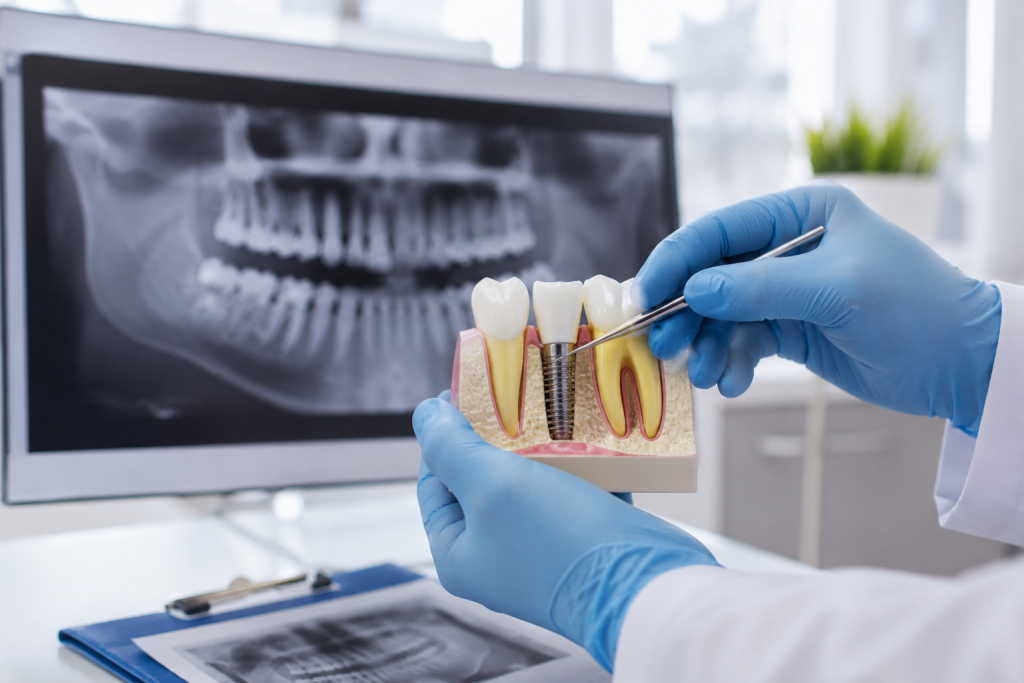
Why Humans Stop Growing Teeth
Many animals never face the problem of permanently losing a tooth.
Sharks continuously replace worn or broken teeth throughout their lives, with some species producing tens of thousands of teeth over a lifetime. Crocodiles and alligators also regenerate their teeth repeatedly, ensuring they rarely remain without a functional bite.
Humans, however, follow a different biological pattern.
We develop two generations of teeth: the primary, or baby teeth, followed by the permanent adult set. Once those permanent teeth are fully formed, the body naturally shuts down the developmental process responsible for creating new ones.
For decades, scientists believed this regenerative ability had disappeared entirely during mammalian evolution.
Recent discoveries suggest the story may be more complicated.
The Hidden Potential Inside Our Jaws
The popular claim that humans possess a “third set of teeth” is not literally true.
There isn’t a hidden row of fully formed teeth waiting to emerge later in life. Instead, researchers have discovered that early embryonic development produces more tooth-forming tissue than eventually becomes visible teeth.
Most of these tiny tooth buds never fully develop. They remain dormant, effectively switched off before birth.
This finding became especially important because nature occasionally provides proof that these biological pathways still exist. Some people are born with extra teeth—a condition known as hyperdontia—which shows that the human body has not completely lost the ability to create additional teeth.
Rather than inventing an entirely new process, scientists are trying to understand whether this dormant potential can be safely reactivated.
The Protein Acting as Nature’s Brake
At the center of this research is a protein called USAG-1.
Its role is to regulate tooth development by suppressing signals that encourage new tooth formation. During normal development, this helps ensure that only the correct number of teeth emerge.
Researchers often compare the process to a construction project.
The genetic blueprint for building another tooth may still exist, but the biological “stop signal” prevents construction from ever beginning.
An experimental antibody therapy known as TRG035 has been designed to temporarily block USAG-1. By removing this natural brake, scientists hope the body can restart its own tooth-development program instead of relying on artificial replacements.
Remarkable Results in Animal Studies
The first major breakthrough came during laboratory experiments involving mice with missing teeth.
After receiving the experimental treatment, the animals developed entirely new teeth.
Encouraged by these findings, researchers expanded their work to ferrets, whose dental anatomy more closely resembles that of humans. Similar regenerative responses were observed there as well.
These results demonstrated that stimulating tooth regeneration is biologically possible in mammals.
However, scientists have been careful not to overstate the findings. Many promising therapies succeed in animal models but fail to produce the same results during human clinical trials.
Human Trials Are Now Underway
The next step has already begun.
Early-stage clinical trials involving human volunteers were launched to determine whether the treatment is safe. At this phase, researchers are primarily looking for side effects rather than confirming whether new teeth actually grow.
Only after safety has been established can larger studies evaluate how effective the therapy truly is.
This process will likely take several years, and there is still no guarantee the treatment will reach the public.
Who Could Benefit First?
If the therapy eventually receives regulatory approval, its first applications are unlikely to focus on routine tooth loss.
Instead, researchers are targeting people born with congenital conditions such as hypodontia or oligodontia, disorders that prevent multiple permanent teeth from developing naturally.
For these patients, the ability to stimulate their own bodies to grow missing teeth could dramatically improve both oral function and quality of life.
If successful, future research could eventually explore its use for people who lose teeth later in life because of injury, disease, or aging.
Why Dental Implants Won’t Disappear Overnight
Even if tooth regeneration becomes a reality, conventional dental implants are unlikely to vanish anytime soon.
Growing a tooth involves far more than producing visible enamel. A natural tooth consists of dentin, pulp, blood vessels, nerves, cementum, and the periodontal ligament—a specialized structure that anchors the tooth while allowing it to absorb chewing forces.
Scientists still need to answer several important questions.
Will regenerated teeth emerge in the correct position?
Will they develop healthy roots?
Can they withstand decades of daily use?
Could stimulating tooth formation accidentally trigger unwanted extra teeth?
Until those questions are answered, regenerative therapies will remain experimental, while implants continue to be the standard treatment worldwide.
A Glimpse Into the Future of Regenerative Medicine
Some reports have suggested that therapies based on this research could become available around 2030, but that timeline remains speculative.
Developing a new medical treatment requires years of clinical testing, regulatory review, and long-term safety monitoring. Many promising discoveries never progress beyond the research stage.
Still, this work represents one of the most exciting advances in regenerative medicine.
Rather than designing increasingly sophisticated artificial replacements, scientists are attempting to restore a natural biological ability that humans appear to have retained in a dormant form for millions of years.
Whether or not this particular therapy ultimately succeeds, it reflects a broader shift in medicine—from replacing damaged tissues toward encouraging the body to rebuild them itself.
If future clinical trials confirm today’s early promise, the next generation may view tooth loss very differently. Instead of asking which implant to choose, patients could one day ask a far simpler question:
Can my own body grow the tooth back?