
On the morning of May 12, 2004, Yvonne DeVries watched her 14-year-old son climb onto a jet ski and head out into the turquoise waters surrounding Aruba. Max waved goodbye, smiling as he disappeared farther from the shoreline. The ride was expected to last no more than 45 minutes, and there was nothing unusual about it. For the DeVries family, it was simply another day of a vacation they hoped would help them recover from an unimaginable loss.
Max never came back.
Within hours, the peaceful Caribbean beaches were filled with rescue boats, helicopters, and emergency crews searching for two missing tourists. By the end of the operation, only one of them had been found alive. Max DeVries had vanished without a trace, leaving behind a mystery that remains unsolved more than twenty years later.
His body has never been recovered, no one has ever been convicted in connection with his disappearance, and his family continues to search for answers.
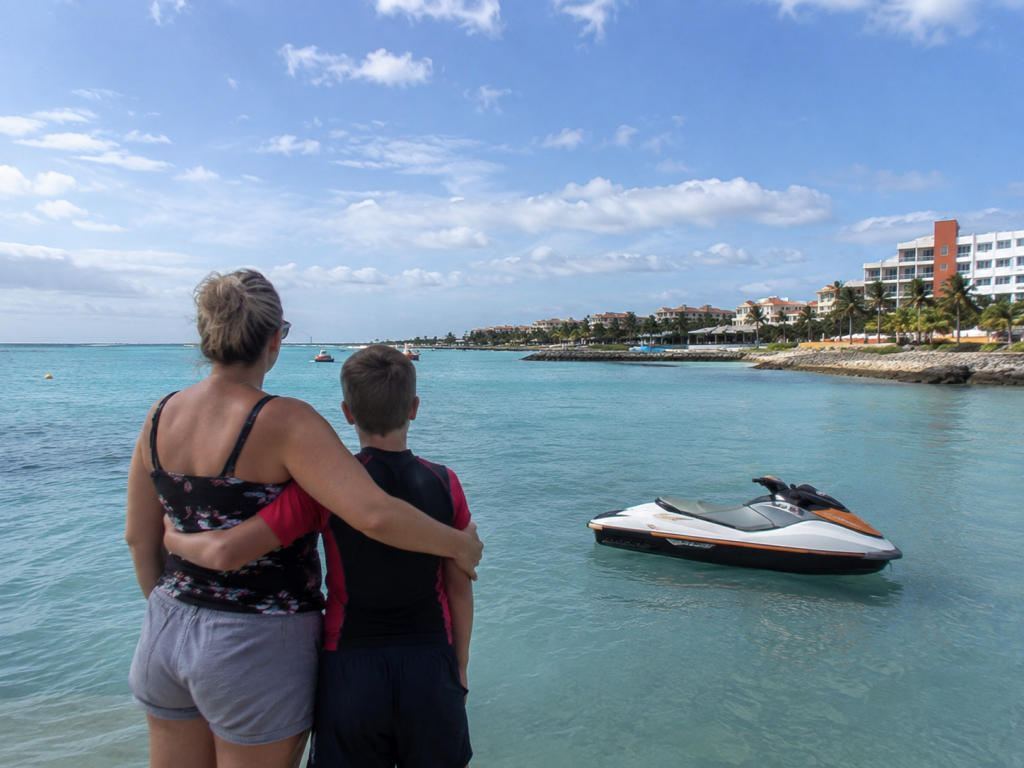
A Vacation Meant to Help a Family Heal
Just months before the trip, the DeVries family had suffered a devastating tragedy. Max’s father had died suddenly from a heart attack, leaving his wife and children struggling to cope with the loss.
Hoping that time away would provide a much-needed emotional break, Yvonne planned a vacation to Aruba, an island widely known for its beautiful beaches, calm waters, and reputation as one of the Caribbean’s safest tourist destinations.
At first, everything seemed to be going exactly as planned. Max appeared happier, enjoyed the resort’s activities, and quickly made friends with other teenagers staying at the hotel. Like many young travelers on vacation, he embraced every opportunity to meet new people and enjoy the freedom of being away from home.
Nothing suggested that the trip would end in tragedy.
A Friendship That Seemed Completely Innocent
While playing pool at the resort, Max met another teenager named David Jr. The two boys connected almost immediately and spent much of the following days together.
Soon afterward, Max’s family also became acquainted with David Jr.’s adoptive father, David Stacey Sr., who explained that he had brought his son to Aruba to celebrate the anniversary of the adoption. The two families naturally began spending time together, sharing meals, joining recreational activities, and enjoying the relaxed atmosphere of the resort.
Looking back, Yvonne later said she had no reason to distrust either of them. They appeared friendly, approachable, and no different from countless other families vacationing on the island.
The Decision That Changed Everything
One day, both families participated in parasailing, and everything went smoothly. Later, Max and David Jr. took a short jet ski ride together and returned safely, reinforcing the impression that there was nothing to worry about.
The following morning, David Stacey Sr. invited Max to go out on another jet ski ride. This time, however, David Jr. would not be joining them.
Yvonne hesitated. Allowing her teenage son to head into open water with an adult she had known for only a few days made her uncomfortable. Max insisted he wanted to go, while David Stacey Sr. reassured her that the ride would be brief and perfectly safe.
Eventually, she agreed.
Years later, Yvonne would describe that decision as one she replayed in her mind countless times, wondering if she could have changed what happened next.
When Forty-Five Minutes Turned Into Hours
At first, no one was concerned. Jet skis frequently disappeared beyond the horizon before returning to shore a short time later.
But as the minutes passed, concern slowly turned into panic.
When the pair failed to return, resort staff and family members alerted local authorities, who quickly launched an extensive search operation involving rescue boats, helicopters, and coast guard teams. Initially, many believed a mechanical failure or changing sea conditions had simply delayed their return.
The search continued for hours.
Only One Person Came Back
Rescuers eventually located David Stacey Sr. alone several miles offshore.
Max was gone.
Investigators immediately focused on the account provided by the only person known to have been with the teenager before his disappearance.
David Stacey Sr. told authorities that Max’s jet ski had experienced mechanical problems and that he had attempted to tow it. According to his version of events, his own watercraft also malfunctioned, causing the two to become separated in open water. He claimed he searched for Max but was unable to find him.
Search crews spent days combing the surrounding waters using boats, divers, and aircraft, hoping to locate the missing teenager or recover physical evidence that might explain what had happened.
Neither Max nor the jet ski he had been riding was ever found.
An Investigation That Left Too Many Questions
Without eyewitnesses, physical evidence, or a recovered body, investigators faced enormous challenges in determining exactly what had happened.
For Max’s family, however, the unanswered questions only deepened their frustration.
Over the years, Yvonne DeVries repeatedly expressed concerns about the investigation, arguing that David Stacey Sr.’s account should have been examined more thoroughly and that not every possible lead had been fully explored.
The case remained open, but clear answers never emerged.
Years later, it also became public that David Stacey Sr. had previous convictions in the United States for sexual offenses involving minors. Those revelations intensified the family’s suspicions and renewed public interest in the disappearance.
However, it is important to distinguish suspicion from proof. Despite the disturbing nature of his criminal history, authorities have never charged David Stacey Sr. with Max DeVries’ disappearance, and no evidence has conclusively linked him to the case.
A Mystery Overshadowed by Another High-Profile Disappearance
Only one year later, Aruba would once again make international headlines after the disappearance of American teenager Natalee Holloway. That case dominated global media coverage and, in many ways, overshadowed Max DeVries’ story.
For his family, though, time has remained frozen since May 12, 2004.
While many cold cases have been revisited using modern forensic techniques, Max’s disappearance remains unresolved. Investigators have never been able to determine whether he was lost in an accident at sea, carried away by powerful currents, or became the victim of something far more sinister.
More than twenty years later, the case still has no definitive conclusion.
There is no grave where his loved ones can mourn, no final explanation for what happened, and no certainty about his fate. What remains is the photograph of a smiling 14-year-old who left for what should have been a short ride on the Caribbean Sea—and a mother who continues to hope that one day, someone will finally reveal the truth about what happened beyond Aruba’s shoreline.