
Today, lemons are one of the most common fruits in the world. They are squeezed into drinks, added to recipes, and used in countless household remedies. Two centuries ago, however, lemons were far more than a kitchen staple. They were a strategic commodity, capable of generating enormous wealth and influencing international trade.
Surprisingly, the story of the Sicilian Mafia begins, in part, with this humble fruit.
That does not mean lemons created the Mafia. The reality is much more complex. Yet historians and economic researchers agree that the extraordinary profits generated by Sicily’s citrus industry helped create the conditions in which organized crime could flourish.
It is one of history’s most fascinating paradoxes: a fruit that helped save millions of lives also became part of the economic landscape that encouraged the rise of one of the world’s most notorious criminal organizations.
A Disease That Threatened the World’s Great Naval Powers
Long before scientists understood vitamins, life at sea was incredibly dangerous. Ships often remained on the ocean for months without access to fresh fruits or vegetables. Sailors survived on salted meat, hard biscuits, dried foods, and stored water.
Eventually, many developed scurvy.
The illness began quietly with exhaustion and aching muscles. As it progressed, gums bled, teeth loosened, wounds reopened, and internal bleeding became common. For countless sailors, the disease proved fatal.
Historians believe that between the 15th and 18th centuries, scurvy claimed millions of lives. On many voyages, it killed more crew members than storms, shipwrecks, or enemy attacks combined.
Finding a solution became essential for every major maritime nation.
The Discovery That Changed Global Navigation
In 1747, Scottish physician James Lind carried out what is widely regarded as one of the earliest controlled clinical experiments.
He tested several treatments on sailors suffering from scurvy. The men who received oranges and lemons recovered far more quickly than everyone else.
Although it took decades before naval authorities fully embraced his findings, the British Royal Navy eventually began supplying citrus juice to its crews on long voyages. The results were remarkable. Cases of scurvy dropped dramatically, allowing ships to travel farther and remain at sea for much longer periods.
A medical breakthrough had unexpectedly created a new global market.
Sicily Became the World’s Citrus Powerhouse
As European navies and merchant fleets increased their demand for lemons, citrus farming became an exceptionally profitable business.
Few places were better suited for cultivation than Sicily.
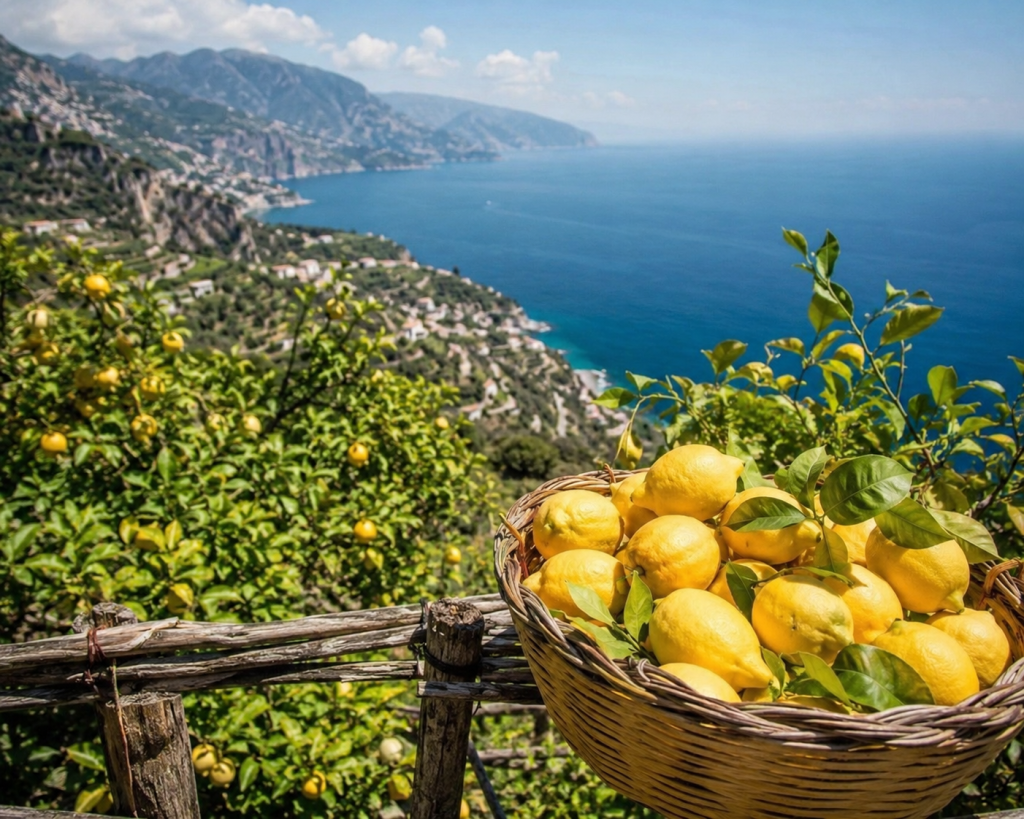
Its Mediterranean climate, fertile volcanic soil, and convenient access to major shipping routes allowed the island to produce large quantities of high-quality lemons that were exported throughout Europe and beyond.
By the nineteenth century, citrus orchards around Palermo and other parts of western Sicily had become some of the most valuable agricultural properties on the continent.
For landowners, lemons represented opportunity.
For criminals, they represented something even more attractive.
A Crop Worth Protecting
Unlike many traditional crops, lemon groves required years of investment before they became productive.
Trees took time to mature, irrigation systems were expensive to build, and constant maintenance was necessary. Once established, however, a successful orchard could generate profits far exceeding those of wheat, olives, or vineyards.
That prosperity also made citrus farms vulnerable.
Unlike fields of grain, a lemon harvest could be picked quickly, transported easily, and sold for substantial sums. A single theft could wipe out months of expected income.
Protecting the orchards became almost as important as cultivating them.
When the State Could Not Guarantee Security
Nineteenth-century Sicily struggled with weak government institutions and limited law enforcement, particularly in rural areas.
Police presence was sparse, legal proceedings were slow, and recovering stolen property was often impossible.
Landowners therefore turned to private protection.
Armed guards were hired to patrol orchards, watch over workers, and escort shipments to nearby ports. Initially, these arrangements appeared to solve a practical problem.
Over time, however, those providing protection began accumulating influence of their own.
Protection Slowly Became Control
As private security groups expanded their authority, many no longer acted solely as guardians.
They began deciding who could transport fruit, who could purchase land, which workers could be hired, and who was permitted to conduct business in certain areas.
Protection payments gradually became mandatory rather than voluntary.
Those unwilling to cooperate sometimes found their orchards damaged, shipments intercepted, or harvests mysteriously disappearing.
This pattern—creating fear while simultaneously selling protection from it—became one of the defining characteristics of organized crime in Sicily.
The economic value of citrus production provided these groups with a reliable source of income and influence, allowing them to strengthen their local power.
What Modern Research Reveals
The connection between Sicily’s citrus industry and the Mafia is supported by more than historical anecdotes.
Modern economic research has explored why organized crime first became deeply rooted in certain parts of the island.
One influential study published in The Journal of Economic History examined historical records alongside agricultural data and found that Mafia activity was concentrated in regions where citrus cultivation generated exceptionally high profits.
The researchers did not argue that lemons created the Mafia.
Instead, they concluded that valuable agricultural assets combined with weak state institutions created strong demand for private protection services. In time, many of those protection networks evolved into criminal organizations.
The Mafia Was Never About Lemons Alone
It would be misleading to suggest that citrus farming alone explains the emergence of the Sicilian Mafia.
Organized crime developed within a broader environment shaped by political instability, widespread poverty, social inequality, corruption, and ineffective government institutions.
The booming citrus trade was one important piece of that puzzle—not the entire picture.
Without weak governance, profitable lemon orchards would likely have remained simply successful farms.
Without the enormous wealth generated by citrus exports, however, criminal protection networks might never have gained the same economic power.
A Remarkable Twist of History
History is full of unexpected connections, and the story of Sicily’s lemons is among the most remarkable.
A fruit that helped protect sailors from one of history’s deadliest maritime diseases also transformed the economy of an entire region. That prosperity created opportunities not only for honest farmers and merchants but also for groups willing to profit through intimidation, extortion, and violence.
Saying that “lemons created the Mafia” oversimplifies a far more complicated historical process.
A more accurate conclusion is that the extraordinary success of Sicily’s citrus industry helped generate the wealth that made organized protection profitable. In a region where government authority was often weak, those protection networks gradually evolved into what the world would eventually recognize as the Sicilian Mafia.
It is a powerful reminder that history is rarely shaped by a single event. Sometimes, even an ordinary piece of fruit can become part of a chain of events that changes the course of society in ways no one could have imagined.