
Every day, millions of people accept driving jobs, delivery requests, or transport assignments without giving them much thought. Most of those trips end exactly as expected. Occasionally, however, a routine job becomes the starting point of a criminal investigation that changes someone’s life forever.
That possibility has become a growing concern for law enforcement agencies, especially as criminal organizations increasingly rely on unsuspecting individuals to move illegal goods. Whether those drivers truly have no knowledge of what they are transporting—or simply ignore obvious warning signs—often becomes the central question in court.
One recent federal case in the United States has brought that debate into the spotlight.
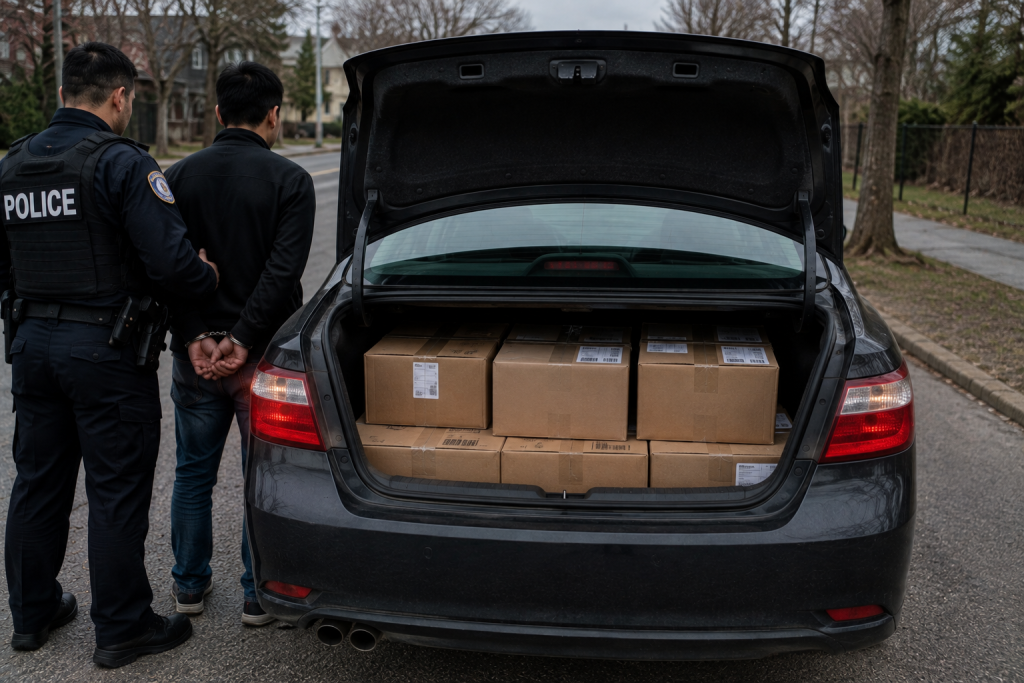
Why Criminal Networks Prefer Ordinary Drivers
Organized crime rarely operates the way it does in movies. Instead of relying only on known associates, many criminal groups look for people who blend into everyday life.
Independent drivers, couriers, gig workers, and individuals seeking extra income can become attractive targets because they generally have clean backgrounds and attract less attention from law enforcement.
Investigators have long warned that trafficking organizations sometimes disguise illegal shipments as ordinary deliveries. A package, a suitcase, or several sealed boxes may appear harmless, especially when accompanied by a believable explanation.
In some situations, the driver may knowingly participate. In others, investigators must determine whether the person genuinely had no idea what was being transported.
A Delivery That Ended in Federal Court
One widely discussed example is the case of Wenjian Zhuo, a Chinese immigrant living legally in the United States.
According to court records, Zhuo accepted what he believed was a routine transportation request after being contacted through WeChat. He later stated that he expected to pick up an international student near the U.S.-Canada border.
When he arrived, the expected passenger never appeared.
Instead, another individual loaded several boxes into his vehicle and instructed him to continue the trip.
Shortly afterward, U.S. Border Patrol agents stopped the vehicle during an ongoing enforcement operation.
Authorities discovered approximately 94 kilograms (about 207 pounds) of marijuana concealed inside the boxes, leading to federal drug trafficking charges against Zhuo.
His Defense: “I Didn’t Know”
Throughout the legal proceedings, Zhuo maintained that he had no knowledge of the boxes’ contents.
His attorneys argued that he believed he was completing a legitimate transportation request and had unknowingly been manipulated by individuals involved in smuggling operations.
Federal prosecutors saw the situation differently.
They argued that multiple unusual circumstances should have prompted a reasonable person to stop and question what was happening. The unexpected change in plans, the isolated pickup location, the missing passenger, and the unexplained transfer of sealed boxes were presented as significant warning signs.
Ultimately, the jury agreed with the prosecution’s interpretation.
The Legal Principle Behind the Conviction
One reason this case attracted so much attention is the legal doctrine known as willful blindness, sometimes referred to as deliberate ignorance.
The concept does not require prosecutors to prove that a defendant had direct knowledge of every detail of a crime.
Instead, courts may conclude that someone deliberately avoided learning the truth despite obvious indications that illegal activity was taking place.
In other words, intentionally choosing not to ask questions or verify suspicious circumstances does not always protect a person from criminal responsibility.
This legal principle has been applied in various criminal cases involving drug trafficking, financial crimes, and other offenses where defendants claim they were unaware of illegal conduct.
Why Cases Like This Divide Public Opinion
Situations involving alleged unwitting couriers often generate strong reactions because the evidence can be interpreted in different ways.
Some observers believe certain defendants are manipulated by sophisticated criminal organizations that exploit trust, financial hardship, or inexperience.
Others argue that obvious warning signs should not be ignored and that personal responsibility includes questioning suspicious requests before accepting them.
Determining where innocence ends and recklessness begins is often one of the most difficult tasks facing juries.
Warning Signs Drivers Should Never Ignore
Security experts recommend treating certain situations with extreme caution, particularly when working as an independent driver or courier.
Unexpected changes to pickup locations, last-minute modifications to delivery instructions, unusually high payments for simple jobs, anonymous customers, and sealed packages that cannot be identified should all raise legitimate concerns.
None of these factors automatically indicate criminal activity.
However, when several appear together, experts advise declining the assignment or requesting additional verification before continuing.
Taking a few extra minutes to confirm who is sending a package—and why—may prevent far more serious consequences later.
A Story Bigger Than One Person
The case involving Wenjian Zhuo is about more than a single criminal trial.
It highlights the increasingly complex relationship between modern gig work, organized crime, and personal responsibility. As digital platforms and messaging applications make it easier to arrange transportation with strangers, distinguishing between legitimate business and criminal activity can become more challenging.
Whether Zhuo was an unsuspecting driver or someone who ignored obvious warning signs remains a subject of public debate. The jury reached one conclusion, while many readers and legal observers continue to discuss the case from different perspectives.
Regardless of where opinions fall, the lesson extends well beyond one courtroom.
Accepting a transportation request may seem like an ordinary decision, but when circumstances suddenly stop making sense, asking a few additional questions could make the difference between completing a routine job and becoming part of a criminal investigation.