
In 2017, two very young children from the same household in rural Indiana died within a matter of months.
The first was a toddler who had not yet reached her second birthday. The second was an 11-month-old baby boy.
At first, neither death had an obvious explanation.
What investigators eventually uncovered would turn the case into one of the most disturbing juvenile murder prosecutions in Indiana: the person responsible was another child living in the home.
His name was Nickalas James Kedrowitz, and he was only 13 years old when the deaths occurred.
Years later, after psychological evaluations, competency hearings, a transfer from juvenile court and a criminal trial, he would receive a total sentence of 100 years in prison.
The viral version of the story is therefore broadly true, but it leaves out the most important part: this was not a straightforward case of a 13-year-old immediately being sentenced to a century behind bars. The legal battle lasted for years and raised difficult questions about childhood, mental health, criminal responsibility and whether a person so young should ever be treated as an adult by the justice system.
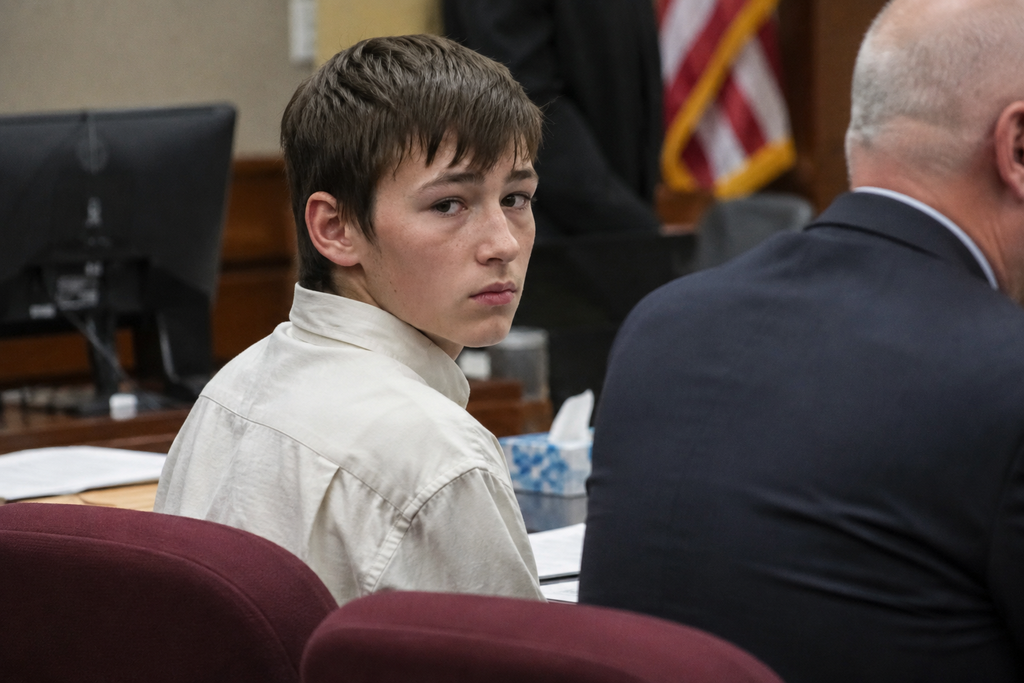
The first child died in the spring of 2017
At the time, Nickalas was living in Ripley County, Indiana, with his mother, her partner and younger children in the household.
On the evening of May 1, 2017, he was helping prepare the younger children for bed.
One of them was Desiree McCartney, a 23-month-old girl who was related to Nickalas through his mother.
According to facts later summarized by the Indiana Court of Appeals, Nickalas took Desiree into the bathroom and used a towel to obstruct her breathing until she became unresponsive.
When his mother returned, he brought the child to her and said something appeared to be wrong.
Emergency responders found Desiree without a pulse and not breathing. Paramedics were able to restore cardiac activity during transport, but she never resumed breathing independently. She died after several days on life support.
At that stage, however, investigators did not yet know what had happened.
Nickalas initially described the incident as an accident. He said Desiree had become ill while bathing and that he had briefly left the room to get her pajamas before returning to find her unresponsive in the tub.
The medical evidence created doubts.
The autopsy did not reveal findings consistent with drowning, and doctors did not identify a major illness or infection that could readily explain the sudden death of an otherwise healthy toddler.
The cause and manner of death initially remained undetermined.
A second child died less than three months later
On July 20, 2017, tragedy struck the household again.
This time the victim was Nathaniel Ritz, an 11-month-old boy who lived with the family and whom court records described as Nickalas’s de facto sibling.
Nickalas was putting Nathaniel to bed.
According to the appellate court’s later account of the evidence, he placed a blanket over the baby’s nose and mouth and kept it there until Nathaniel stopped breathing.
He then carried the child to his mother and told her that something was wrong.
Paramedics were unable to revive him.
As with Desiree, the initial medical investigation did not reveal a clear natural cause. There was no obvious disease, major infection or genetic abnormality that satisfactorily explained why an 11-month-old child had suddenly died.
Nathaniel’s death was also initially classified as undetermined.
Two unexplained deaths inside the same household, however, could not easily be dismissed as coincidence.
The first real break came during a psychological evaluation
The investigation changed direction later that year.
During the autumn of 2017, clinical psychologist Linda McIntire was evaluating Nickalas as part of child-protection proceedings connected to the deaths.
During those conversations, Nickalas began making unusual statements.
He reportedly said that he had “freed” the two children because they had been trapped.
The psychologist reported what she had heard to authorities.
On December 13, investigators interviewed Nickalas directly.
According to court records, he spoke about having a conversation with God and said that he had released the children from what he described as “hell” and “chains of fire.”
He also explained how he had done it, describing the towel used with Desiree and the blanket used with Nathaniel.
In another conversation, this time with an aunt, he reportedly gave a somewhat different explanation. He said he had wanted to protect the children and did not want them to experience the kind of life he believed he had experienced himself.
Those differences matter.
Online retellings of the case sometimes try to reduce the motive to one dramatic sentence. The actual court record presents something much less simple. Nickalas made several statements about what he believed he was doing, and they do not produce a single, straightforward explanation for the killings.
The autopsy findings were reconsidered
Once investigators had Nickalas’s statements, the earlier medical findings were examined in a different context.
What he described was consistent with mechanisms that could explain the otherwise mysterious deaths.
The official cause of death for both children was eventually changed to asphyxia due to smothering.
In September 2018, prosecutors formally initiated proceedings alleging two acts that would have constituted murder if committed by an adult.
But bringing the case to trial turned out to be far more complicated than simply presenting evidence to a jury.
The next major question was whether Nickalas was mentally competent to be tried at all.
Experts disagreed about whether he could understand the proceedings
Competency is often misunderstood.
A person may have significant psychological problems and still be legally competent to stand trial. Competency asks a narrower question: does the defendant understand the nature of the proceedings, and can that person meaningfully assist an attorney in preparing a defense?
The experts who evaluated Nickalas did not reach a unanimous conclusion.
Two court-appointed psychologists concluded that he was competent.
Cognitive testing produced low scores. One assessment resulted in a composite score of 84. Another evaluation recorded a full-scale IQ of 72, placing him in a very low range of intellectual functioning.
Yet on a separate test designed to evaluate understanding of legal concepts among people with intellectual limitations, he reportedly scored 89 percent. One evaluator interpreted that result as evidence that he understood courtroom roles and basic legal procedures relatively well.
Other experts disagreed.
A psychiatrist retained by the defense concluded that Nickalas was not competent to stand trial. Another physician reached a similar conclusion, and professionals who had evaluated or treated him also expressed serious concerns.
The trial court ultimately decided that he was competent.
The judge gave greater weight to the experts who believed Nickalas could understand courtroom roles, follow legal advice and communicate sufficiently with defense counsel.
That decision later became one of the central issues raised on appeal.
His mental health history was complicated, not neatly defined
The case also generated considerable discussion about Nickalas’s psychological condition.
Over time, different clinicians raised or assigned different diagnoses, including major depressive disorder, anxiety, disorders within or related to the schizophrenia spectrum, other psychotic conditions and, during a later sentencing evaluation, post-traumatic stress disorder.
The professionals involved did not all agree with one another.
That uncertainty is important because a complex psychiatric history should not be converted into a simplistic claim that a particular diagnosis “caused” the killings.
Mental illness and violence are not synonymous, and most people living with mental health conditions are not violent.
In this case, the psychological evidence mattered primarily because of questions involving competency, maturity, treatment needs and sentencing.
It did not automatically remove criminal responsibility.
Why was a 13-year-old eventually prosecuted as an adult?
Nickalas’s case began in the juvenile justice system.
Indiana law, however, permits particularly serious cases involving young defendants to be transferred to adult criminal court.
For certain murder allegations involving children who are at least 12 years old, state law creates a pathway through which juvenile jurisdiction can be waived when the legal requirements are met.
The court concluded that remaining exclusively within the juvenile system was not appropriate in Nickalas’s case.
One of the concerns was time.
Juvenile jurisdiction has limits, and the court believed Nickalas required both treatment and long-term supervision extending beyond what the juvenile system could reliably provide.
The case was therefore transferred to adult criminal court.
That decision became another major point of controversy.
Supporters of the transfer emphasized the seriousness of the offenses and the need to protect the public.
Critics argued that a child who was only 13 at the time of the crimes, particularly one with documented cognitive and psychological difficulties, should not be treated in the same manner as an adult offender.
The murder trial did not happen until 2021
By the time Nickalas finally went before a jury, several years had passed since the deaths.
His trial took place in August 2021 in Ripley Circuit Court.
The jury found him guilty of both murders.
He was 17 years old by then.
That distinction is important because the phrase often used online — “13-year-old sentenced to 100 years” — compresses several years of legal proceedings into a misleading headline.
He was 13 when Desiree and Nathaniel died.
He was 17 when he was convicted.
How a pair of 50-year sentences became 100 years
Sentencing took place on February 1, 2022.
Judge Ryan King imposed 50 years for each murder.
The sentences were ordered to run consecutively rather than at the same time.
The total therefore became 100 years in prison.
Interestingly, 50 years was not the maximum punishment available for each murder under Indiana law.
The sentencing range at the time was 45 to 65 years per count, with an advisory sentence of 55 years.
In other words, the individual sentences were near the lower end of the statutory range.
The extraordinary total came from the fact that there were two victims and the sentences were stacked one after the other.
His age was considered during sentencing
The judge did not ignore the fact that Nickalas had been only 13 when the killings occurred.
The sentencing court treated several circumstances as mitigating factors, including his age, immaturity, limited cognitive abilities, mental health difficulties and lack of a prior juvenile or criminal history.
His youth was therefore part of the sentencing analysis.
But the court also found substantial aggravating circumstances.
Both victims were extremely young and completely dependent on others for their safety.
Nickalas was the older child in a position of trust.
There were two separate deaths.
The court also considered the circumstances surrounding the killings and what it viewed as a lack of genuine remorse.
The judge ultimately concluded that those aggravating factors outweighed the mitigating ones.
The 100-year sentence survived appeal
Nickalas’s defense challenged several aspects of the case.
The appeal questioned the finding that he had been competent to stand trial, the decision to transfer him out of juvenile court and the severity of the sentence.
On November 28, 2022, the Indiana Court of Appeals upheld both the convictions and the 100-year sentence.
The appellate judges concluded that the lower court had acted within its discretion when evaluating the conflicting expert opinions about competency.
They also upheld the transfer to adult court and determined that the sentence was not inappropriate given the circumstances of the offenses and the two victims.
The case then moved toward the Indiana Supreme Court.
Juvenile justice advocates argued that 100 years was effectively a life sentence
Several organizations specializing in juvenile justice and adolescent development became involved as the defense sought further review.
Among them were the Juvenile Law Center, the Center for Law, Brain and Behavior, The Sentencing Project and the Children’s Policy and Law Initiative of Indiana.
Their argument focused heavily on the science of adolescence.
A 100-year sentence imposed for crimes committed at age 13, they argued, functions much like life imprisonment because it leaves little realistic possibility of release during a normal lifetime.
They also urged the court to give greater weight to developmental science, trauma and Nickalas’s cognitive limitations.
On June 28, 2023, the Indiana Supreme Court declined to accept the case for further review.
That decision left the appellate ruling and the 100-year sentence intact.
The decision was not entirely without disagreement.
Chief Justice Loretta Rush wrote that the court should have taken the case, and Justice Christopher Goff joined that view.
Rush argued that the case offered an important opportunity to clarify how Indiana courts should evaluate extremely long sentences imposed for crimes committed by children and how juvenile characteristics should factor into constitutional proportionality.
Why adolescent brain development matters in cases like this
The debate surrounding Nickalas’s sentence reflects a much broader shift in how courts and researchers understand adolescence.
Modern developmental neuroscience does not suggest that teenagers are incapable of understanding right and wrong.
What it does show is that adolescence is a period of continuing neurological development.
Brain systems involved in impulse control, long-term planning, evaluating consequences and emotional regulation continue to mature throughout the teenage years and into early adulthood.
This does not eliminate criminal responsibility.
But it helps explain why legal systems increasingly distinguish between adolescents and fully mature adults when considering culpability, punishment and the possibility of rehabilitation.
A 13-year-old is not simply a smaller version of a 30-year-old.
That principle has influenced juvenile sentencing law in the United States for years and became central to arguments made by organizations seeking further review of the Kedrowitz sentence.
The case cannot be reduced to one viral quote
One of the reasons the case continues to spread online is the disturbing language attributed to Nickalas during interviews.
References to freeing the children from “hell” are real parts of the case record.
But turning those statements into a clean explanation of motive goes further than the evidence allows.
He gave different explanations at different times.
His psychological history was complicated.
Experts disagreed about his competency.
He showed significant cognitive limitations but also demonstrated an understanding of legal concepts during testing.
The actual case is far more unsettling than the simplified internet version precisely because there is no single explanation that makes everything fit neatly together.
Two victims, one child defendant and an almost impossible legal question
The facts surrounding Desiree and Nathaniel should never disappear behind the debate over juvenile justice.
Desiree was not yet two years old.
Nathaniel was only 11 months old.
Both were completely vulnerable and dependent on the people around them for protection.
Their deaths were deliberate acts, according to the jury that convicted Nickalas.
At the same time, the person responsible was himself a 13-year-old child when those acts occurred.
He had documented cognitive limitations.
He had significant psychological difficulties.
And multiple professionals examining the same young person reached different conclusions about something as fundamental as whether he was capable of participating meaningfully in his own trial.
The Indiana courts ultimately decided that he was responsible for two murders and that the seriousness of those crimes justified two consecutive 50-year sentences.
Legally, the outcome remains in place.
Morally, the case is harder to resolve.
It leaves behind a question that reaches far beyond one household in Indiana:
When a child commits an irreversible act, how should justice balance the harm already done against the possibility that the child who committed it might someday become a fundamentally different adult?