
You fly thousands of miles to experience another country. There are historic landmarks to see, museums to visit, famous restaurants to try and neighborhoods waiting to be explored.
And then, somehow, you find yourself spending 45 minutes in a supermarket.
Not because you desperately need groceries.
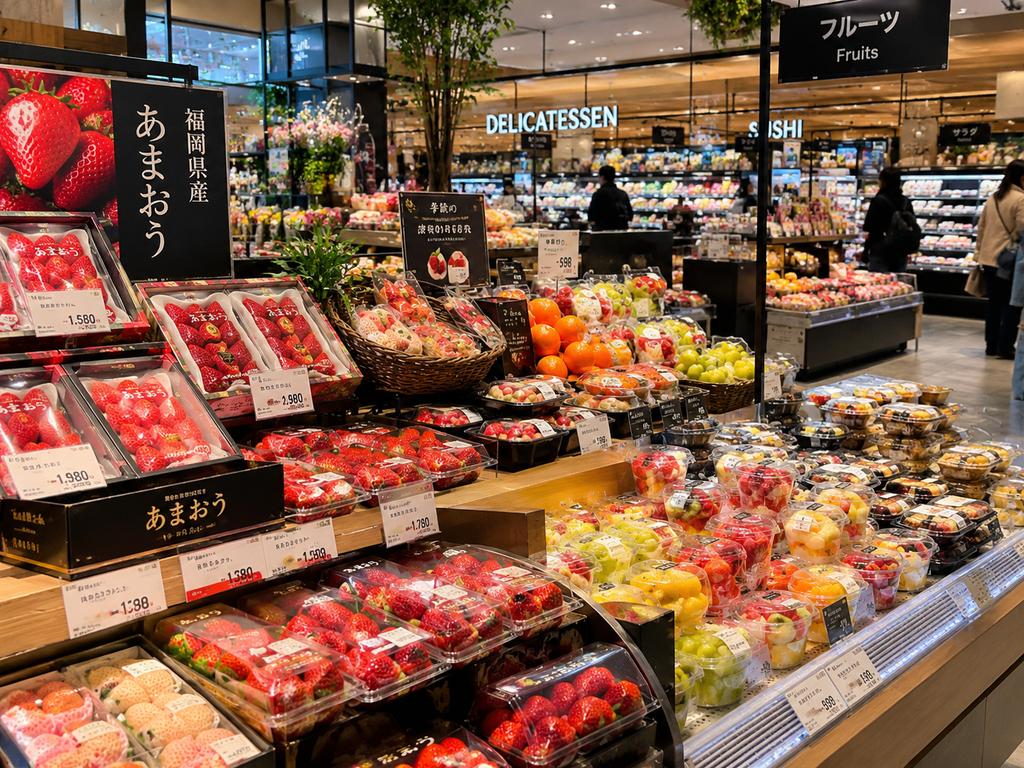
You are examining unfamiliar snacks, wondering why a familiar brand comes in flavors you have never seen before, comparing the price of milk with what you pay at home and taking photographs of products that local shoppers walk past without a second glance.
To them, it is Tuesday night’s grocery run.
To you, it is part of the trip.
This seemingly ordinary behavior has become visible enough to earn its own labels: “grocery tourism” and “supermarket tourism.” Travel companies are tracking it, social media has amplified it and, in Finland, some supermarkets have even been promoted as places for tourists to visit.
But the appeal goes deeper than unusual candy and viral snacks.
A supermarket may be one of the easiest places to glimpse something travelers increasingly want to find: the ordinary life of another country.
The tourist attraction that was never designed to be one
For decades, tourism has been built around exceptional places.
We travel to see what is historic, beautiful, rare or culturally important. Cities direct visitors toward monuments, museums, scenic viewpoints and restaurants.
Supermarkets belong to an entirely different category.
They exist primarily for the people who live there.
That distinction is precisely what makes them interesting.
In August 2026, BBC Travel examined the growing appeal of supermarkets and convenience stores as tourist destinations, highlighting places such as Japan, where visiting a convenience store can become an experience in its own right.
A Japanese 7-Eleven, for example, may be an everyday stop for someone heading home from work. For a visitor, the same store offers egg sandwiches, matcha desserts, unfamiliar drinks, ready-made meals and regional variations of recognizable products.
And Japan is far from the only example.
Expedia had already identified a related behavior in its Unpack ’25 travel trends. According to its survey, 39% of travelers said they visit grocery stores or supermarkets while on vacation, while 44% shop for local goods they cannot get at home.
Expedia also highlighted what it called “Goods Getaways”: trips influenced partly by the desire to find products associated with a destination, including items that have become difficult to obtain or highly desirable through social media.
Hilton’s research for its 2026 travel trends report pointed in the same general direction. In its survey, 77% of travelers said they enjoy exploring local grocery stores to discover authentic foods and drinks.
These figures come from different surveys and methodologies, so they should not be treated as evidence of a jump from 39% to 77%. What they do show is that wandering through local food stores is hardly an eccentric habit practiced by a tiny group of travelers.
It has become part of the travel experience for a substantial number of people.
A grocery store is a snapshot of everyday priorities
Walk through a supermarket slowly enough and it begins to tell stories.
How much space is dedicated to fresh food compared with frozen meals?
What does an ordinary breakfast look like?
How much ready-to-eat food is available?
What kinds of bread, fish, dairy products or vegetables dominate the shelves?
How large are the packages?
What is marketed to children?
What does a cheap dinner cost?
Even global brands can reveal local preferences. Companies routinely adapt flavors, recipes and product ranges for different markets, which is why something completely ordinary in one country can appear almost experimental to a visitor.
Then there are prices.
Tourists usually encounter the economics of a destination through hotel rooms, restaurant bills and admission fees. A grocery store provides another perspective.
The price of bread, eggs, milk, fruit or a simple ready-made dinner does not tell you everything about the cost of living, but it offers a small window into everyday consumption that a tourist menu rarely provides.
A supermarket is not a perfect representation of a culture.
It is, however, a remarkably accessible piece of everyday evidence.
Your brain is part of the reason this feels so entertaining
There is an obvious question: why can an activity we consider boring at home suddenly become enjoyable abroad?
Novelty offers part of the explanation.
Research in tourism psychology has examined how novel experiences can attract attention and contribute to memorable travel experiences. When something differs from our expectations, we are more likely to notice it.
At home, grocery shopping often requires very little discovery.
You recognize the packaging. You know which yogurt you like. You probably know where the bread is before entering the store.
Hundreds of products can sit directly in front of you without receiving much conscious attention.
Abroad, that automatic familiarity disappears.
A bottle contains something you cannot identify. A snack has a flavor combination you have never encountered. A product category occupies half an aisle when it barely exists at home.
Even familiar products become questions.
Why is this sold warm?
What is that ingredient?
Why are there twelve versions of this?
Do people actually eat this for breakfast?
The setting remains reassuringly familiar — shelves, baskets, refrigerators, checkout counters — while the contents continually surprise you.
It is exploration without requiring much effort.
Travelers increasingly want ordinary life, not only attractions
There is another reason supermarkets fit modern tourism so well: the search for authenticity.
Travelers often say they want to experience a destination “like a local.”
That is easier said than done.
A restaurant beside a major landmark may have menus in several languages. Souvenir shops obviously select their products for visitors. Entire neighborhoods can change as tourism grows.
A neighborhood grocery store is different.
People really do stop there after work.
Parents really do buy those breakfast cereals.
Someone really is choosing that bread for tomorrow morning.
The tourist temporarily enters a space where ordinary life is taking place without needing to be staged as entertainment.
The appeal, paradoxically, comes from the fact that nothing remarkable is supposed to be happening.
Finland decided to make the unofficial attraction official
Finland provided one of the clearest examples of how far the trend has developed.
In May 2026, Finnish retailer K-Supermarket announced an unusual initiative: participating supermarkets would be listed on Tripadvisor as attractions for visitors.
According to retailer Kesko, the company believed it was the first grocery chain to list multiple stores on the travel platform as tourist attractions.
One participating location, K-Supermarket Lippulaiva in Espoo, has appeared on Tripadvisor among things visitors can do in the area, highlighting features such as Finnish products, its bakery and local fish.
The idea sounds almost absurd at first.
Why would anyone travel somewhere and then visit a grocery store?
But that question reveals exactly why the phenomenon is interesting.
The supermarket becomes worth visiting not despite being ordinary, but because it is ordinary.
TikTok didn’t invent grocery tourism — it gave it an audience
Travelers were exploring foreign supermarkets long before smartphones existed.
Social media changed the scale of the phenomenon.
A supermarket visit is almost perfectly designed for short-form content. It is visual, inexpensive and filled with small discoveries.
Someone in Tokyo can film five snacks unavailable in Europe. Someone in Seoul can show an entire wall of products unfamiliar to American viewers. A traveler in Finland can compare everyday prices with those back home.
Millions of viewers can then experience a tiny moment of cultural discovery without leaving their phones.
Some of them will remember the product.
When they eventually travel to that country, they may actively look for it.
Then they film their own discovery.
The ordinary grocery item completes a strange cycle: local product, viral curiosity, tourist attraction, social media content — and back again.
It may also be one of the cheapest travel experiences left
There is another advantage that should not be underestimated.
Travel can be expensive.
Popular attractions charge admission. Famous restaurants can require substantial budgets. Guided experiences, entertainment and transportation quickly add up, particularly for families.
Walking through a supermarket costs nothing.
And the souvenir might cost only a few dollars or euros.
Instead of another mass-produced magnet, travelers can bring home tea, coffee, chocolate, spices, biscuits or some oddly flavored snack they will probably force their family to taste.
Food also has an unusual quality as a souvenir.
It can recreate part of the trip later.
Open the coffee you bought abroad and the smell may bring back the morning you found it. Share an unfamiliar candy with friends and suddenly you are telling the story of where you bought it.
The product disappears.
The memory attached to it does not necessarily disappear with it.
There is a catch: tourists can change the reality they came to observe
It would be easy to turn supermarket tourism into an overly romantic story about discovering “the real country.”
Reality is more complicated.
Supermarkets are commercial environments. Their selections are shaped by supply chains, contracts, pricing strategies, marketing and consumer demand. Stores in heavily visited areas can also adjust what they sell specifically because tourists are there.
Tourism itself can influence everyday prices.
A 2026 study published in Annals of Tourism Research analyzed roughly 1.3 billion daily price observations in Croatia and examined how intense tourism affected consumer prices in coastal destinations.
The researchers found seasonal price effects associated with tourism, including for ordinary consumer goods. Price differences appeared ahead of the busiest summer period, intensified during peak tourism and then declined later in the year.
That creates an intriguing contradiction.
Travelers enter supermarkets hoping to observe everyday local life.
But when enough visitors arrive, their presence can begin changing the everyday life they came to see.
Maybe the best travel discoveries aren’t always extraordinary
A monument tells us something about history.
A museum tells us what a society has chosen to preserve.
A restaurant may introduce us to the cuisine a destination wants visitors to experience.
A supermarket answers different questions.
What does someone buy on the way home from work?
What goes into a child’s school snack?
What does a family choose when nobody has time to cook?
What is considered cheap, comforting, practical or completely ordinary?
These details will never replace museums, historic sites or great restaurants. Nor should they.
But travel does not have to consist entirely of extraordinary experiences.
Sometimes understanding a place means paying attention to the things nobody thought were important enough to show you.
That may explain why travelers can cross an ocean, walk past famous landmarks and still become genuinely excited by an aisle of potato chips.
For the person standing beside them, it is just grocery shopping.
For the traveler, it is a glimpse into somebody else’s version of normal.
Sources
BBC Travel — The supermarket is becoming a tourist attraction, August 2026.
Expedia — Unpack ’25: The Trends in Travel, including research on “Goods Getaways” and grocery shopping during travel.
Hilton — 2026 Trends Report, including survey findings on travelers exploring local grocery stores.
Kesko / K-Supermarket — 2026 announcement regarding Finnish supermarkets being listed as attractions on Tripadvisor.
Condé Nast Traveller — The Biggest Travel Trends of 2026.
Frontiers in Psychology — research examining novelty and memorable tourism experiences.
Annals of Tourism Research — 2026 research examining tourism intensity and consumer prices in Croatia.