
When the story first made headlines, many people reached the same conclusion: a roller coaster had claimed someone’s life. But as investigators uncovered more details, it became clear that the situation was far more complex than it initially appeared.
There was no mechanical failure, no derailment, and no evidence that the ride malfunctioned. Yet a 32-year-old man lost his life after experiencing one of the park’s newest attractions.
The tragedy has sparked an important conversation about responsibility, accessibility, and how amusement parks assess medical risks.
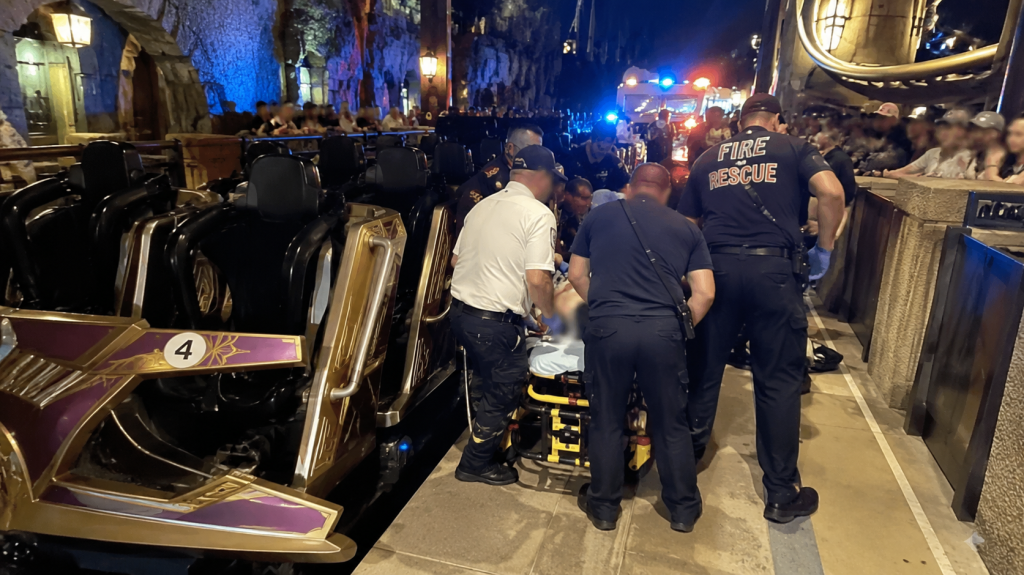
What Happened?
In September 2025, Kevin Rodriguez Zavala visited Universal Orlando’s Epic Universe and boarded Stardust Racers, one of the park’s high-speed roller coasters.
Kevin used a wheelchair because of a neurological condition that affected his muscle control. According to his girlfriend, shortly after the ride began, he appeared to lose consciousness. During the intense twists, turns, and rapid changes in direction, his body was no longer able to stabilize itself, causing repeated impacts inside the restraint system.
When the train returned to the station, employees immediately realized something was wrong. Emergency responders began lifesaving efforts before he was transported to the hospital, where he was later pronounced dead.
The medical examiner determined that he died from multiple blunt-force injuries sustained during the ride, and the death was officially ruled accidental.
Was the Roller Coaster at Fault?
Investigators thoroughly examined the attraction after the incident.
According to the official findings, the roller coaster was operating exactly as designed. Inspectors found no mechanical defects, and the restraint system functioned properly throughout the ride. Authorities also concluded that park employees had followed the established operating procedures.
As a result, no criminal charges were filed, and investigators did not attribute the death to equipment failure.
Why the Case Remains Controversial
Although the official investigation cleared the ride itself, the case continues to raise difficult questions.
Kevin’s family believes the tragedy could have been prevented. Their concerns focus on whether someone with a serious neurological disorder should have been allowed to ride such an intense attraction in the first place.
On the other hand, amusement parks provide extensive health warnings that advise guests with certain medical conditions to avoid high-intensity rides. This raises another question: how much responsibility belongs to the guest, and how much belongs to the park?
There are no easy answers.
Changes After the Incident
Following the accident, Universal updated certain accessibility guidelines and ride eligibility requirements for this attraction.
The company did not admit legal responsibility, but the revisions suggest that operators continue refining safety policies as they learn from rare and unexpected incidents.
The victim’s family and Universal later reached a confidential settlement, and its terms have not been made public.
A Tragedy That Raises Bigger Questions
Modern roller coasters are engineered with multiple layers of safety and undergo extensive inspections. For the overwhelming majority of visitors, they operate exactly as intended.
However, this case illustrates that medical conditions can introduce risks that no restraint system can completely eliminate.
The incident has also encouraged broader discussions about how amusement parks evaluate guests with complex health conditions and whether existing screening procedures are always sufficient.
Sometimes, the most meaningful changes in safety standards come only after heartbreaking events remind us that protecting lives involves far more than simply building reliable machines.