
From a psychological standpoint, the situation described reflects a common phenomenon in parenting: anticipatory anxiety. Parents often experience a conflict between their rational mind, which assures them that the environment is safe, and their protective instincts, which detect potential dangers. Dramatic stories or movies can amplify these fears, triggering obsessive thoughts and heightened emotional responses, even when the actual risk is minimal. This is an adaptive mechanism designed to protect children, though in modern contexts it can lead to stress and overthinking.
A few months ago, I watched The Stolen Girl — that movie about a mother who lets her daughter stay overnight at a classmate’s house, not knowing that the other woman had lost her own child and wanted to replace her.
The ending was devastating. And ever since then, I can’t get it out of my head.
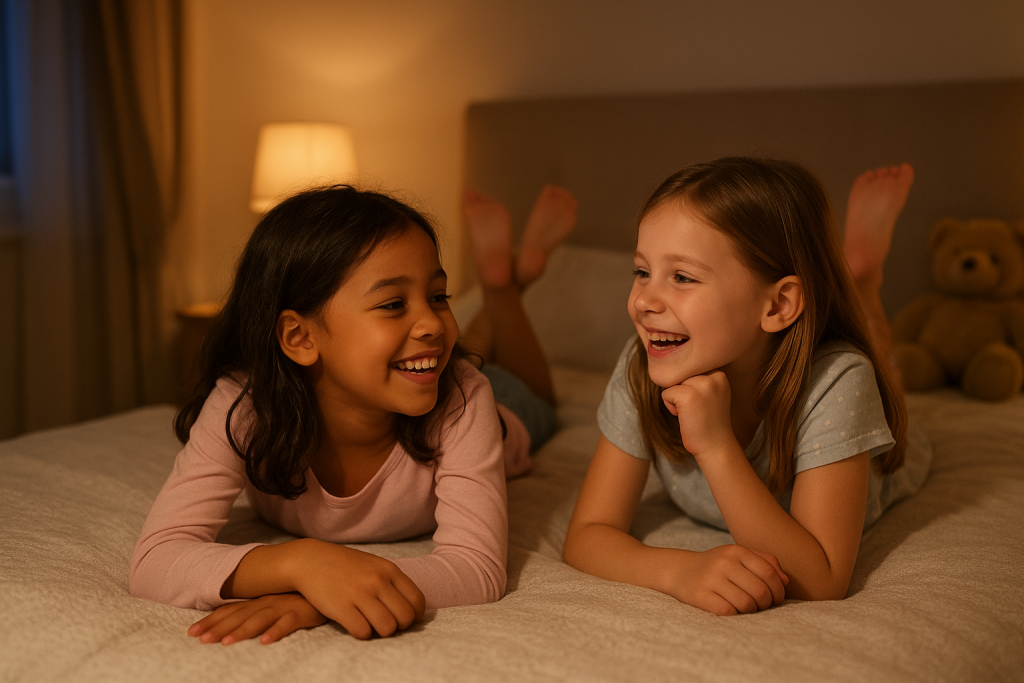
Because, just like in that film, my daughter went to visit a classmate today.
It was supposed to be just a short visit — a few hours of playtime, some snacks, laughter.
But they had so much fun, and she asked me to have a sleepover.
So I accepted the sleepover, had a talk with the other mom, and let her know that we would leave the next morning for a competition with my oldest daughter, but that she could drop my little one off at our building since my mother would be home. Hearing this, she said, “No worries, she can stay with us. I’m home all day.”
Nothing unusual, right? They live only two blocks away from us. Nice family, polite parents, lovely little girl. I had no reason to worry. And yet, after watching that movie, something inside me shifted.
It made me question things I thought I was already sure about. How well do we really know the people around us? The parents we wave to at pick-up, the ones we exchange polite smiles with during school meetings — do we actually know them, or just the version of them we see in public?
The tension between allowing a child freedom and ensuring their safety is a classic parental dilemma. Developmental psychology shows that parents must navigate the ambivalence between control and trust in other adults. This ambivalence can create anxiety and self-doubt, yet it reflects deep emotional engagement and responsibility. Even seemingly safe social situations — like a short visit or sleepover — can activate extreme mental scenarios, especially after exposure to media that dramatizes potential dangers.
My mind says, “Don’t be paranoid, nothing like that could happen.” But my heart whispers, “What if…?” And once you’re a mother, that little voice never really goes away.
Parenting feels like a constant balancing act — between love and fear, freedom and safety.
You don’t want to be the overprotective mom who never lets her child do anything.
But you also don’t want to be the mom who ignored her instincts.
Sometimes I wonder — am I wrong if I don’t let her go? Or am I wrong if I do?
I’m up late, ruminating on these thoughts. I can’t wait for morning to come, so I can bring my daughter home.
Maybe I’m overthinking. Maybe I’m just being a mom.
Because when it comes to our children, trust is never simple — not even when it’s just two blocks away.
Ultimately, psychologists recommend recognizing one’s own limits and accepting uncertainty. The habit of anticipating negative scenarios is adaptive, keeping parents vigilant, but chronic overthinking can lead to fatigue and stress. Balancing caution with trust, and maintaining open dialogue with children about boundaries and safety, are effective strategies for reducing parental anxiety while supporting the child’s healthy autonomy.