
Every parent eagerly waits for the moment they can watch their newborn stretch tiny fingers, kick their legs, and discover the world through movement. These first motions are more than heartwarming milestones—they’re signs that a baby’s muscles and joints are working together as they should.
For some families, however, those first moments raise unexpected questions. Doctors may notice that a baby’s arms or legs are unusually stiff, or that certain joints cannot move through a normal range. One possible explanation is Arthrogryposis Multiplex Congenita (AMC), a rare condition that affects joint mobility from birth.
Although the diagnosis can feel overwhelming, it does not determine what a child’s life will become. Thanks to advances in medicine and rehabilitation, many people with arthrogryposis grow up to pursue careers, build families, participate in sports, and live fulfilling, independent lives.
What Is Arthrogryposis?
Arthrogryposis is not a single disease but an umbrella term for a group of conditions in which a baby is born with stiffness and contractures affecting two or more joints.
A contracture means that a joint cannot move through its full range of motion because the surrounding muscles, tendons, ligaments, or connective tissues have not developed normally. The condition may involve the hands, wrists, elbows, shoulders, hips, knees, ankles, or feet, and its severity varies greatly from one person to another.
Because arthrogryposis can result from many different underlying causes, no two cases are exactly alike.
How Does It Develop?
Long before birth, a baby’s movements play a vital role in healthy development. As the fetus stretches, bends, and changes position inside the womb, muscles grow stronger and joints develop their normal flexibility.
When those movements are significantly reduced, the joints remain in the same position for extended periods. Over time, the surrounding tissues tighten, leading to the contractures seen at birth.
Doctors refer to this reduced fetal movement as fetal akinesia, and it is considered the key event that leads to arthrogryposis.
Why Does It Happen?
There is no single explanation.
In some children, arthrogryposis is linked to genetic changes that affect muscles, nerves, or the developing nervous system. In others, the problem may originate in the muscles themselves or in the nerves responsible for controlling movement.
Less commonly, factors within the uterus—such as limited space or reduced amniotic fluid—can restrict fetal movement enough to interfere with normal joint development.
Even with today’s medical knowledge, many families never receive a definitive answer about why the condition developed.
One important fact deserves emphasis: in the vast majority of cases, nothing the parents did during pregnancy caused arthrogryposis.
How Common Is It?
Arthrogryposis is considered a rare condition, affecting roughly one in every 3,000 to 5,000 live births worldwide.
Researchers have identified more than 400 disorders and syndromes that can include arthrogryposis as one of their features, which explains why symptoms and long-term outcomes differ so widely among patients.
What Are the Signs?
The condition is usually recognized immediately after birth.
A newborn may have joints that appear fixed in unusual positions, hands that remain tightly flexed, elbows that cannot bend normally, or feet affected by clubfoot. The muscles surrounding the involved joints are often thinner than expected because they have not developed fully.
Some children also have hip dislocations, spinal curvature, or other orthopedic differences, depending on the underlying cause.
Does It Affect Intelligence?
One of the biggest concerns for many parents is whether their child’s intellectual development will be affected.
Fortunately, in most forms of arthrogryposis, intelligence develops normally.
Children typically learn, communicate, attend school, and participate in everyday activities just like their peers. Cognitive difficulties are usually present only when arthrogryposis is part of a broader neurological syndrome.
Can It Be Diagnosed Before Birth?
Sometimes.
Modern prenatal ultrasound can occasionally detect unusually limited fetal movement or limbs that remain in fixed positions during repeated examinations.
These findings do not automatically confirm arthrogryposis, but they alert doctors that further monitoring or additional testing may be necessary.
In most cases, the diagnosis is confirmed after birth through a physical examination, imaging studies, and, when appropriate, genetic testing.
Is There a Cure?
There is currently no cure that can reverse arthrogryposis, but early treatment can make an extraordinary difference.
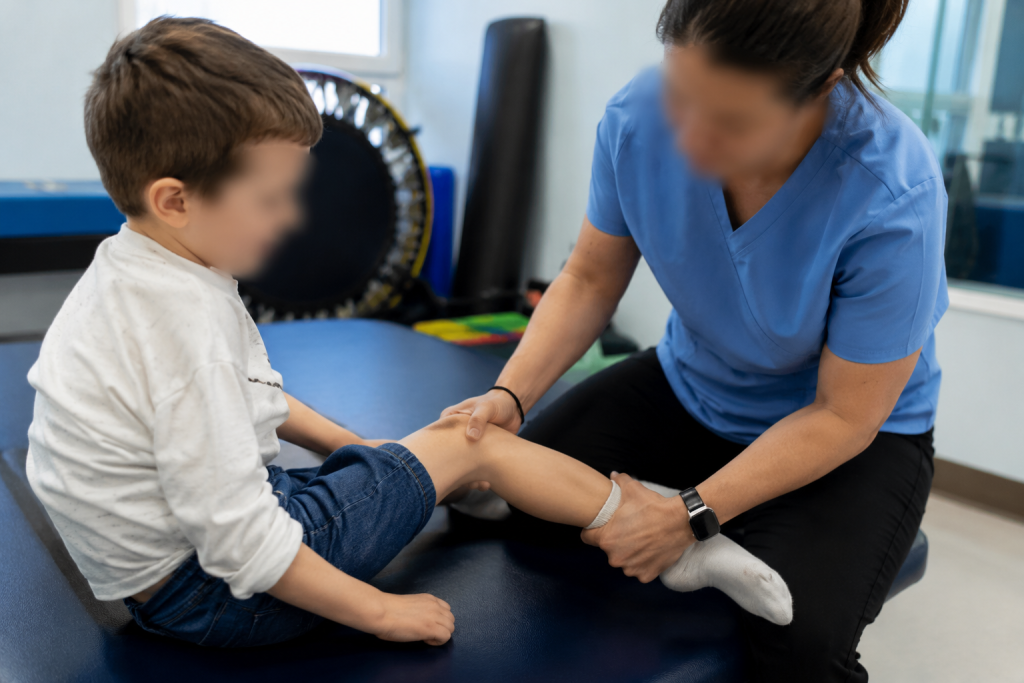
Physical therapy often begins within the first weeks of life to gently improve joint mobility and strengthen muscles. Occupational therapy helps children develop everyday skills, while braces and splints can support better positioning as they grow.
Some children benefit from orthopedic surgery to correct severe deformities or improve joint function.
Treatment is rarely short-term. Instead, it is a long-term process that evolves alongside the child’s growth and changing needs.
Will Children Be Able to Walk?
The answer depends on which joints are affected and how severe the condition is.
Many children with arthrogryposis eventually walk independently. Others use braces, walkers, crutches, or wheelchairs for certain activities.
The important point is that mobility often improves significantly with early rehabilitation, determination, and individualized care.
Looking Beyond the Diagnosis
Medical advances have transformed expectations for people living with arthrogryposis.
Today, adults with the condition work in countless professions, drive cars, travel, raise families, and pursue careers in fields ranging from technology and education to the arts and business. Adaptive equipment and modern rehabilitation have opened opportunities that were difficult to imagine only a few decades ago.
Every person’s journey is unique, but the diagnosis itself does not determine future potential.
Research Continues to Bring Hope
Scientists continue to discover new genetic causes of arthrogryposis and gain a better understanding of how fetal movement influences joint development.
These discoveries are improving diagnosis, expanding genetic counseling for families, and helping doctors develop more personalized treatment strategies.
While a complete cure remains out of reach, medical progress continues to improve quality of life for children and adults living with this rare condition.
More Than a Medical Diagnosis
Hearing the word “arthrogryposis” for the first time can be frightening for any family. It often comes with uncertainty and countless questions about the future.
Yet over time, many parents discover something remarkable: their child is far more than a diagnosis.
Children with arthrogryposis laugh, learn, dream, make friends, overcome obstacles, and celebrate achievements just like every other child. Their path may involve additional therapy sessions, surgeries, or adaptations, but it is still a path filled with possibilities.
Arthrogryposis may limit the movement of certain joints, but it cannot measure determination, intelligence, resilience, or the ability to build a meaningful life. Those qualities are never defined by a medical condition.