
The Shaolin Temple has fascinated travelers, martial artists, and history enthusiasts for centuries. Famous for its connection to kung fu and Buddhist philosophy, it is often portrayed as a mysterious place where only male monks live and train. Because of this image, many people wonder whether women are even allowed to visit or experience life connected to Shaolin.
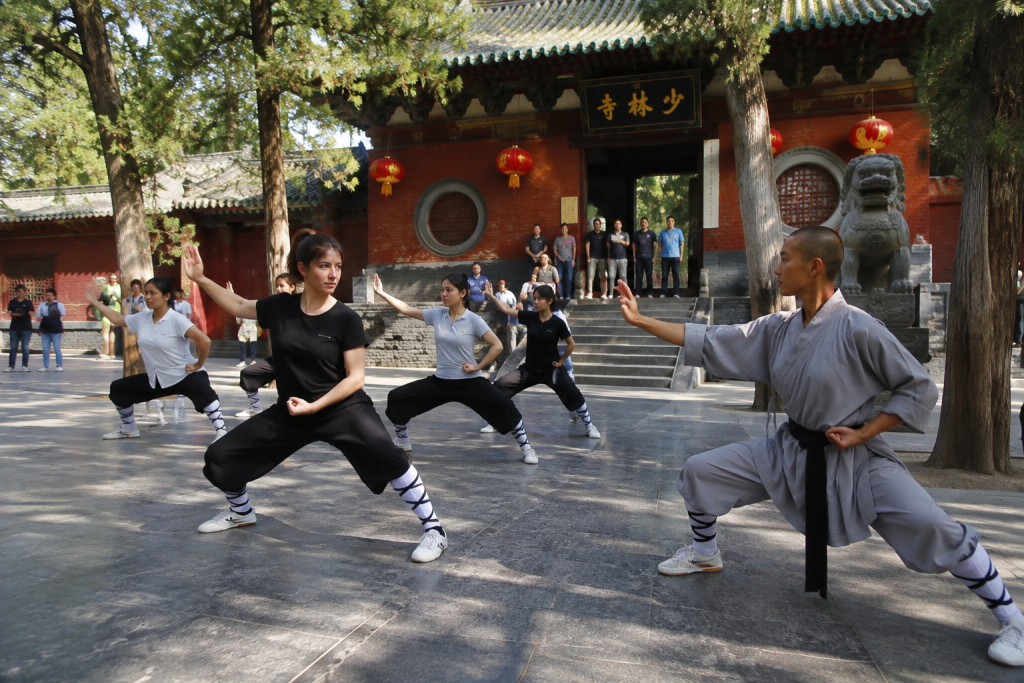
The short answer is yes. Women are welcome to visit the Shaolin Temple and can also take part in martial arts programs inspired by its traditions. However, the reality is more nuanced than many social media posts and action movies suggest.
More Than a Martial Arts Destination
Located on Mount Song in China’s Henan Province, the Shaolin Temple was founded in 495 AD during the Northern Wei Dynasty. Although it is now internationally recognized as the birthplace of Shaolin kung fu, its original purpose was religious rather than martial.
The temple has long been a center of Chan Buddhism, the Chinese tradition that later evolved into Zen Buddhism in Japan. Meditation, discipline, and spiritual practice remain at the heart of Shaolin life, while martial arts developed over time as a way to strengthen the body, improve focus, and, when necessary, provide self-defense.
Can Women Visit the Shaolin Temple?
Absolutely.
The temple welcomes visitors from around the world regardless of gender, nationality, or religious background. Every year, thousands of women explore the historic complex, watch martial arts demonstrations, and learn about the centuries-old traditions that made Shaolin famous.
Tourists are free to walk through much of the temple grounds, admire its architecture, and visit nearby attractions such as the renowned Pagoda Forest.
Why Do So Many People Think Women Are Not Allowed?
This misunderstanding usually comes from confusing the temple itself with the monks’ private living quarters.
Like many religious communities around the world, Shaolin maintains areas reserved exclusively for its monastic residents. These sections are not open to tourists, whether they are men or women.
In other words, ordinary male visitors are not allowed to live alongside the monks either. Access to the monastic community is governed by religious rules rather than by tourism.
What About the Training Programs?
Many videos online show foreigners spending weeks or months “living at Shaolin.” While these experiences are real, they rarely take place inside the monastery itself.
Instead, participants usually stay at martial arts academies located near the temple. These schools offer structured training based on Shaolin techniques and philosophy, often under instructors with strong connections to the Shaolin tradition.
These programs are generally open to both men and women.
Depending on the school, students may spend several hours each day practicing kung fu, stretching, balance exercises, conditioning, meditation, and breathing techniques. The routines are physically demanding but are typically adjusted to match each participant’s fitness level and experience.
Are Women Treated Differently?
In most international Shaolin training schools, women train alongside men during classes while staying in separate accommodations.
People of different ages and backgrounds attend these programs, including complete beginners, experienced martial artists, fitness enthusiasts, and travelers simply looking for a unique cultural experience.
The emphasis is usually placed on discipline, perseverance, respect, and self-improvement rather than competition.
Are There Female Buddhist Monastics?
Yes.
Chinese Buddhism has a long tradition of Buddhist nuns who dedicate their lives to religious practice. They typically live in monasteries established specifically for women rather than in communities with male monks.
This separation follows longstanding monastic traditions and is intended to preserve the structure and discipline of religious life rather than to exclude women.
Popular Misconceptions About Shaolin
Movies and viral videos have helped create an almost mythical image of Shaolin, but they often blur the line between reality and entertainment.
One common misconception is that every Shaolin monk is a martial arts master capable of extraordinary physical feats. In reality, spiritual practice remains the primary focus of monastic life, and not every monk performs the dramatic demonstrations seen in public shows.
Another misunderstanding is that attending a short training course allows someone to become a Shaolin monk. While visitors can experience aspects of Shaolin culture, becoming a monk involves years of religious commitment, study, and adherence to Buddhist monastic rules.
It is also worth remembering that many impressive performances seen around the world are presented by highly trained martial artists rather than ordained monks.
Is a Visit Worth It?
For anyone interested in history, Buddhism, Chinese culture, or martial arts, the Shaolin Temple offers a unique perspective on a tradition that has endured for more than fifteen centuries.
Whether you join a week-long training camp or simply spend a day exploring the historic grounds, the experience goes beyond kung fu. It offers insight into a philosophy centered on discipline, mindfulness, and personal growth.
Final Thoughts
The belief that only men can visit or experience Shaolin is a widespread myth.
Women are welcome to tour the Shaolin Temple and to enroll in many of the martial arts programs inspired by its teachings. The only important distinction is that the monks’ private residential areas remain part of a functioning religious community and are not intended for tourists.
Understanding this difference helps separate legend from reality. Rather than being an exclusive destination reserved for a select few, Shaolin continues to welcome visitors from across the globe who wish to learn about one of China’s most influential cultural and spiritual traditions.