
Few people go through life without noticing tiny white flakes on dark clothes at least once or dealing with that persistent itchy feeling that makes them constantly touch their scalp. Dandruff is one of the most common scalp conditions in the world, and while it is usually harmless, it can become frustrating, embarrassing, and surprisingly difficult to control.
Dermatologists estimate that a large percentage of adults experience dandruff at some point in their lives. It can affect teenagers, adults, older people, and even children, although the causes and symptoms often vary depending on age, hormones, skin type, lifestyle, and overall health.
Many people still assume dandruff simply means poor hygiene. Modern dermatology tells a very different story. In most cases, dandruff develops because of a combination of excess oil production, scalp sensitivity, and the overgrowth of a microscopic yeast called Malassezia. This microorganism naturally lives on human skin and usually causes no issues. However, in some individuals, the scalp reacts with irritation, inflammation, and accelerated shedding of skin cells.
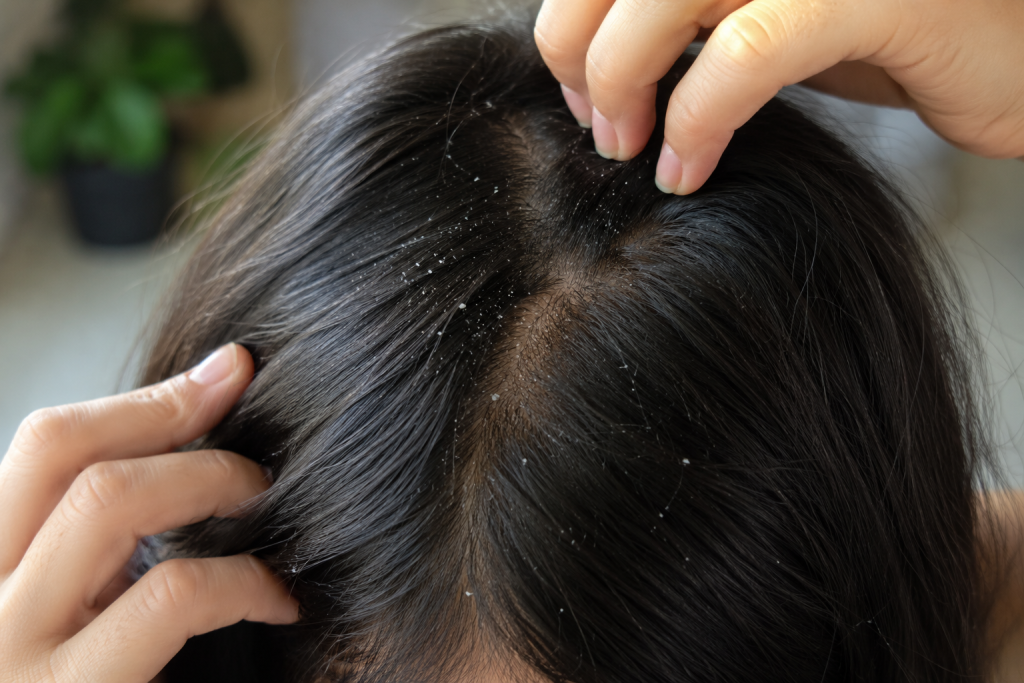
What Actually Happens When Dandruff Appears
The skin on the scalp constantly renews itself. Old cells die and are replaced by new ones in a slow, invisible cycle. With dandruff, this renewal process speeds up dramatically. Skin cells accumulate and shed in visible clusters, creating the flakes most people recognize immediately.
Researchers believe that scalp oil plays a major role in this process. Oily environments allow Malassezia to thrive more easily, which may trigger irritation in sensitive individuals. Once inflammation develops, the scalp begins shedding cells faster than normal.
Several other factors may worsen the condition. Chronic stress, hormonal fluctuations, lack of sleep, harsh hair products, cold weather, and even certain neurological or immune-related conditions have all been linked to worsening dandruff symptoms. Many people notice flare-ups during winter, when dry air outdoors combines with heated indoor environments.
Dandruff or Dry Scalp? The Difference Many People Miss
One of the biggest misconceptions is assuming every flake comes from dandruff. In reality, dry scalp and dandruff are not always the same thing.
Dry scalp usually produces very small, lightweight flakes. The skin often feels tight or irritated after washing, and symptoms commonly worsen during colder months or after using aggressive shampoos. People with dry skin on the rest of their body may experience similar scalp dryness as well.
True dandruff is often linked to excess oil production. The flakes may appear larger, thicker, or slightly yellowish, and the scalp may feel greasy alongside the itching. Ironically, oily scalps often produce more visible dandruff than dry ones.
This confusion leads many people to overload their scalp with heavy oils or moisturizing treatments, which can actually worsen the problem in cases related to seborrheic dermatitis.
How to Recognize Typical Dandruff
Classic dandruff usually has a recognizable pattern. Small white or yellowish flakes appear around the scalp and become visible on clothing or hairbrushes. Mild itching is common, but severe pain, open wounds, or heavy inflammation are usually absent.
Symptoms often come and go. Some weeks the scalp seems almost normal, while stressful periods, hormonal changes, or certain hair products may suddenly trigger another flare-up.
Ordinary dandruff generally does not cause major hair loss, bleeding, or thick inflamed plaques.
When You Should Take It More Seriously
Sometimes what appears to be simple dandruff may actually be another skin condition entirely. Dermatologists recommend paying closer attention if symptoms become persistent, painful, or unusually severe.
Thick red patches extending beyond the scalp toward the forehead, ears, or neck may suggest seborrheic dermatitis or psoriasis rather than ordinary dandruff.
Scalp psoriasis often creates sharply defined plaques covered with thick silvery scales. Some individuals also develop lesions on their elbows, knees, or other areas of the body. Unlike mild dandruff, inflammation tends to be stronger and more persistent.
Severe itching, burning sensations, yellow crusts, unpleasant odor, or tenderness are also warning signs that the issue may require medical evaluation.
Hair thinning or circular bald patches should never be ignored either, since fungal infections, autoimmune disorders, or inflammatory scalp diseases can sometimes mimic dandruff during early stages.
Dandruff in Children and Teenagers
Young children are less likely to experience severe dandruff compared to adults, but things often change during puberty. Hormonal shifts stimulate oil glands, making the scalp more active and sometimes much oilier than before.
Teenagers frequently notice flakes, itchiness, and greasy hair appearing together. For some, the condition improves naturally over time. For others, it continues well into adulthood.
Dermatologists also point out that teenagers sometimes worsen the situation unintentionally through excessive styling products, frequent bleaching, harsh shampoos, or aggressive scratching.
In babies, parents often encounter the yellowish crusts commonly known as cradle cap. Although alarming in appearance, this condition is usually harmless and tends to improve gradually as the skin matures.
Why Men and Women Experience Dandruff Differently
Studies suggest men are affected slightly more often than women, largely because male hormones stimulate higher sebum production.
Men commonly experience oilier scalps and stronger seborrheic dermatitis symptoms beginning in adolescence and continuing for years.
Women, on the other hand, may notice symptoms fluctuating with hormonal changes, pregnancy, stress, or menstrual cycles. Hair dye, heat styling, and chemical treatments may also irritate the scalp barrier and worsen flaking.
Many women also mistake scalp dryness for dandruff, especially after repeated cosmetic procedures that weaken the skin barrier.
Dandruff in Older Adults
As people age, the scalp becomes thinner and more sensitive. Medications, chronic illnesses, and age-related skin changes may all influence scalp health.
In older adults, persistent flaking may sometimes be linked to eczema, psoriasis, medication reactions, or inflammatory conditions rather than ordinary dandruff alone. Sudden severe symptoms appearing later in life deserve medical attention rather than self-treatment for months.
Common Dandruff Myths That Still Refuse to Disappear
Despite how common dandruff is, misinformation remains everywhere.
One of the oldest myths claims dandruff only happens because someone does not wash their hair properly. In reality, many people with excellent hygiene still struggle with chronic dandruff.
Another misconception is that dandruff is contagious. The yeast associated with dandruff naturally exists on most human skin. The issue is not “catching” something from another person, but rather how an individual scalp reacts to that environment.
Some people also assume natural oils automatically cure dandruff. While certain oils may temporarily soothe dry skin, overly oily treatments can sometimes worsen seborrheic dermatitis by feeding the conditions that allow yeast overgrowth.
Which Ingredients Dermatologists Commonly Recommend
Not all anti-dandruff shampoos work the same way because their active ingredients target different mechanisms.
Ketoconazole is often used to control fungal overgrowth and is commonly recommended for seborrheic dermatitis. Zinc pyrithione helps reduce microbial activity and inflammation. Selenium sulfide slows excessive skin cell turnover, while salicylic acid helps loosen thick flakes from the scalp surface.
Coal tar products have also been used for decades to reduce inflammation and slow skin cell production, especially in more stubborn scalp conditions.
Dermatologists frequently point out that people use these shampoos incorrectly. Quickly rinsing them out often reduces effectiveness. Most active ingredients need several minutes of contact with the scalp before washing.
Can Diet and Lifestyle Affect Dandruff?
Researchers continue studying the relationship between nutrition and scalp health. Although no specific diet can instantly eliminate dandruff, poor sleep, chronic stress, and heavily processed diets may contribute to inflammation in some individuals.
Many people notice flare-ups during emotionally stressful periods, illness, exhaustion, or hormonal imbalance. The scalp, like the rest of the skin, often reflects what is happening internally in the body.
Still, experts caution against miracle cures or extreme online advice claiming that one specific food completely “causes” or “cures” dandruff.
How Often Should You Wash Your Hair?
This question appears constantly in dermatology clinics, and the answer depends heavily on scalp type.
People with oily scalps may benefit from more frequent washing, while overly aggressive washing with hot water or harsh products can irritate sensitive skin and worsen flaking.
Modern dermatology no longer fully supports the old belief that frequent washing automatically “creates” more oil. Instead, specialists usually recommend balanced routines adapted to individual scalp needs.
Why Dandruff Shouldn’t Be Dismissed Completely
Although dandruff is medically considered a relatively minor condition, its emotional impact can be surprisingly significant. Many people avoid dark clothing, feel uncomfortable in social situations, or become self-conscious about constantly brushing flakes off their shoulders.
Repeated scratching may also damage the scalp barrier and increase irritation over time.
For this reason, dermatologists encourage people not to ignore persistent symptoms that continue returning despite treatment.
The Important Thing Many People Learn Too Late
Dandruff does not automatically mean poor hygiene, and it is not always “just dry skin.” It is a complex scalp condition influenced by hormones, skin microbiology, genetics, stress, oil production, and environmental factors.
Most cases can be managed successfully with proper care and appropriate treatment. However, severe inflammation, painful lesions, strong hair loss, or symptoms that refuse to improve deserve professional medical evaluation.
Sometimes, what looks like a simple cosmetic inconvenience may actually be the scalp’s way of signaling that something deeper needs attention.