
On a quiet November afternoon in 2003, a tragedy unfolded inside a family home in rural Ohio. A father was dead from a gunshot wound, and the only person who had witnessed what happened was his 10-year-old son.
When investigators arrived, the boy explained that it had been an accident. Authorities examined the circumstances, accepted the explanation, and closed the case. The death of Robert Breininger was officially ruled accidental.
For years, that conclusion remained unchanged.
No arrests were made. No criminal charges were filed. Life moved on.
Then, nearly nine years later, the child at the center of the tragedy became an adult and revealed a version of events that would completely reshape the case. His statements led to a reopened investigation, a murder conviction, a life sentence, a successful appeal, and one of the most debated criminal cases in Ohio’s recent history.
A Family Living Behind Closed Doors
In the early 2000s, Robert Breininger lived with his wife, Judith Hawkey, and their children in Defiance County, Ohio. To people on the outside, the family appeared relatively ordinary.
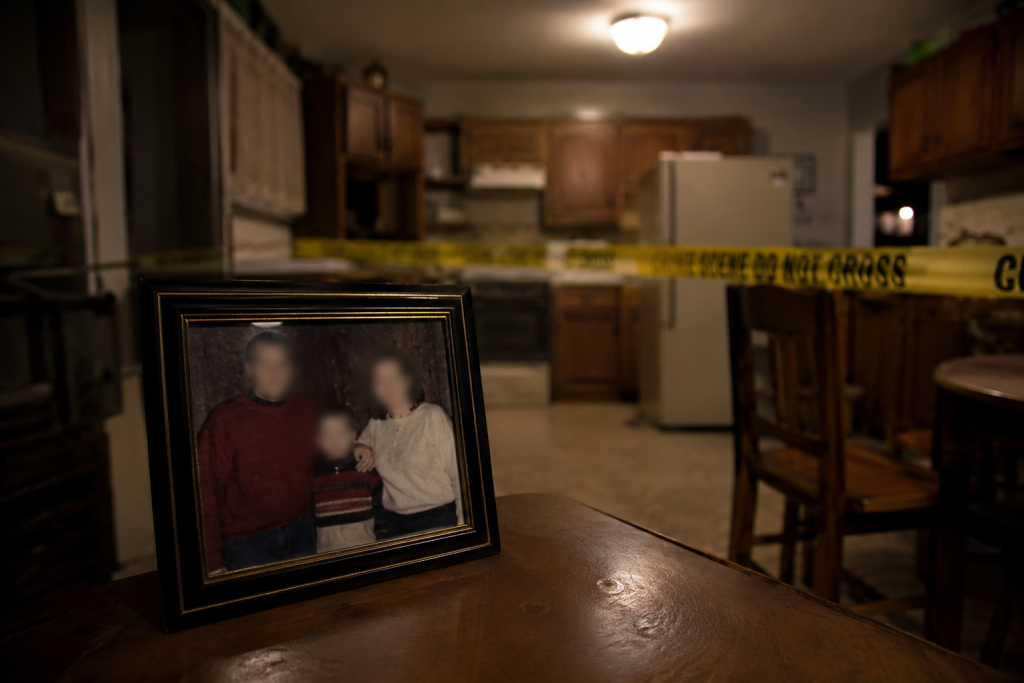
Public records reveal little about daily life inside the household before the shooting. There were no highly publicized warning signs that suggested the family would one day become the focus of a major criminal investigation.
Years later, however, Corey Breininger would describe a very different reality.
According to his testimony, he experienced years of physical and emotional mistreatment while growing up. Prosecutors would later argue that these experiences created an environment of fear and control that played a critical role in the events that followed.
Those allegations became one of the central pillars of the state’s case.
The Afternoon That Changed Everything
On November 3, 2003, Robert Breininger was at home resting before work. Judith Hawkey had left with the other children, while Corey remained in the house with his father.
At some point during the afternoon, a firearm was discharged.
The shot struck Robert in the head, killing him.
Emergency responders arrived, but there was nothing they could do.
When questioned, Corey told investigators that the shooting had been accidental. Based on the evidence available at the time, authorities accepted his account. The death was classified as an accident, and the investigation was closed.
For nearly a decade, that decision stood unquestioned.
The Secret That Surfaced Years Later
Between 2011 and 2012, Corey began sharing a different version of what had happened.
He told people close to him that the shooting had not been an accident. According to his later statements, he had been manipulated into pulling the trigger by his stepmother, Judith Hawkey.
Corey claimed he had been told that his father was seriously ill and would die anyway. He also alleged that he had been led to believe the family needed life insurance money and that Robert’s death had been presented as a solution.
Those revelations eventually reached law enforcement.
The case, long considered closed, was reopened.
Investigators revisited old evidence, conducted new interviews, consulted experts, and reexamined events that had occurred nearly a decade earlier. What had once been treated as a tragic accident was now being viewed through an entirely different lens.
From Closed Case to Homicide Investigation
As the new investigation progressed, authorities reached a dramatic conclusion.
Robert Breininger’s death was reclassified as a homicide.
In 2013, Judith Hawkey was indicted on charges that included aggravated murder, child endangerment, and insurance fraud.
Prosecutors argued that she had orchestrated the killing without physically carrying it out herself. Their theory was that a vulnerable child had been manipulated into committing the act while believing he was doing what he had been told was necessary.
The state also alleged that financial motives played a role, pointing to life insurance benefits connected to Robert’s death.
The case immediately attracted attention because of its unusual circumstances. It was not a typical murder prosecution. At its center stood a child who had spent years describing the incident as an accident before later insisting it was something entirely different.
A Trial Built Around Testimony
When the case went to trial, Corey became the prosecution’s most important witness.
He described years of alleged abuse and explained why he believed he had remained silent for so long. Prosecutors argued that delayed disclosure is not uncommon among individuals who experience trauma during childhood.
Experts were called to discuss the psychological effects of coercion, fear, and long-term abuse. The prosecution maintained that Corey’s actions and later disclosures were consistent with patterns seen in some abuse victims.
The defense strongly disagreed.
Attorneys for Judith Hawkey argued that much of the case depended on statements made many years after the fact. They challenged the reliability of certain expert testimony and questioned whether the evidence was sufficient to support the prosecution’s theory.
Despite those arguments, the jury found Hawkey guilty.
She was sentenced to life in prison without the possibility of parole.
At the time, it appeared the case had finally reached its conclusion.
Why the Conviction Did Not Stand
The story did not end with the verdict.
In 2016, an Ohio appellate court reviewed the case and determined that significant legal errors had occurred during the original trial.
Judges concluded that certain testimony and evidence should not have been presented to the jury in the way they were. As a result, the conviction was overturned and a new trial was ordered.
Importantly, the appellate court did not declare Judith Hawkey innocent.
Instead, it ruled that the original proceedings contained enough procedural problems to require a new trial.
The decision reignited debate surrounding the case and highlighted the challenges of prosecuting events that had occurred many years earlier.
What Research Says About Delayed Disclosure
One reason this case continues to attract attention is its connection to a well-documented psychological phenomenon: delayed disclosure.
Research in trauma psychology has shown that some victims of childhood abuse do not immediately report what happened to them. Fear, shame, dependency, confusion, loyalty to family members, and concerns about not being believed can all contribute to long periods of silence.
At the same time, researchers who study memory emphasize that recollections emerging years later must be examined carefully. Human memory is complex and can be influenced by many factors over time.
Because of this, courts often seek independent evidence that can either support or challenge delayed accounts of past events.
The Hawkey case became a striking example of how legal systems must navigate the difficult space between psychological realities and evidentiary standards.
The Agreement That Brought the Case to a Close
Rather than proceed through another lengthy trial, Judith Hawkey eventually entered what is known as an Alford plea to reduced charges.
An Alford plea allows a defendant to accept that prosecutors possess enough evidence to potentially secure a conviction while not explicitly admitting guilt in the traditional sense.
The agreement resulted in a significantly reduced sentence compared with the original life term.
Legally, the case was resolved.
Publicly, however, many questions remained.
A Case That Still Sparks Debate
More than twenty years after Robert Breininger’s death, the case continues to generate discussion among legal observers, psychologists, and true-crime researchers.
Certain facts are not disputed. Robert Breininger died from a gunshot wound in 2003. His son Corey was the person who fired the weapon. The death was initially ruled accidental before later being reclassified as a homicide. Judith Hawkey was convicted, saw that conviction overturned on appeal, and eventually reached a plea agreement that ended the criminal proceedings.
What remains debated is the precise chain of events that unfolded inside that family and whether every question raised by the case can ever be answered with complete certainty.
Perhaps that uncertainty explains why the story continues to resonate. Beyond the courtroom arguments and legal rulings, it is ultimately a story about memory, influence, family dynamics, trauma, and the extraordinary difficulty of uncovering the full truth long after the moment itself has passed.