
Some survival stories become famous because of dramatic rescues. Others are remembered because the outcome seems almost impossible. The accident involving American caver Glenn Anders belongs in the second category.
In November 1981, what began as a routine recreational trip through Trap Door Cave in southern Indiana turned into a life-threatening emergency when part of the cave entrance suddenly collapsed. Anders was pinned beneath enormous rocks weighing hundreds of kilograms, yet against all expectations, he survived with no life-threatening injuries. More than four decades later, the incident is still referenced within the American caving community as a powerful reminder that underground environments can change without warning.
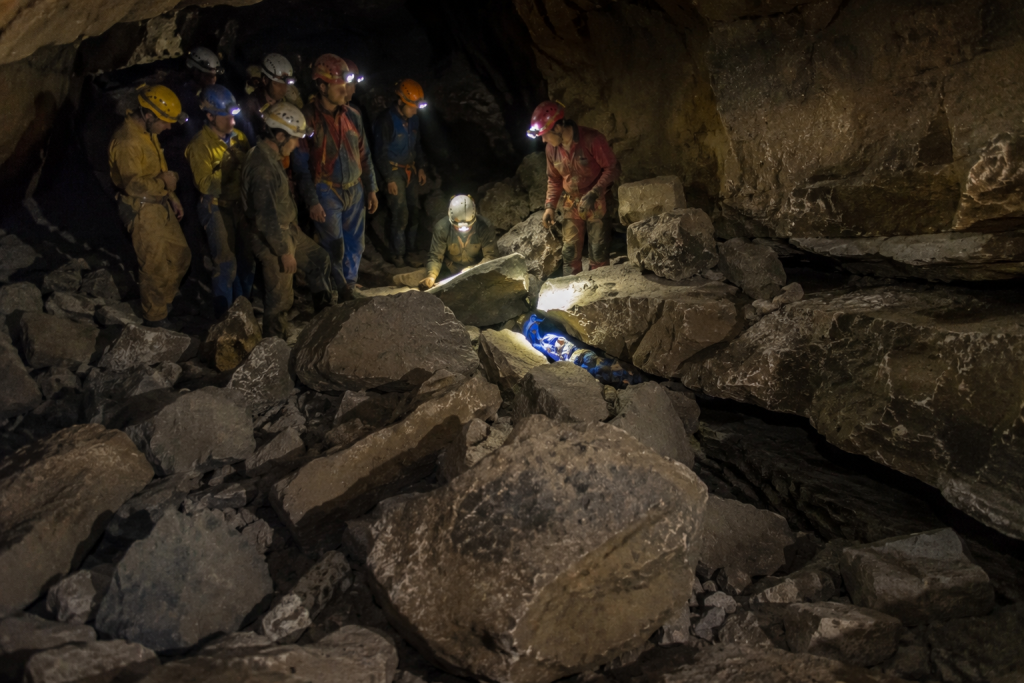
An Adventure That Seemed Routine
Cave exploration is often associated with adventure, but experienced cavers know that every expedition carries inherent risks. Even well-documented caves can contain unstable rock formations created by thousands of years of erosion, water infiltration and natural geological movement.
During the Thanksgiving weekend of 1981, a group of sixteen experienced cavers entered Trap Door Cave for what was expected to be a normal exploration. The trip lasted about two hours, and nothing unusual occurred as the group made its way through the cave.
When it was time to leave, several members had already reached or passed the entrance. Glenn Anders was only moments away from exiting when everything changed.
A Sudden Rockfall
Without any significant warning, part of the wall near the cave entrance collapsed.
Three massive boulders crashed down directly onto Anders. Reports later estimated their combined weight to be well over a metric ton. One rock struck his left shoulder, while others pinned his head and upper body inside the narrow passage.
The collapse happened so quickly that there was almost no time to react. Instinctively, Anders pulled his legs beneath him just before the rocks came down. That split-second movement likely prevented far more serious injuries and may have saved his life.
Although he remained conscious, breathing became increasingly difficult as his body was compressed between the rocks.
Quick Thinking Underground
The people around him understood that every decision had to be made carefully. Attempting to move the boulders without assessing the situation could easily have triggered another collapse.
A fellow caver positioned immediately behind Anders managed to extend his legs, helping relieve pressure on his chest and allowing him to breathe more comfortably while others evaluated the scene.
By coincidence, another caving group was preparing to enter the cave at roughly the same time. Among them was a fourth-year medical student, who quickly reached the accident site and performed an initial medical assessment underground.
To everyone’s surprise, Anders was alert, responsive and showed no obvious signs of catastrophic injuries despite being trapped beneath enormous rocks.
Once rescuers determined that the remaining boulders appeared stable enough, they carefully freed him and transported him to the surface for further medical evaluation.
Others Were Still Trapped
The accident did not end with Glenn Anders’ rescue.
Three cavers positioned deeper inside the cave found themselves completely cut off by the collapse. With the passage blocked, leaving the cave was impossible.
Rather than panic, they followed the safety principles familiar to experienced cavers. They moved to a safer chamber, conserved their food supplies and carefully rationed the batteries powering their lights, knowing that rescue operations inside caves can take many hours.
Meanwhile, additional experienced cavers organized efforts at the surface. Every rock had to be evaluated before being moved because disturbing an unstable section could have endangered both the trapped explorers and the rescue team.
After a carefully coordinated operation, the blocked passage was reopened and all three stranded cavers were brought safely back to the surface.
An Unexpected Medical Outcome
Considering the size of the rocks involved, doctors expected Glenn Anders to have suffered multiple fractures or severe internal injuries.
Instead, medical examinations revealed an outcome that surprised nearly everyone involved. Despite the extraordinary force of the collapse, Anders escaped without serious permanent injuries.
His survival became one of the most remarkable examples of how chance, quick thinking and calm decision-making can combine to produce an outcome that initially seemed impossible.
Why the Incident Still Matters
The Trap Door Cave accident was later documented in American Caving Accidents, an annual publication that examines significant cave incidents across the United States. Rather than focusing on sensational stories, these reports aim to improve safety by helping cavers understand how accidents occur and how similar situations might be prevented.
The case highlights several lessons that remain relevant today. Underground emergencies demand teamwork, careful risk assessment and patience. Moving unstable rock without proper evaluation can easily worsen an already dangerous situation, while carrying backup lighting and emergency supplies can become critical if an exit is unexpectedly blocked.
It also demonstrates that familiarity with a cave does not eliminate risk. Geological formations continue to change over time, and even frequently visited passages may become unstable without visible warning.
A Story That Continues to Fascinate
Today, short videos and social media posts have introduced Glenn Anders’ story to a new generation. Many focus only on the dramatic image of a man trapped beneath enormous boulders, but the real story is far more compelling than a few seconds of footage.
It is a story of experienced explorers responding calmly under extreme pressure, of rescuers making careful decisions in one of the most unforgiving environments imaginable, and of a man whose survival defied expectations.
More than forty years later, the Trap Door Cave collapse remains an extraordinary reminder that nature does not always provide second chances—and that sometimes, a single instinctive movement can make the difference between tragedy and survival.