
Every experienced real estate investor knows that foreclosure properties come with surprises. Hidden water damage, stripped wiring, broken plumbing, or years of neglect are all considered part of the risk when buying a home below market value.
But sometimes, the unknown goes far beyond expensive repairs.
That was the reality for a Connecticut investor whose first visit to a newly purchased house ended not with renovation plans, but with an emergency call that launched a major police investigation. What appeared to be an excellent investment quickly became one of the most unusual real estate stories reported in the United States this year.
A Bargain That Seemed Worth the Risk
In June 2026, Edward Marchion successfully bid on a foreclosed property in Burlington, Connecticut. He paid approximately $525,000 for a home estimated to be worth around $650,000, making it appear to be a promising investment.
Like many foreclosed homes sold in the U.S., the property was offered “as is.” That meant the buyer accepted the home in its existing condition, without guarantees regarding repairs or hidden problems. In many foreclosure sales, buyers also have little or no opportunity to inspect the interior before the purchase is finalized.
For seasoned investors, this is part of the business. Unexpected repairs are expected. Major structural issues are possible. Still, few imagine that opening the front door could reveal something far more disturbing than damaged walls or outdated plumbing.
A Routine Visit Turned Into a Crime Scene Investigation
Once the legal paperwork was completed, Marchion entered the property for the first time.
Instead of planning renovations, he made a discovery that immediately changed the course of the day.
Inside the home were the remains of three individuals in an advanced state of decomposition.
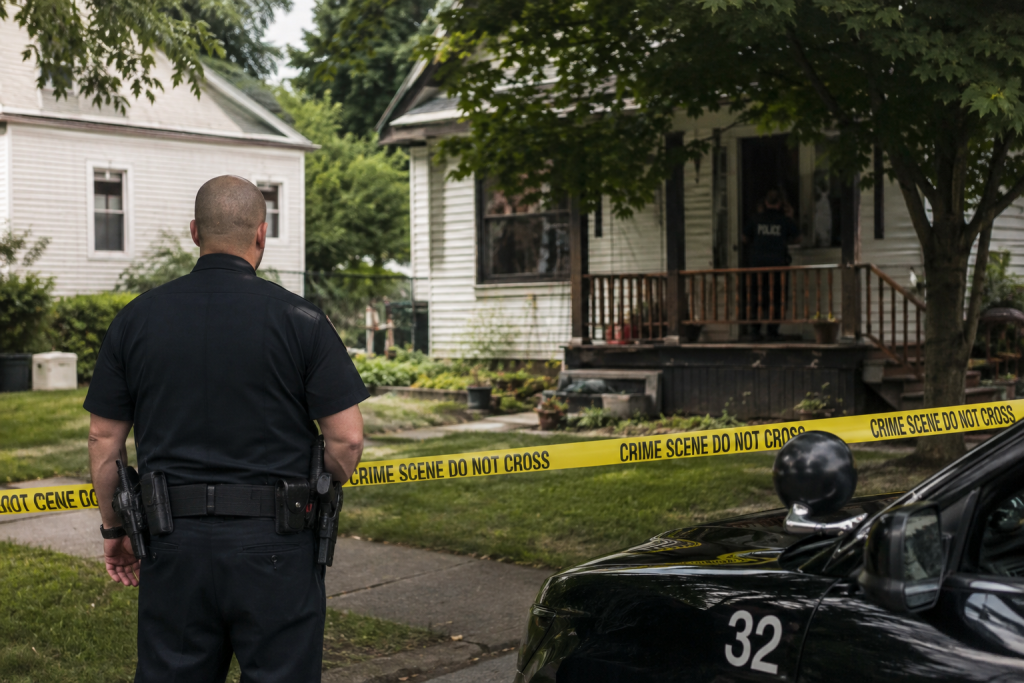
Authorities were called to the scene, and investigators secured the property while forensic teams began examining the house. Because of the condition of the remains, identifying the victims required extensive forensic analysis.
The Investigation Continues
Officials later identified two of the deceased as 54-year-old Sally Ann Cash and her 22-year-old son, Brian Cash.
The third individual had not yet been officially identified when the case became public, with DNA testing still underway.
Investigators are also working to determine how long the bodies remained inside the home and reconstruct the events leading up to the deaths.
Although the discovery immediately fueled speculation, authorities have stated that there is currently no evidence pointing to homicide. Investigators also ruled out carbon monoxide poisoning as an obvious explanation.
The official cause of death has not yet been released.
How Can a House Be Sold Without Anyone Discovering This?
For many people outside the United States, the case raises an obvious question: how could a property containing three deceased individuals reach a public auction?
The answer lies in how foreclosure sales often work.
When lenders repossess a property after mortgage payments stop, their primary focus is recovering the financial asset—not conducting a detailed inspection of everything inside the house. Depending on the circumstances, the home may remain locked for months, and access can be limited until ownership officially changes hands.
As a result, the successful bidder may become the first person to enter the property after a long period of vacancy.
Most of the time, buyers discover issues such as vandalism, mold, water damage, or abandoned belongings. Finding human remains is extraordinarily rare.
An Unexpected Legal Complication
The discovery affected more than just the criminal investigation.
Marchion’s attorney requested that the court pause completion of the property transfer, arguing that if the previous occupants had died before the foreclosure process was legally finalized, questions could arise regarding ownership rights and the validity of the sale itself.
A judge temporarily suspended the transfer while investigators continue gathering evidence and clarifying the timeline of events.
Instead of beginning renovations, the new owner suddenly found himself waiting for legal and forensic authorities to determine what would happen next.
The Hidden Risks Behind Foreclosure Investments
Foreclosed homes continue to attract investors because they often sell below market value, creating opportunities for significant returns after renovation.
However, these properties also carry uncertainties that cannot always be discovered beforehand.
Some buyers encounter costly structural damage. Others inherit lengthy legal disputes or unexpected repair bills. The Connecticut case demonstrates that, on extremely rare occasions, the greatest unknown has nothing to do with the building itself.
It is a reminder that discounted properties sometimes conceal stories no inspection report could ever reveal.
More Questions Than Answers
The investigation remains ongoing, and many important questions have yet to be answered.
How did the three people die? How long had they been inside the house? And perhaps most puzzling of all, how could an entire property move through the foreclosure process without anyone realizing what was waiting behind the front door?
Until investigators provide those answers, the Burlington case stands as one of the most extraordinary examples of how a seemingly routine real estate investment can turn into something no buyer—or seller—could have anticipated.