
For many people, tipping at a restaurant feels so normal that it almost seems like an unwritten rule. Yet despite how common it has become in many countries, a tip is usually not legally required. In most places around the world, it remains a voluntary payment offered by the customer as a way to reward good service rather than a mandatory fee.
What often confuses travelers and even locals is that tipping culture changes dramatically depending on where you are. In some countries, leaving extra money is expected and deeply rooted in the hospitality industry. In others, it may be uncommon, already included in the bill, or even considered unnecessary. Because of this, many people end up wondering the same thing after every meal: how much is considered polite, and can you refuse to tip if the experience was poor?
Why Tipping Became So Common
The modern tipping system is closely tied to the restaurant and hospitality industries, especially in countries where service workers may rely heavily on gratuities as part of their income. In places such as the United States and Canada, restaurant servers are often paid lower base wages under the assumption that tips will make up a significant portion of their earnings.
Historically, tipping became more widespread during the late nineteenth and early twentieth centuries, particularly in hotels, restaurants, and luxury travel services. Over time, it evolved from an occasional gesture of appreciation into a strong social expectation in many parts of the world.
Today, tipping is influenced not only by culture but also by psychology. Multiple behavioral studies have shown that customers are more likely to leave larger tips when service staff appear attentive, friendly, make eye contact, remember names, or create a more personal dining experience. Researchers studying hospitality behavior have repeatedly found that even small social interactions can significantly influence gratuity amounts.
How Much People Usually Leave
In countries where tipping is common, many customers leave around 10–20% of the total bill for sit-down restaurant service. Around 15% is often viewed as standard for good service, while 18–20% may be given for exceptional experiences.
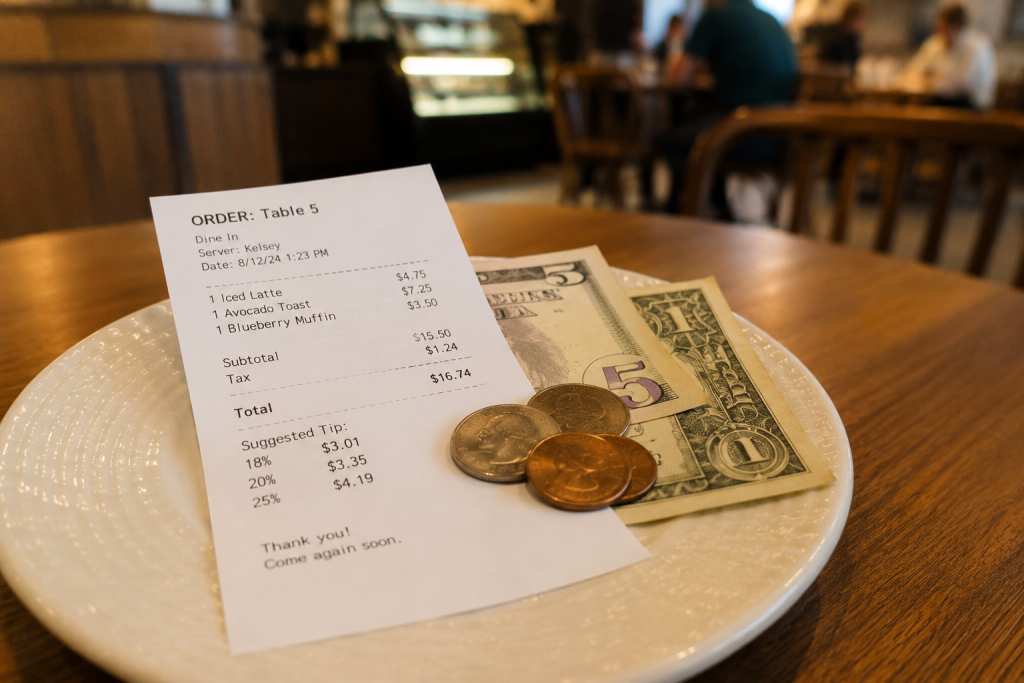
For example:
- A $50 meal might receive a $7–10 tip.
- A $100 dinner could lead to a $15–20 gratuity.
- Casual cafés or quick-service restaurants may involve only rounding up the bill or leaving a small amount in a tip jar.
At the same time, there is no universal formula. In many European and Asian countries, service charges may already be included in the final bill, making additional tipping optional or minimal. Some travelers are surprised to discover that in certain regions, leaving large tips can even feel culturally unusual.
Is Tipping Legally Required?
In most countries, a tip is not legally mandatory unless a service charge has been clearly added to the bill beforehand. This distinction matters because many people confuse a voluntary gratuity with an automatic service fee.
Restaurants may sometimes include:
- a “service charge,”
- a “gratuity fee,”
- or an “automatic gratuity” for large groups.
When these charges are clearly disclosed in advance or printed on the menu, they may become part of the official payment. Otherwise, customers generally retain the right to decide whether they want to leave a tip and how much they feel comfortable giving.
This is why checking the bill carefully has become increasingly important, especially in tourist areas where service fees are more commonly added automatically.
Why Digital Payments Changed Tipping
Over the last decade, tipping behavior has changed significantly because of card terminals, delivery apps, and digital payment systems. Many restaurants now display suggested percentages directly on payment screens, often offering buttons such as 10%, 15%, 20%, or even higher.
Behavioral economists have noted that these digital prompts can subtly influence customers into tipping more than they originally planned. Studies suggest that people are often more generous when tipping electronically because the transaction feels less immediate than handing over physical cash.
Some experts also believe that digital tipping systems create social pressure. Customers may feel uncomfortable selecting “no tip” when the screen is visible to staff or other customers nearby.
Should You Still Tip for Bad Service?
This remains one of the biggest debates around restaurant culture. Many people believe tipping should reflect the quality of the experience. If service was rude, careless, or extremely slow, some customers reduce the amount or choose not to tip at all.
Others argue that restaurant staff often deal with stressful conditions, understaffing, long shifts, and factors outside their control, meaning a bad experience may not always be entirely the server’s fault.
Because tipping is both financial and emotional, reactions vary widely between cultures and individuals. What one person sees as standard etiquette, another may view as optional generosity.
The Psychology Behind Tipping
Scientists studying consumer behavior have discovered that tipping is deeply connected to social norms and human psychology. Many people tip not only to reward service but also to avoid guilt, embarrassment, or appearing rude.
Research has shown that customers are influenced by:
- social expectations,
- mood,
- restaurant atmosphere,
- friendliness,
- perceived effort,
- and even background music.
Interestingly, studies have also found that people tend to leave larger tips when dining in groups compared to eating alone, partly because social visibility affects decision-making.
Final Thoughts
Tipping has become one of the most emotionally charged parts of dining culture because it sits somewhere between gratitude, habit, economics, and social pressure. In most places, it is not legally mandatory unless a service charge is officially included, but cultural expectations can still make it feel almost unavoidable.
For many diners, the simplest approach is still the most practical one: reward genuinely good service fairly, check the bill carefully, and remember that tipping customs are never exactly the same everywhere in the world.