
Every so often, a headline or viral video promises what sounds like a breakthrough that could transform modern medicine. The latest example centers on ivermectin, a medication that has been safely used for decades to treat parasitic infections but is now being promoted online as a potential weapon against cancer. According to a widely shared video, 84.4% of cancer patients who took ivermectin for six months reportedly saw their disease disappear, shrink, or stop progressing. The same video goes even further, suggesting that evidence supporting antiparasitic drugs as cancer treatments was hidden for decades and that a study from the 1950s was allegedly classified by the CIA.
It is an extraordinary claim, and that is precisely why it deserves careful examination. If a low-cost, widely available medicine truly produced such remarkable outcomes, it would represent one of the most significant advances in oncology in modern history. So, how much of the story is supported by evidence, and how much has been amplified through social media?
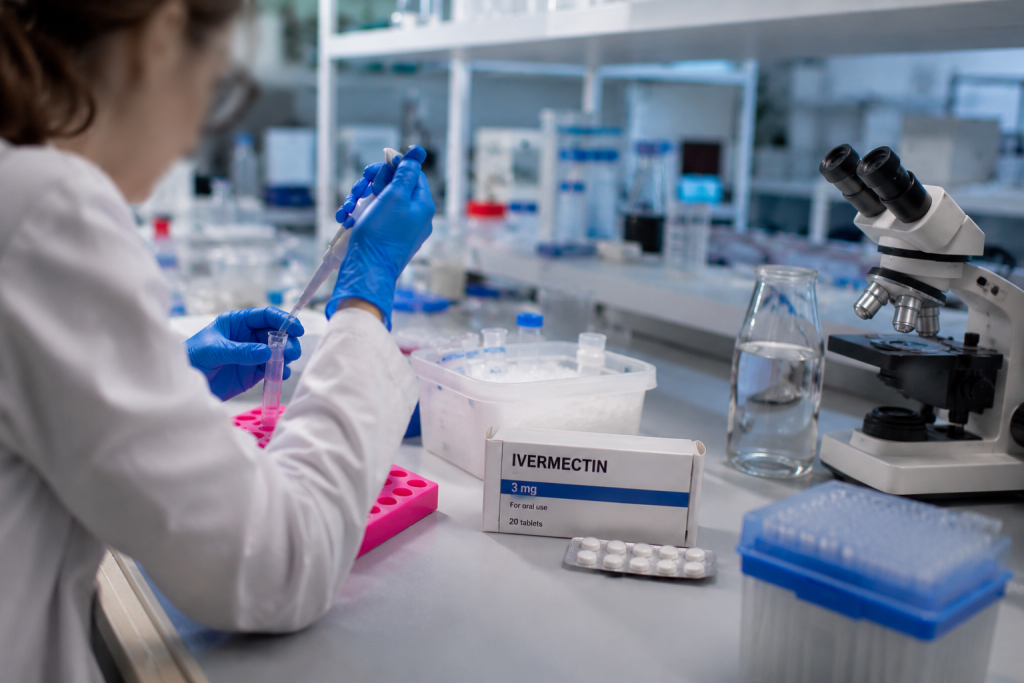
A Proven Drug—But for a Different Purpose
There is no dispute about ivermectin’s importance in medicine. Since its introduction in the early 1980s, it has helped control devastating parasitic diseases affecting millions of people around the world, including river blindness and lymphatic filariasis. Its impact on global public health was so significant that the scientists behind its discovery received the 2015 Nobel Prize in Physiology or Medicine.
Because ivermectin has such a well-established safety profile for approved uses, researchers have naturally explored whether it might have applications beyond parasitic infections. This process, known as drug repurposing, is common in medical research. Instead of developing an entirely new compound, scientists investigate whether an existing medication could also be useful for treating other diseases.
Cancer has been one of the many areas where ivermectin has attracted scientific interest.
Where Did the 84.4% Figure Come From?
Unlike many viral claims, the statistic itself was not invented. It originated from an observational study involving patients with different types of cancer who had taken ivermectin, mebendazole, or a combination of both drugs.
After approximately six months, 84.4% of participants reported that their cancer had either disappeared, regressed, or remained stable.
At first glance, that number appears extraordinary. However, impressive statistics can be misleading when they are presented without explaining how they were obtained. In medical research, methodology often matters more than the headline figure itself.
Two studies may report similar percentages while offering vastly different levels of scientific evidence. Understanding how the data were collected is essential before drawing any conclusions.
One Important Word Changes the Entire Meaning
One detail receives very little attention in most online discussions: the participants reported their outcomes.
That distinction is crucial.
There is a significant difference between patients describing their own disease status and researchers demonstrating, through standardized imaging, clinical examinations, and internationally accepted response criteria, that a treatment produced measurable improvements.
Patient-reported outcomes are valuable because they provide insight into symptoms and quality of life. However, they cannot by themselves establish that a medication effectively treats cancer.
This seemingly small difference dramatically changes how the study should be interpreted.
Why the Study Does Not Prove That Ivermectin Treats Cancer
One of the main goals of clinical research is to eliminate factors that could influence the outcome. In this particular study, that was simply not possible.
Participants represented a wide range of cancer types, from different stages of disease, and many were already receiving established cancer treatments, including surgery, chemotherapy, radiation therapy, immunotherapy, or targeted therapies. Some were undergoing several treatments simultaneously.
Because there was no comparable control group receiving identical care without ivermectin, researchers cannot determine whether the reported improvements were related to the medication, conventional cancer therapies, natural disease variation, or other factors.
Observational studies can reveal interesting patterns and generate hypotheses worth investigating, but they cannot establish cause and effect. That is why randomized controlled trials remain the gold standard for determining whether a treatment actually works.
Laboratory Results Are Only the Beginning
The fact that current clinical evidence is limited does not mean scientists have ignored ivermectin. Quite the opposite.
Over the past decade, laboratory research has shown that ivermectin can influence several biological pathways involved in the growth of certain cancer cells. In cell cultures and animal models, researchers have observed effects such as slowing cancer cell proliferation, promoting programmed cell death, and interfering with molecular signaling pathways associated with tumor development.
These findings are scientifically interesting and provide a legitimate reason for continued investigation.
However, laboratory experiments represent only the earliest stage of drug development. Many compounds demonstrate promising anticancer activity in isolated cells but fail during human clinical trials because they cannot reach effective concentrations safely or because the biology of a living human body is far more complex than laboratory models.
History has repeatedly shown that encouraging laboratory data do not necessarily translate into successful treatments for patients.
What Do Current Medical Guidelines Say?
If ivermectin consistently produced the kind of results suggested in viral posts, the global oncology community would almost certainly respond quickly. Large international trials would be launched, multiple research centers would attempt to replicate the findings, and treatment guidelines would eventually be updated if the evidence proved convincing.
That has not happened.
Organizations such as the American Cancer Society, the National Cancer Institute, the European Society for Medical Oncology (ESMO), and the American Society of Clinical Oncology (ASCO) do not currently recommend ivermectin as a standard treatment for any form of cancer.
This is not because the drug has been dismissed or ignored. Rather, the available clinical evidence has not yet demonstrated that ivermectin improves survival, slows disease progression, or provides benefits that outweigh existing therapies.
Should stronger evidence emerge in the future, scientific recommendations could certainly change. At present, however, that evidence does not exist.
What About the CIA Story?
Perhaps the most dramatic claim in the viral video is that a study from the 1950s proving the anticancer effects of antiparasitic drugs was classified by the CIA for decades.
Despite its popularity online, there is no credible historical evidence supporting this narrative.
An additional problem is chronological. Ivermectin itself did not exist in the 1950s. The microorganism that ultimately led to its discovery was identified only in the 1970s, making it impossible for a classified study from two decades earlier to have investigated ivermectin specifically.
While researchers have explored many different compounds over the years, there is no verified documentation showing that an effective cancer treatment based on antiparasitic drugs was deliberately hidden from the public.
Why Stories Like This Spread So Easily
Cancer remains one of the world’s most feared diseases, and people naturally hope that a simple solution may already exist.
That emotional context makes stories about inexpensive, readily available medications especially compelling. When those stories include striking statistics, scientific terminology, and suggestions of suppressed discoveries, they become even more persuasive.
The challenge is that science rarely moves in dramatic leaps. Progress usually comes through years of carefully designed studies, independent verification, and repeated testing across different research groups.
The most promising discoveries are not accepted because they generate excitement. They are accepted because the evidence consistently supports them.
The Bottom Line
The widely shared claim that 84.4% of cancer patients taking ivermectin experienced complete remission, tumor regression, or disease stabilization is based on a real observational study, but the conclusions circulating on social media extend well beyond what the available evidence can support.
Laboratory research suggests ivermectin deserves continued scientific investigation, and researchers remain interested in understanding its potential biological effects. However, there is currently no high-quality clinical evidence demonstrating that ivermectin can replace established cancer treatments or serve as a proven therapy for cancer in humans.
Medical history contains many promising ideas that eventually became life-saving treatments. It also contains countless others that looked impressive in early experiments but failed when tested rigorously in clinical trials. For ivermectin and cancer, the scientific journey is still underway, and until stronger evidence emerges, the gap between hope and proof remains significant.