
There are moments when everything changes without warning, when an ordinary day quietly breaks in two, and something that felt completely safe suddenly becomes impossible to control.
In May 1996, in Belgium, 12-year-old Sabine Dardenne was in a situation that would not have raised concern for anyone. She had stepped out on her own for a short time, something children her age do every day without a second thought.
It wasn’t late at night. It wasn’t a remote or obviously dangerous place.
And yet, within that short window of time, she disappeared.
At first, her family searched for simple explanations, holding on to the hope that it was just a delay or a misunderstanding. But as the hours passed, that hope slowly gave way to something much harder to accept.
This was not a normal situation.
A Quick Abduction, No Witnesses
Sabine was not targeted because of who she was personally. She became a victim because she happened to be alone at the wrong moment, in a situation where no one was there to intervene.
Marc Dutroux, who was later identified as the abductor, did not act randomly. His pattern involved identifying moments when a child was briefly alone and vulnerable, and acting quickly before anyone could react.
The abduction itself happened fast.
There was no time to call for help, no time to resist in a meaningful way, and no direct witnesses who could step in. In just moments, Sabine was taken from a familiar environment and brought somewhere no one around her could have imagined.
Hidden Behind an Ordinary Door
The place where she was taken did not stand out. It was a normal house in a normal neighborhood, the kind of place people pass by every day without a second look.
That was part of what made the situation so unsettling.
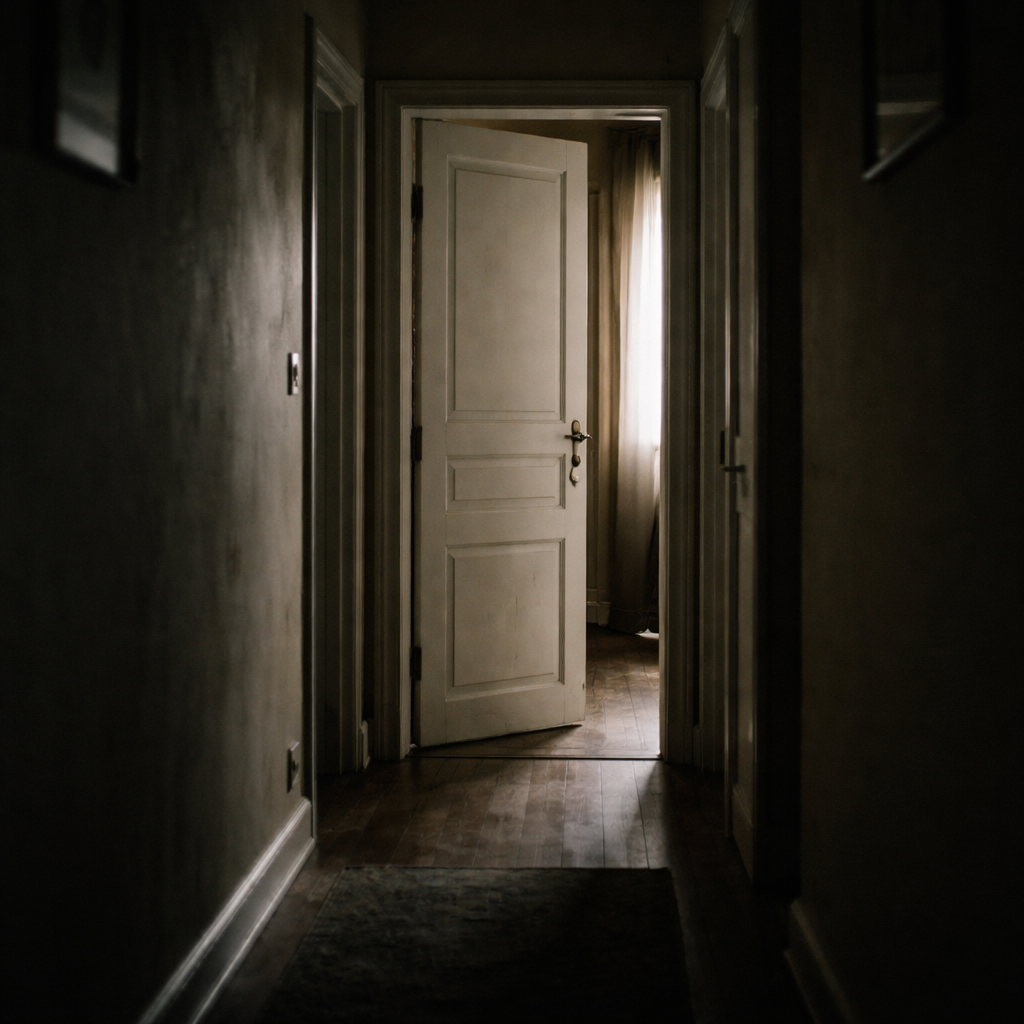
Inside, there was a concealed space, built in a way that made it difficult to detect. This is where Sabine was held.
She was completely isolated from the outside world, without access to information, without a way to communicate, and without any control over her situation. She lived under constant control and was subjected to serious abuse, in an environment where fear and uncertainty shaped each day.
Public sources do not describe every detail of how she was restrained or confined at every moment, but it is clear that her freedom was entirely removed and that she had no realistic way to escape on her own.
In conditions like these, time loses its meaning, and days begin to blur into one another.
And still, she managed to hold on.
Another Girl
In August 1996, a few months after Sabine’s disappearance, Marc Dutroux abducted another girl, 14-year-old Laetitia Delhez. Just like in Sabine’s case, the situation involved a moment when the victim was alone and could not be helped immediately.
Laetitia was taken to the same location.
For Sabine, the presence of another person in that space changed something, even if it did not change the conditions themselves. It did not bring safety or freedom, but it meant she was no longer completely alone.
Two lives were now confined within a space hidden inside a house that, from the outside, looked entirely ordinary.
The Moment Everything Was Discovered
In August 1996, the investigation reached a turning point. A combination of gathered information and growing public pressure led authorities to Marc Dutroux’s property.
This was not a routine check, but the result of an investigation that was finally beginning to come together.
When officers entered the house, they did not yet fully understand what they would find.
That changed when they discovered the concealed space.
Sabine Dardenne was there.
Alive.
And she was not alone. Laetitia Delhez was found with her.
For the families, that moment cannot be reduced to a single emotion. It was shock, relief, disbelief, and something much harder to define all at once. For the public, it was the confirmation of fears that had been growing for months.
After the Rescue
After being rescued, Sabine did not disappear from public life, but she also did not seek attention for its own sake. Over time, she chose to speak about her experience in her own way, sharing her story and contributing to a broader understanding of how such trauma affects a child.
She later wrote a book and became part of important conversations about victims, trauma, and the responsibilities of institutions.
Her presence was not built on dramatization, but on honesty.
A Case That Changed a Country
The Dutroux case quickly went beyond an individual story and became a national crisis in Belgium. It led to massive public protests, known as the “White March,” where hundreds of thousands of people demanded real changes in the justice system.
It was a moment when an entire society was forced to confront uncomfortable questions.
Why This Story Still Matters
Sabine Dardenne’s story is not just about a kidnapping.
It is about how quickly normal life can be disrupted, how serious harm can be hidden behind ordinary appearances, and how fragile the sense of safety we rely on can sometimes be.
And perhaps most importantly, it is about a form of resilience that cannot be seen from the outside, but that makes the difference between breaking and surviving.