
A drive home that should have been routine
In May 2008, 19-year-old Brandon Swanson was finishing his semester at Minnesota West Community and Technical College. Like many students at that time of year, he spent the evening celebrating with friends after finals.
Nothing about the night initially suggested danger.
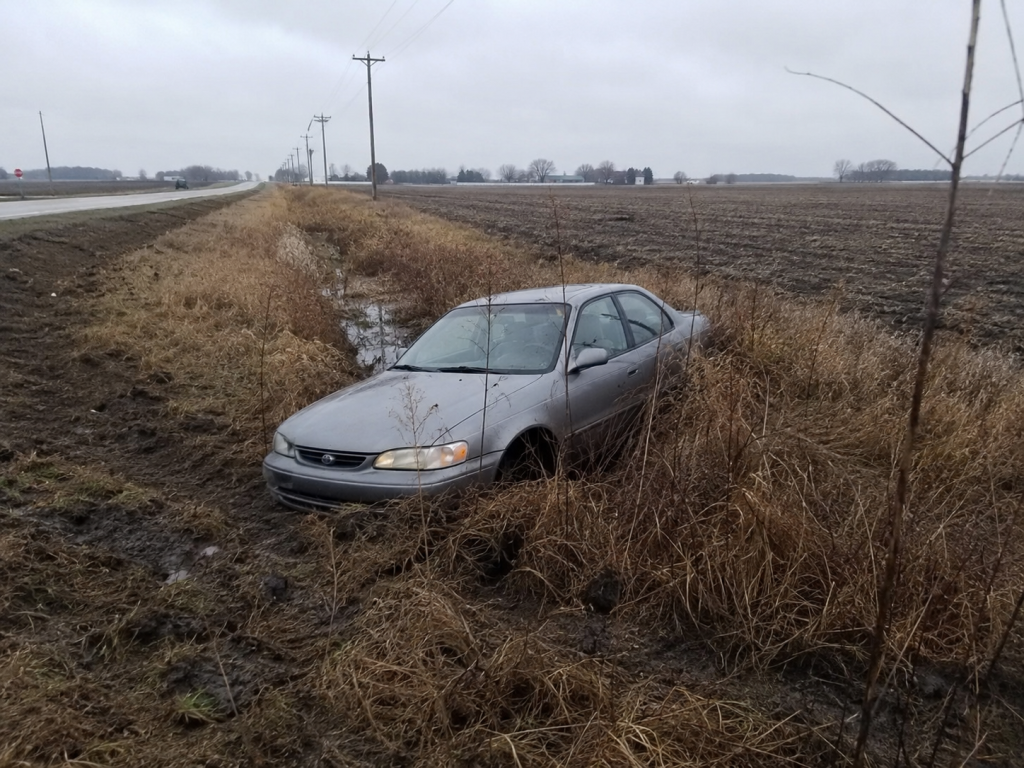
Sometime after midnight on May 14, Brandon began driving toward his parents’ home near Marshall. Along the way, his car went off a rural road and became stuck in a ditch.
The crash itself did not appear serious. Brandon wasn’t injured, and the vehicle remained mostly intact.
At first, it sounded like an inconvenient late-night accident—nothing more.
The call to his parents
Around 1:54 a.m., Brandon called his parents to explain what had happened and ask for help.
He sounded calm.
He told them he believed he knew where he was and could guide them to him. But one of the strangest parts of the case is that Brandon had misidentified his location entirely.
He thought he was near Lynd. Investigators later discovered his vehicle was actually many miles away in a different rural area.
In isolated farmland at night, this kind of disorientation is more possible than many people realize. Roads look nearly identical, landmarks disappear in darkness, and distances become difficult to judge.
Walking through the fields
While his parents drove around trying to find him, Brandon decided to leave the vehicle and walk toward what he believed were nearby lights or a town.
He stayed on the phone with his father the entire time.
That ongoing call is what makes this case especially haunting. The final phase of Brandon’s disappearance wasn’t reconstructed from guesses or scattered clues—it unfolded in real time through a conversation that lasted close to 47 minutes.
As he walked, Brandon described crossing fields, fences, and uneven terrain. He believed he was getting closer to safety.
Meanwhile, his parents continued searching roads nearby, unaware that they were nowhere close to his actual position.
The moment everything stopped
At one point during the call, Brandon suddenly shouted:
“Oh, shit!”
Then the line went dead.
His father immediately tried calling him back.
There was no answer.
The phone never connected again, and no verified contact from Brandon has ever been made since.
The search begins
The following day, search teams located Brandon’s vehicle in an isolated rural area. The car confirmed investigators’ suspicion that Brandon had been confused about his location.
Large search operations followed:
law enforcement officers, volunteers, tracking dogs, helicopters, and specialized teams combed through farmland, drainage areas, creeks, and nearby terrain.
But Brandon was never found.
Why the environment mattered so much
To someone unfamiliar with the rural Midwest, open farmland can appear simple and easy to navigate.
At night, however, those landscapes can become extremely deceptive.
The area included deep ditches, streams, muddy ground, fences, uneven fields, and limited visibility. Without reliable landmarks, people can unknowingly move farther away from roads or populated areas while believing they are heading in the correct direction.
Investigators considered the possibility that Brandon may have fallen into water or difficult terrain immediately after his final words.
Even so, no definitive evidence has confirmed exactly what happened.
Fatigue, alcohol, and spatial confusion
One factor frequently discussed in the case is alcohol consumption. Brandon had attended parties earlier that evening, and authorities acknowledged that alcohol may have contributed to his impaired judgment.
But the situation is likely more complex than a single cause.
Experts in cognition and spatial orientation note that several combined factors can dramatically affect decision-making:
fatigue, darkness, stress, unfamiliar terrain, overconfidence in navigation, and even moderate alcohol use.
Under those conditions, people can make choices that seem logical in the moment while unknowingly placing themselves in greater danger.
A disappearance that changed procedures
Over the years, Brandon’s family continued searching and speaking publicly about the case. The disappearance eventually contributed to legislative changes in Minnesota through what became known as “Brandon’s Law,” aimed at improving how authorities respond to reports of missing adults believed to be in danger.
Even with renewed searches and ongoing attention, the case remains unresolved.
Why the case continues to affect people
Many disappearances become mysteries because very little information exists.
Brandon Swanson’s case is unsettling for the opposite reason.
There is a timeline. There is a conversation. There are final words.
For nearly an hour, his father could hear him moving through the darkness, trying to find his way home.
And then, within a single second, everything stopped.
A story missing its final answer
Today, Brandon Swanson is still considered missing.
No confirmed explanation has ever been established for what happened after that final moment on the phone.
What remains is a rural road, miles of dark farmland, a conversation that sounded increasingly hopeful—and a silence that has lasted for years.
And perhaps that is what makes the case so difficult to forget.
Not only that Brandon disappeared…
but that for nearly an hour, he seemed so close to being found.