
There are moments that feel too ordinary to ever become important, the kind of nights that pass without leaving any trace, when everything seems exactly as it should be and nothing suggests that anything is about to change.
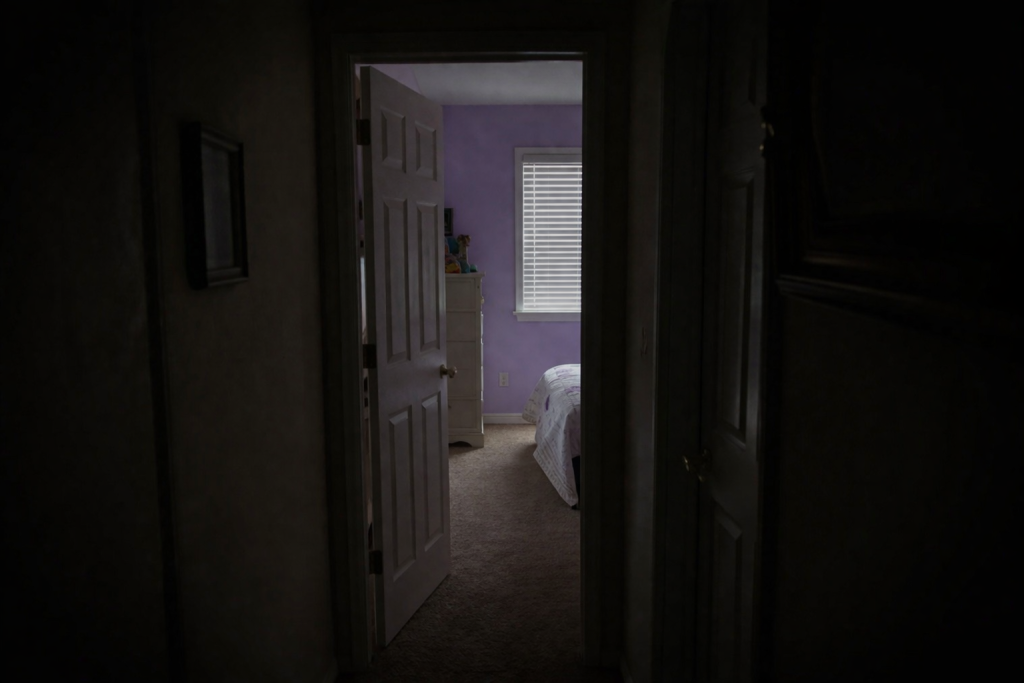
A teenage girl is asleep in her bedroom. Her family is in the same house, just a few steps away. The doors are closed, the lights are off, and the world outside feels distant and quiet.
And yet, in the middle of that silence, someone enters.
There is no dramatic noise that wakes everyone at once, no clear signal that something is wrong, only a brief, controlled intrusion that turns a normal night into the beginning of a disappearance that will last for months.
In June 2002, in Salt Lake City, Utah, 14-year-old Elizabeth Smart was taken from her home.
What followed was not just a missing persons case, but a story that would raise difficult questions about safety, perception, and how close someone can be to being found without actually being recognized.
In the immediate aftermath, confusion took over. There were no obvious signs of forced entry that pointed clearly to what had happened, and the situation quickly shifted from disbelief to urgency as authorities became involved. Her family spoke publicly, hoping that visibility would help bring her back, while investigators tried to reconstruct the events of that night.
As time passed, the case became more complex.
The person responsible was not entirely unknown to the family, a detail that would only become clear later and would change how the entire situation was understood. What initially appeared to be a random act revealed elements of planning and familiarity, which made the disappearance even more unsettling.
During the months that followed, Elizabeth was held in different locations, often in improvised settings that allowed constant control over her movements and limited any opportunity to escape. The environment was not defined only by physical restriction, but also by psychological pressure, as rules, fear, and manipulation were used to maintain control over time.
One of the most unsettling aspects of the case is that there were moments when she was seen in public.
People passed by, conversations happened, and yet nothing triggered immediate recognition. Her appearance had been altered, and the situation was carefully managed by those around her, creating a reality that, from the outside, did not immediately appear as what it was. Looking back, these moments raise a question that appears often in cases like this: how close can someone be to being found, and still remain unseen?
A similar pattern appeared in the case of Jaycee Dugard, who was held captive for 18 years while still having occasional contact with the outside world.
In Elizabeth’s case, the turning point came in March 2003, nearly nine months after her disappearance.
While in a public setting, suspicions were finally strong enough to lead to intervention. Authorities approached, questions were asked, and what had remained hidden for months was suddenly brought into the open.
Elizabeth Smart was identified and safely recovered.
For her family, the moment was almost impossible to process. After months of uncertainty, public appeals, and the gradual weight of not knowing, the outcome was something that many similar cases never reach.
But the story does not end at the moment of being found.
In the years that followed, Elizabeth chose to speak publicly about her experience, not in a way that focused only on what happened, but on what it means to move forward after something like this. Her voice became part of a larger conversation about safety, awareness, and the long-term impact of such events, shifting the narrative from the crime itself to resilience and recovery.
What makes this case stay with people is not only the fact that she was taken, but how it happened, how long it lasted, and how close it came, at times, to being noticed without being understood.
It challenges the assumption that danger is always obvious and reminds us that some of the most difficult situations unfold quietly, in places that feel completely safe.
Not every story like this has an ending that brings someone home.
This one did.