
Some stories revolve around the moment everything breaks—the disappearance, the instant when a normal day turns into something else entirely. But there are other stories where the real question isn’t just what happened in that moment, but how someone continues to exist, day after day, inside a reality where nothing is left to chance and every part of life is controlled.
Natascha Kampusch’s story is not only about abduction. It is about long-term control, isolation, and the kind of survival that doesn’t always look dramatic from the outside, but determines whether someone manages to hold on to themselves over time.
A Morning That Didn’t Seem Different
In March 1998, in Vienna, a 10-year-old girl was walking to school along a familiar route, one she had taken many times before, in a city widely considered safe. There was nothing unusual about that morning, nothing that would have suggested it would be the last time she would walk that path freely for years.
She was approached by Wolfgang Přiklopil, an adult man who acted quickly and decisively, forcing her into a van within seconds. There was no time to react, no opportunity to escape, and no immediate intervention from anyone nearby.
Her disappearance was noticed quickly, and the case triggered a large-scale investigation. Authorities followed numerous leads, conducted extensive searches, and examined countless possibilities, yet the reality was far more unsettling.
She had not been taken far.
Hidden in Plain Sight
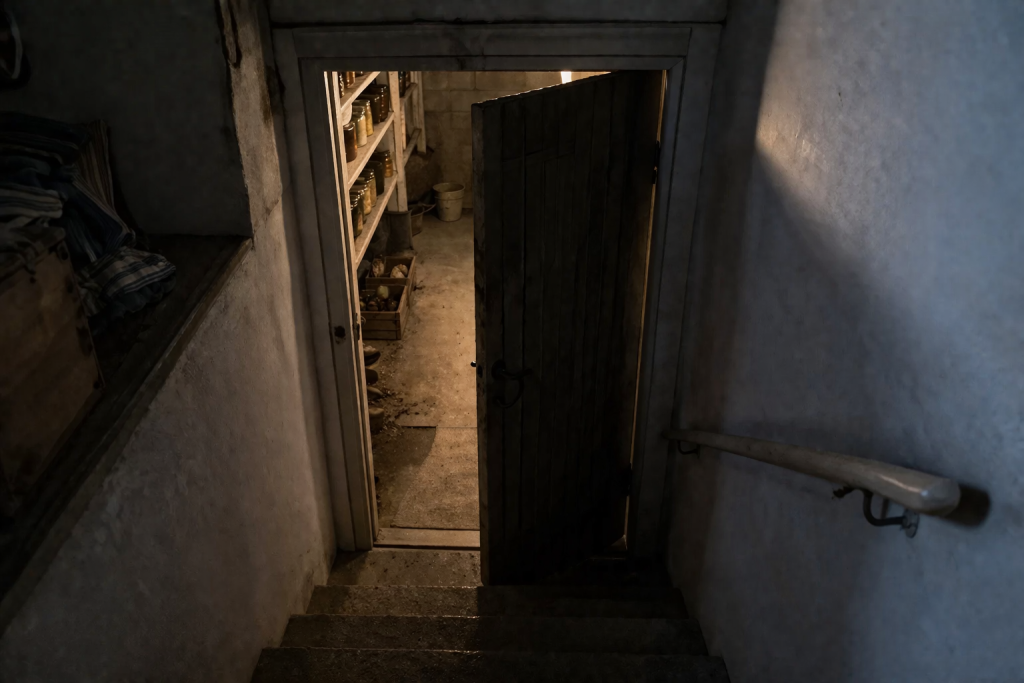
Natascha was held in a residential area in Strasshof, not far from Vienna, in a space that would never have drawn attention from the outside.
Beneath an ordinary house, a small, specially constructed room had been built. It had no windows, was soundproofed, and designed to remain undiscovered. It was not just a place to hide someone—it was a space built to control every aspect of a person’s existence.
In such an environment, time loses its usual meaning. Days are no longer shaped by natural light, routines, or interactions, but by imposed structure and the constant presence of one individual.
Control That Goes Beyond Physical Confinement
Captivity did not mean only the loss of movement.
It extended into every part of daily life.
Access to light, space, and even basic necessities was controlled. Food was not something freely available, but something regulated—given under certain conditions, tied to behavior and compliance. Over time, this kind of control does more than limit physically; it creates dependency.
In complete isolation, the ability to compare reality, to question it, or to resist it in a conventional way becomes increasingly difficult. Control becomes less visible, but more effective.
A Reality That Becomes the Only Reality
The years spent in captivity were not simply time passing, but a continuous process of adaptation.
Natascha later described how she learned to observe carefully, to avoid situations that could escalate, and to maintain a fragile balance within an environment that offered no stability. Survival, in this context, was not about strength, but about awareness and adjustment.
Over time, she was occasionally allowed into other parts of the house, always under strict supervision. There were even moments when she was taken outside, into public spaces, and in some cases into situations that, from the outside, might have appeared almost ordinary, including outings and even trips such as skiing.
But these moments were not freedom.
They were part of a controlled dynamic, where the appearance of normality reduced suspicion while every movement remained monitored and restricted.
Years That Don’t Follow Normal Time
Eight years do not pass the same way for everyone.
For a child, those years are meant to shape identity, development, and understanding of the world. In her case, that development took place in a completely controlled environment, making her story not only one of survival, but of maintaining a sense of self under conditions that could have erased it entirely.
And yet, the idea of an outside world never disappeared completely.
The Moment That Changed Everything
In 2006, after eight years in captivity, an opportunity appeared—one that could not have been planned in advance, but had to be recognized instantly.
While her captor was distracted by a phone call, Natascha managed to leave the space she was in and escape.
It was not dramatic in the traditional sense. It was a moment of clarity, where hesitation could have meant losing the only chance she might have had.
She reached a nearby home and asked for help. Shortly after, her identity was confirmed.
After years of absence, she was found alive.
After Freedom
Freedom is often seen as the end of a story.
In reality, it is where a different kind of challenge begins.
Returning to a world that continued without you requires rebuilding not just a life, but a sense of identity. Natascha Kampusch chose, over time, to speak about her experience, to write, and to offer insight into what survival meant in her situation—not only physically, but psychologically.
Her life after captivity has been shaped by that process of reconstruction, where the past cannot be erased, only understood.
What This Story Leaves Behind
What makes this case difficult to ignore is not only the length of time she was held, but the fact that it happened in a place that seemed entirely ordinary, in a setting where no one suspected what was happening so close by.
And perhaps the most unsettling question is not just how it happened, but how something like this can remain invisible for so long.
Because sometimes, the things that change lives the most are not hidden far away.
They are hidden behind the appearance of normal life.