
There are moments that quietly reshape how people understand safety. Not because they happen in unfamiliar places, but because they unfold exactly where no one expects danger to reach. The case of Polly Klaas became one of those moments in the United States — a story that shifted fear from the outside world into the one place people trust most: their own homes.
An ordinary evening that changed in minutes
On the evening of October 1, 1993, in Petaluma, a 12-year-old girl was spending time with two friends in her bedroom. It was the kind of night that feels routine — laughter, conversation, a sense of comfort that comes from being at home.
Sometime around 10 p.m., that sense of normalcy was broken.
An unknown man entered the house. There was no loud forced entry, no immediate sign that something was wrong. He moved quietly enough to reach the girls’ room without drawing attention, taking advantage of how easily a home can be accessed when no one is expecting a threat.
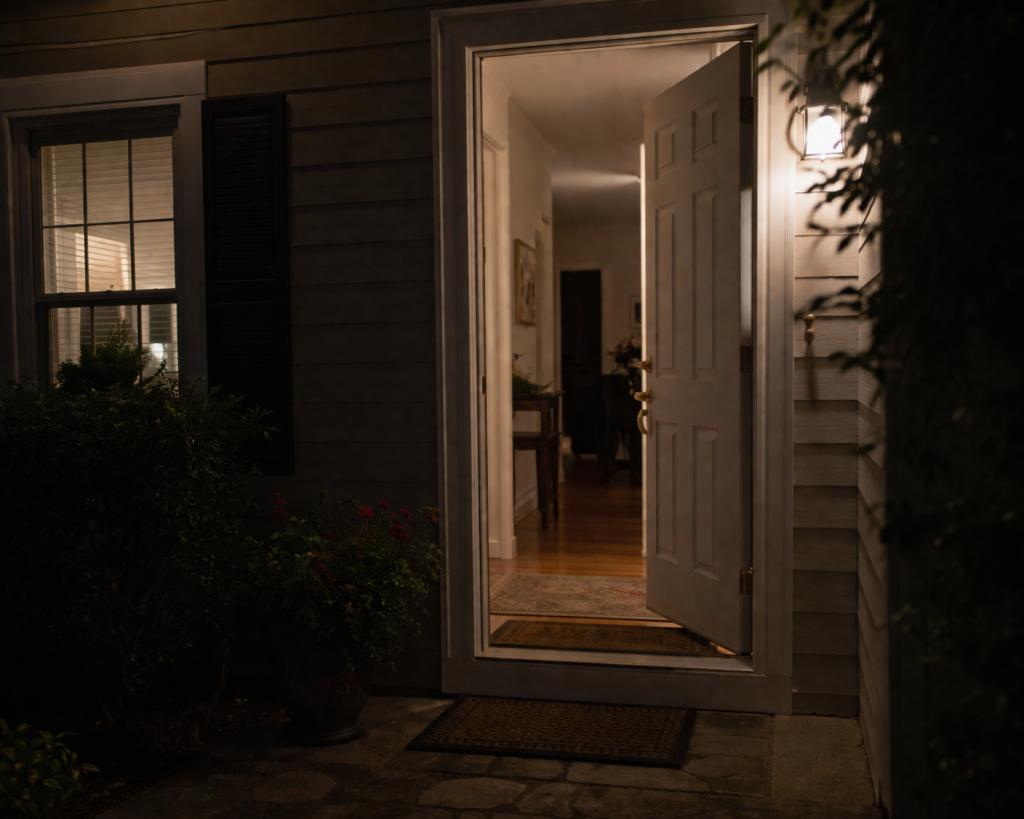
When he stepped inside the room, everything shifted at once.
Polly Klaas and her friends were confronted without warning. Under threat, he restrained the two friends and gave them a chilling instruction — to keep counting and not stop. It was a simple command, but one that bought him time.
Then he took Polly and left.
It happened in minutes.
The first hours: confusion and urgency
Once the girls managed to free themselves, they alerted the household immediately. Law enforcement was contacted, and the search began almost right away. But in those early hours, like in many cases, the situation was filled with uncertainty.
There was no clear suspect. No obvious direction. Just a disappearance that, given the circumstances, quickly raised alarm beyond the local level.
The community in Petaluma mobilized, with volunteers joining search efforts across surrounding areas. Media coverage expanded rapidly, turning the case into a national story within a short period of time.
Her father, Marc Klaas, became a visible and persistent voice, helping keep attention focused on the case at a time when visibility mattered.
The investigation: pressure, leads, and turning points
As days passed, pressure mounted. Investigators followed every possible lead, some of which appeared promising before leading nowhere. The process was far from linear — it was a mix of urgency, uncertainty, and constant reassessment.
A key development came from a witness who reported a suspicious vehicle near the home on the night of the disappearance. That detail, small at first, helped narrow the focus of the investigation.
Eventually, attention turned to Richard Allen Davis, a repeat offender with a history of violent crime. He was not an unknown figure to the system, and that fact would later become central to public debate.
When the truth came into focus
After nearly two months of searching, investigators were able to piece together what had happened.
Polly Klaas was not found alive.
The discovery marked a turning point — not just in the investigation, but in how the case was understood by the public. What had been followed with hope shifted into something much heavier.
It was no longer a search. It was a reconstruction.
The trial and its wider impact
Richard Allen Davis was arrested, tried, and ultimately sentenced to a severe penalty. The trial drew significant attention, with many focusing not only on the crime itself, but on how the system had handled him before.
The fact that he had prior convictions and had been released raised difficult questions about public safety and repeat offenders.
Those questions didn’t stay confined to the courtroom.
A case that led to change
The impact of Polly Klaas’s case extended beyond the immediate tragedy. It contributed to broader discussions and legislative changes in the United States, particularly around the monitoring of convicted offenders and community awareness.
Measures designed to inform the public about the presence of certain offenders gained traction, becoming part of a larger effort to prevent similar cases.
Behind much of that advocacy was Marc Klaas, who continued to push for awareness and reform.
What her family was left with
For the family of Polly Klaas, there was no clear “after.” Life doesn’t return to what it was after something like this.
What remains is a different kind of reality — one shaped by loss, but also by the decision to act, to speak, and to try to prevent similar tragedies from happening again.
A story that changed the question
The story of Polly Klaas is not just about what happened that night. It’s about how a single event can shift the way people think about safety.
Before, the question might have been: where is it dangerous?
Afterward, it became something else entirely: is there any place that feels completely safe?
And that question, once asked, doesn’t go away.