
A man living with a devastating neurological disease says he spent years asking for the support he needed to continue living with dignity. Instead, one of the options discussed during conversations with healthcare staff was medically assisted dying.
His name is Roger Foley, and his case has become one of the most debated examples in Canada’s ongoing discussion about Medical Assistance in Dying (MAiD). For some, his experience raises serious concerns about how vulnerable patients are treated. For others, it highlights the challenges of balancing patient autonomy with complex healthcare realities.
Online, his story is often reduced to dramatic headlines claiming that Canada encouraged a disabled man to end his life because caring for him was too expensive. While the situation is undeniably controversial, the facts are more nuanced than many viral posts suggest.
Understanding Roger Foley’s case requires separating verified information from disputed claims and looking beyond a single patient’s experience to the broader ethical questions surrounding assisted dying.
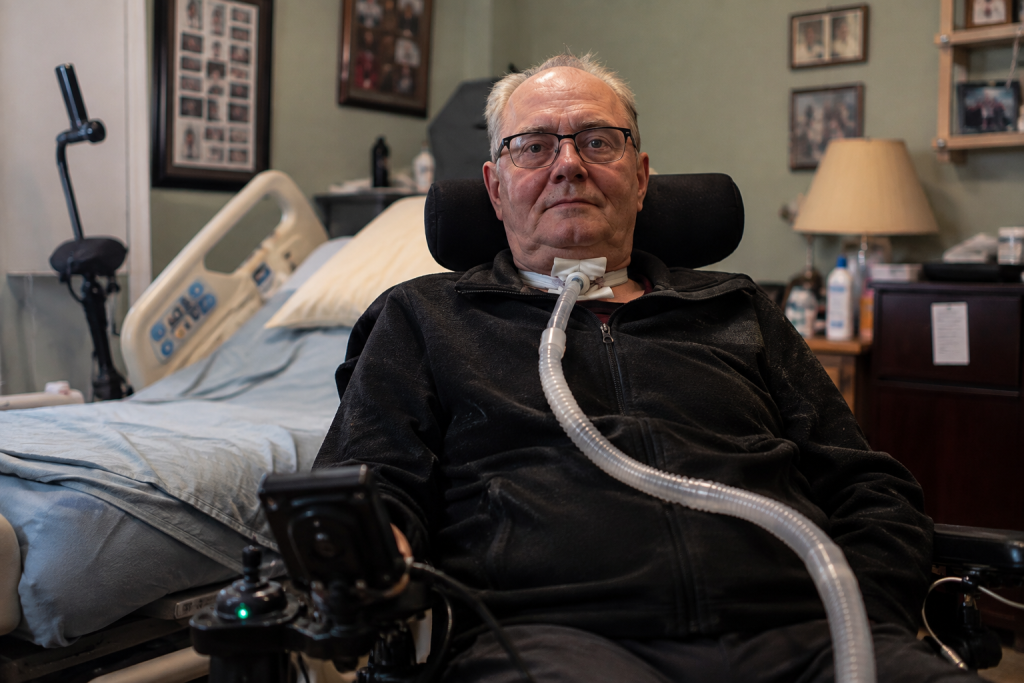
Who Is Roger Foley?
Roger Foley is a Canadian living with spinocerebellar ataxia, a rare progressive neurological disorder that gradually affects balance, coordination, speech, and swallowing.
As the disease advances, many people lose the ability to walk independently and require extensive assistance with daily activities such as eating, bathing, dressing, and moving from place to place.
Foley has publicly described how the condition has dramatically changed his life. Once independent, he eventually became dependent on others for many essential tasks while continuing to advocate for his right to receive appropriate long-term care.
Unlike many stories shared online, his case is not centered on someone seeking death. Throughout his public statements, Foley has consistently maintained that he wants to live and has been fighting for access to the care he believes would allow him to do so.
Why Has He Remained in Hospital for So Long?
For years, Foley has lived in a hospital in London, Ontario.
According to him, remaining hospitalized was never his preferred choice. Instead, he says he was unable to secure the type of self-directed home care he believed was necessary to safely leave the hospital.
Rather than relying on caregivers assigned through existing public programs, Foley argued that he needed greater control over who provided his care because of the complexity of his medical condition.
This disagreement became one of the central issues in his legal battles with healthcare authorities.
From Foley’s perspective, the available services did not adequately meet his needs.
From the perspective of healthcare administrators, funding decisions, eligibility rules, staffing limitations, and provincial care policies created a far more complicated situation than simply approving or denying a request.
The Recordings That Sparked International Attention
Roger Foley’s name became widely known after audio recordings of conversations with healthcare staff were made public.
In those discussions, Medical Assistance in Dying (MAiD) was mentioned as one of the legal options available in Canada.
Foley later said that introducing assisted dying into conversations while he was seeking better care felt deeply inappropriate. He has argued that he perceived these discussions as pressure rather than neutral information.
The recordings quickly spread through international media and have since been referenced by disability rights organizations and critics of Canada’s assisted dying legislation.
However, while the recordings confirm that MAiD was discussed, they do not by themselves establish that healthcare professionals attempted to force or coerce him into choosing assisted death.
That distinction remains one of the most important aspects of the case.
What Is MAiD?
Medical Assistance in Dying is Canada’s legal framework allowing eligible adults experiencing grievous and irremediable medical conditions to request medical assistance in ending their lives.
The law came into effect in 2016 and has since been expanded through several legislative changes.
Today, MAiD includes two possible methods. Most commonly, a physician or nurse practitioner administers medication that causes death. In some circumstances, patients may self-administer prescribed medication instead.
Canadian law requires multiple safeguards, including assessments by qualified healthcare professionals, confirmation that the request is voluntary, and informed consent from the patient.
Supporters argue that the legislation protects individual autonomy by allowing competent adults to make deeply personal decisions about unbearable suffering.
Critics counter that genuine autonomy becomes difficult to evaluate if people cannot access adequate healthcare, disability support, or long-term care services.
What Does Roger Foley Claim?
Foley has consistently stated that he never sought assisted dying.
Instead, he says his goal has always been to receive the medical and personal support necessary to continue living outside institutional care.
He alleges that discussions about MAiD occurred while his requests for improved care remained unresolved.
He has also claimed that decisions regarding aspects of his treatment negatively affected his comfort, nutrition, and quality of life.
These allegations have appeared in lawsuits, parliamentary testimony, interviews, and public advocacy campaigns.
What Have the Courts Decided?
One of the most common misconceptions surrounding Roger Foley’s story is that Canadian courts confirmed his allegations.
That is not what happened.
While Foley initiated legal action involving several healthcare institutions and government bodies, the litigation did not produce a final judgment determining whether healthcare professionals pressured him toward MAiD.
Some legal proceedings ended because of procedural issues rather than findings on the merits of every allegation.
As a result, neither supporters nor critics of MAiD can accurately claim that the courts definitively proved or disproved everything Foley has alleged.
This distinction is essential when discussing the case responsibly.
Why Disability Advocates Continue to Raise Concerns
Roger Foley’s story has become closely associated with broader concerns expressed by several disability rights organizations.
Their argument is not necessarily that healthcare professionals deliberately encourage patients to die.
Instead, they question whether people facing severe disabilities can truly exercise free choice if they lack access to adequate home care, pain management, accessible housing, or other essential supports.
From this perspective, assisted dying should never become more accessible than the resources needed to live with dignity.
Bioethicists have debated this issue extensively, asking whether social inequalities and gaps in healthcare could unintentionally influence decisions that are legally defined as voluntary.
Supporters of MAiD See the Issue Differently
Advocates of Canada’s assisted dying legislation emphasize another ethical principle: respect for personal autonomy.
They argue that competent adults experiencing intolerable suffering should have the right to decide how and when their lives end.
According to this view, problems within healthcare systems should be addressed directly rather than eliminating access to MAiD for everyone who qualifies under the law.
Supporters also point out that healthcare professionals have a responsibility to inform patients about legally available medical options.
Simply mentioning MAiD does not automatically constitute coercion.
Whether a conversation crosses the line into inappropriate pressure depends heavily on its context, timing, language, and the patient’s individual circumstances.
Does Roger Foley’s Case Prove Systemic Abuse?
Not by itself.
His experience raises serious ethical questions, but it does not establish that Canada’s assisted dying program routinely pressures vulnerable patients into ending their lives.
Likewise, dismissing his concerns entirely would ignore important issues about disability rights, access to care, and the responsibilities of modern healthcare systems.
The case demonstrates how difficult it can be to distinguish between providing information, respecting autonomy, and ensuring that vulnerable individuals never feel that death is being presented as a substitute for adequate support.
Separating Facts From Allegations
Several aspects of Roger Foley’s story are well documented.
He lives with a severe progressive neurological disease.
He has spent years in hospital.
Audio recordings confirm that MAiD was discussed during conversations with healthcare staff.
He has repeatedly stated that he wants better care rather than assisted death.
He has pursued legal action against healthcare institutions.
At the same time, some of the strongest claims circulating online remain allegations rather than established legal facts.
No court has ruled that medical professionals attempted to force him into MAiD.
There has been no judicial finding that healthcare providers intentionally withheld care to persuade him to choose assisted dying.
These distinctions matter because responsible reporting requires separating documented events from unresolved disputes.
A Debate That Extends Far Beyond One Patient
Roger Foley’s case continues to attract international attention because it highlights one of the most difficult ethical questions facing modern medicine.
Can a person’s decision truly be considered free if meaningful alternatives are unavailable?
For some, the answer depends entirely on protecting the legal right to choose assisted dying.
For others, freedom of choice begins much earlier—by ensuring every patient first has realistic access to quality healthcare, disability support, pain management, and dignified living conditions.
Roger Foley’s story does not provide simple answers.
Instead, it challenges governments, healthcare systems, ethicists, and society as a whole to consider whether the right to die should always be accompanied by an equally strong commitment to helping people live.