
If you have a garden, you’ve probably noticed them.
They appear after rain, leave shiny trails behind, and sometimes seem to target the very plants you care about most. Because of this, many people automatically see them as pests.
But the reality is more complex.
Snails are not just “garden enemies.” In nature, they play an important role in maintaining ecosystem balance.
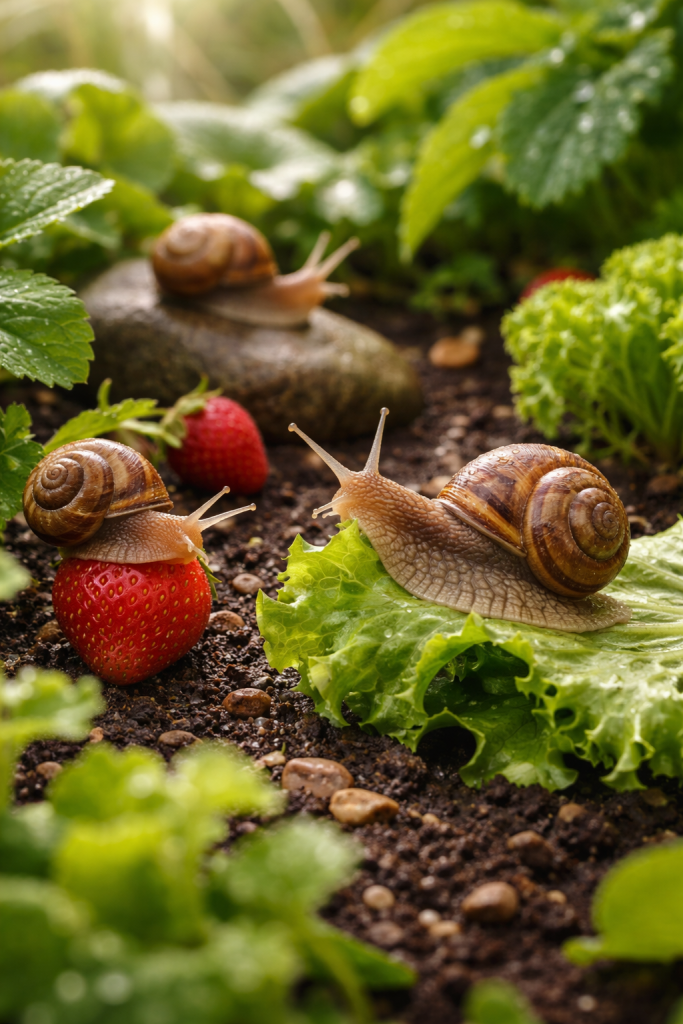
In Nature: More Than Just Leaf Eaters
Snails and slugs are, for the most part, detritivores—organisms that feed on decomposing organic matter.
Instead of targeting healthy plants, they often prefer:
- dead leaves
- plant debris
- decaying organic material
Through this process, they contribute to what ecologists call:
nutrient cycling
In simple terms, they help turn dead matter into nutrients that plants can reuse.
How They Actually Help the Soil
Snails do more than just “clean up.”
As they feed, they help:
- release nutrients like nitrogen and carbon back into the soil
- support beneficial microorganisms
- keep the soil biologically active
In some ecosystems, their activity can even speed up the breakdown of organic material, influencing how quickly nutrients return to the soil.
In other words, they indirectly support plant growth.
An Important Part of the Food Chain
Snails are not just recyclers—they’re also food.
They are eaten by:
- birds
- hedgehogs
- frogs
- insects and reptiles
Without them, many species would lose an important food source.
Why Things Change in the Garden
The problem appears when snails enter human-managed environments.
Gardens are essentially:
- concentrated sources of food
- full of soft, young plants
- often moist and sheltered
In these conditions, snails don’t just feed on decaying matter—they also eat:
- young leaves
- seedlings
- crops like lettuce, cabbage, and strawberries
exactly the plants you’re trying to grow.
They’re Not Aggressive—Just Adapted
Snails don’t become pests because they’re “destructive.”
They’re simply following their natural behavior.
The difference is the environment:
- in nature → balance
- in gardens → abundance in a small space
This imbalance allows their populations to grow quickly and cause visible damage.
Can They Be Beneficial in Gardens Too?
Yes—in small numbers.
A few snails can:
- help break down organic matter
- contribute to nutrient recycling
- support soil biodiversity
The issue isn’t their presence—it’s their population size.
Why They Seem So Destructive
Even a small number of snails can appear damaging.
That’s because they:
- prefer soft, young plants
- feed mostly at night
- leave visible signs (holes in leaves)
so the effects show up quickly.
Final Thoughts
Snails are neither “good” nor “bad.”
They are a natural part of ecosystems and play a key role in recycling organic matter and supporting healthy soil.
In gardens, however, they can become a problem when conditions allow their numbers to grow too much.
Snails are not the problem. Imbalance is.