
For most people, sleep is something you fall into without thinking. It’s the body’s way of resetting, a quiet pause that happens naturally at the end of the day. But there are situations where that exact moment — the one meant to bring relief — turns into tension instead.
This isn’t just about struggling to fall asleep. It’s something deeper.
It’s the fear of falling asleep.
That fear is known as somniphobia.
It’s not “I can’t sleep,” it’s “I’m afraid to”
The difference matters more than it seems.
With typical insomnia, the body doesn’t cooperate even though the person wants to rest. In somniphobia, there’s an internal conflict. The need for sleep is there, but it comes with a layer of anxiety that makes the act of drifting off feel unsafe.
For some, that fear is tied to the idea of losing control. When you fall asleep, you’re no longer aware, no longer able to react. For a brain that stays on high alert, that vulnerability can feel threatening.
For others, the trigger is more specific — recurring nightmares, episodes of sleep paralysis, or past experiences that have become linked to bedtime.
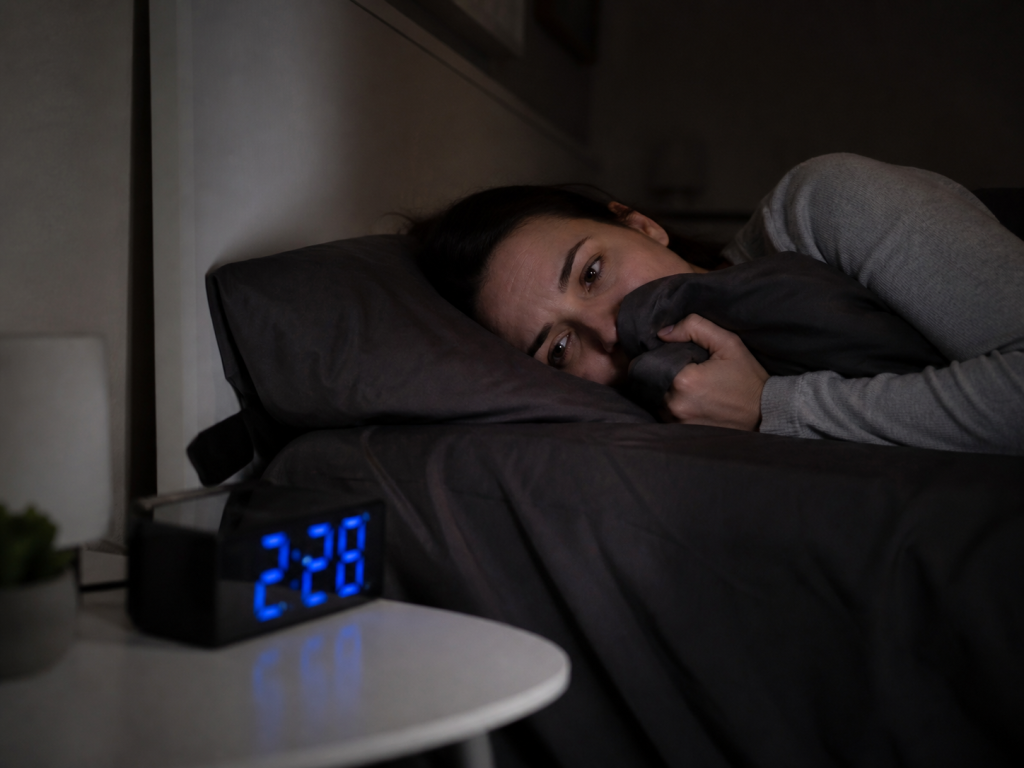
What’s happening in the brain
From a biological perspective, falling asleep requires the brain to gradually reduce its alert systems and allow the body to relax.
In somniphobia, that transition doesn’t happen smoothly.
Areas involved in fear processing, such as the amygdala, can remain active even when the body is trying to wind down. Instead of shifting into rest mode, the brain keeps signaling vigilance.
That’s why, right when someone tries to fall asleep, the body may react with physical signs of alertness — a faster heartbeat, shallow breathing, muscle tension. It’s essentially the same response you’d expect in a stressful situation, even though there’s no immediate danger.
A cycle that feeds itself
One of the most challenging aspects of somniphobia is how easily it becomes self-reinforcing.
The more someone fears the moment of falling asleep, the more they try to delay it. They might stay up later, keep themselves distracted, or avoid going to bed altogether. In the short term, it feels like control.
But over time, sleep deprivation increases stress and emotional sensitivity, making the fear response even stronger. The result is a cycle where fear leads to lack of sleep, and lack of sleep intensifies the fear.
How it affects everyday life
The impact doesn’t stop at night.
Ongoing sleep deprivation can affect concentration, memory, and decision-making. It can lead to irritability, low energy, and difficulty maintaining daily routines.
Some people also develop habits meant to reduce anxiety around sleep, such as needing background noise, checking their surroundings repeatedly, or avoiding sleep unless they feel completely exhausted.
Not an exaggeration, but a real response
Somniphobia isn’t about being dramatic or “overthinking.” It’s a real way the brain interprets a situation.
For most people, sleep represents safety and recovery. For others, it can feel like a loss of control or a space linked to negative experiences.
The difference isn’t in sleep itself, but in how it’s perceived.
A different way to look at it
What makes somniphobia so interesting is what it reveals about the mind. Even something as essential and natural as sleep can become difficult when the brain’s protective systems stay active longer than they should.
In the end, it’s not the act of sleeping that creates the problem. It’s the meaning the brain attaches to that moment — and how strongly it reacts to it.