
There are moments when a pet disappears — and with it, the quiet certainty that everything will be okay again.
A dog runs off.
Gets startled.
Wanders just a little too far.
At first, you assume he’ll come back.
Then hours pass.
Days.
And what felt temporary starts to feel permanent.
For many people, that’s where the story ends.
But sometimes, it doesn’t.
Bobbie — A Journey That Shouldn’t Have Been Possible
In 1923, a dog named Bobbie — later known as Bobbie the Wonder Dog — was lost during a family trip in Indiana.
His home was in Silverton, Oregon.
Hundreds of miles away.
A completely unfamiliar place.
No known landmarks. No sense of direction as we understand it.
His family searched for days.
They called his name.
Asked around.
Did everything they could.
Nothing.
Eventually, they had to return home without him.
For them, the story was over.
But not for Bobbie.
About six months later, in February 1924, he appeared in Silverton.
At their home.
After traveling an estimated 2,500 miles (over 4,000 kilometers), crossing multiple states along the way.
Alone.
He was severely underweight.
His paws were worn and injured.
His body showed clear signs of a long, difficult journey.
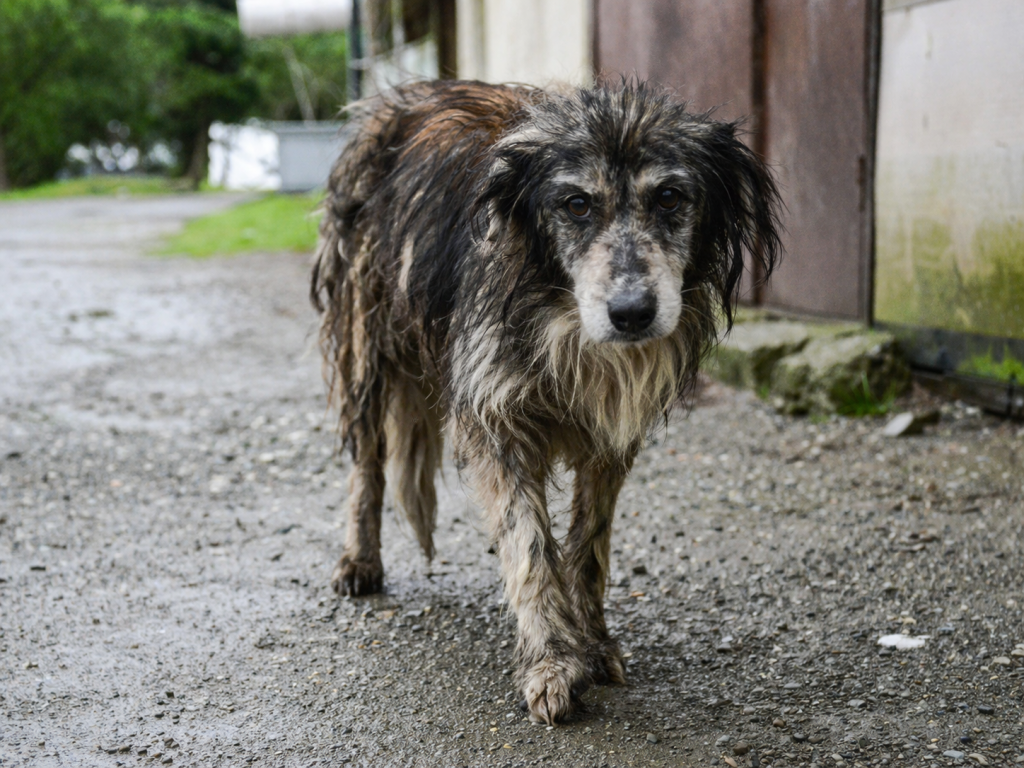
The story quickly spread across the country and was widely covered in newspapers at the time.
But what made it even more compelling came later.
People from different states began to recognize his description. Some recalled seeing a lone dog matching Bobbie’s appearance moving through their towns during the months he had been missing.
There was no complete map of his route.
No step-by-step proof.
But these scattered accounts formed a pattern that was hard to ignore.
He hadn’t been transported.
He hadn’t been carried from place to place.
He had moved.
Step by step.
On his own.
And that leaves one simple, difficult-to-explain conclusion:
he walked.
How Dogs Really Live — More Than Just Pets
To understand a story like this, you have to understand what a dog truly is.
Dogs are social animals, descended from wolves, shaped by cooperation, awareness, and adaptation.
They don’t just react.
They:
– learn
– remember
– anticipate
– adjust
Over time, they’ve developed something rare in the animal world — a deep ability to connect with humans.
How Dogs Became “Man’s Best Friend”
The bond between humans and dogs didn’t happen recently.
It began somewhere between 15,000 and 30,000 years ago, when certain wolf populations started approaching human settlements.
Not through force.
Through adaptation.
The less aggressive individuals had easier access to food.
They became more tolerant.
They stayed closer.
Over generations, that relationship evolved.
From coexistence to cooperation.
From cooperation to attachment.
Today, dogs are often called “man’s best friend.”
Not as a cliché.
But as the result of thousands of years of shared evolution.
How Long Dogs Live — And How They Develop
A dog’s lifespan varies depending on size and breed.
In general:
– smaller dogs tend to live 12–16 years or more
– larger dogs usually live around 8–12 years
Their development is rapid.
In the first year, most dogs go through the majority of their physical and behavioral growth.
After that, maturity continues — just more gradually.
What Dogs Eat — And How They Adapt
Dogs are opportunistic omnivores.
Although they descend from carnivores, they’ve adapted to digest a wide range of foods:
– meat
– fats
– carbohydrates
– certain plant-based sources
This flexibility gives them a major survival advantage.
In difficult conditions, they can adapt in ways many animals cannot.
Their Senses — The Part That Changes Everything
For a dog, the world isn’t primarily visual.
It’s built through scent.
Their sense of smell is extraordinary:
– up to 300 million scent receptors
– dozens of times more sensitive than a human’s
Dogs don’t just smell.
They interpret.
They can recognize:
– paths
– people
– territories
– subtle environmental changes
Beyond scent, they also rely on:
– spatial memory
– visual landmarks
– highly sensitive hearing
Some studies even suggest they may use the Earth’s magnetic field to orient themselves.
Finding the Way Back — More Than Instinct Alone
Bobbie’s return wasn’t luck.
It was most likely the result of a complex combination:
– following scent trails
– reconstructing familiar routes
– environmental orientation
– memory
– physical endurance
A dog can travel dozens of miles in a single day.
But that doesn’t make the journey easy.
Surviving the Journey
To make it home, Bobbie had to:
– find food
– avoid danger
– endure exhaustion
– keep going, even when injured
The survival instincts dogs carry are far stronger than we usually see in everyday life.
How Often Does This Actually Happen?
Not every dog can do this.
But there are enough documented cases to show it’s not random.
Dogs have been known to:
– travel hundreds of miles
– return after months
– find their way back from unfamiliar regions
Bobbie’s case is one of the most extreme.
But it’s not the only one.
What We Still Don’t Fully Understand
Even today, there’s no complete explanation.
We understand the pieces.
But not exactly how they work together.
The Part That Changes Everything
When you think about a journey like this, it’s not just about navigation.
It’s about motivation.
A dog isn’t just looking for a place.
He’s looking for someone.
For a dog, “home” isn’t just a location.
It’s a relationship.
And Then the Question Changes
It’s no longer:
“How did he find his way back?”
But:
“Why didn’t he stop?”
Maybe It Wasn’t Just Instinct
Maybe it was something we recognize — but can’t fully measure:
attachment.
And Maybe the Most Important Part
To us, the journey seems impossible.
To him, it was the way home.
Not the easiest.
Not the fastest.
But clear enough that he kept going.
Because somehow — in a way we’re still trying to understand —
he knew where he belonged.