
When German art collector Wilhelm Uhde first noticed a small painting of apples in a quiet French town, he assumed it had been created by an unknown artist waiting to be discovered.
He never imagined that the painter was the woman who cleaned his rooms.
That unexpected discovery would change the course of art history.
A Life Hidden Behind Ordinary Work
Long before museums displayed her paintings, Séraphine Louis lived a life that seemed unremarkable.
She earned her living as a housekeeper in Senlis, France, cleaning the homes of wealthier families. It was demanding work, but once the day was over, she devoted herself to something few people knew about.
She painted.
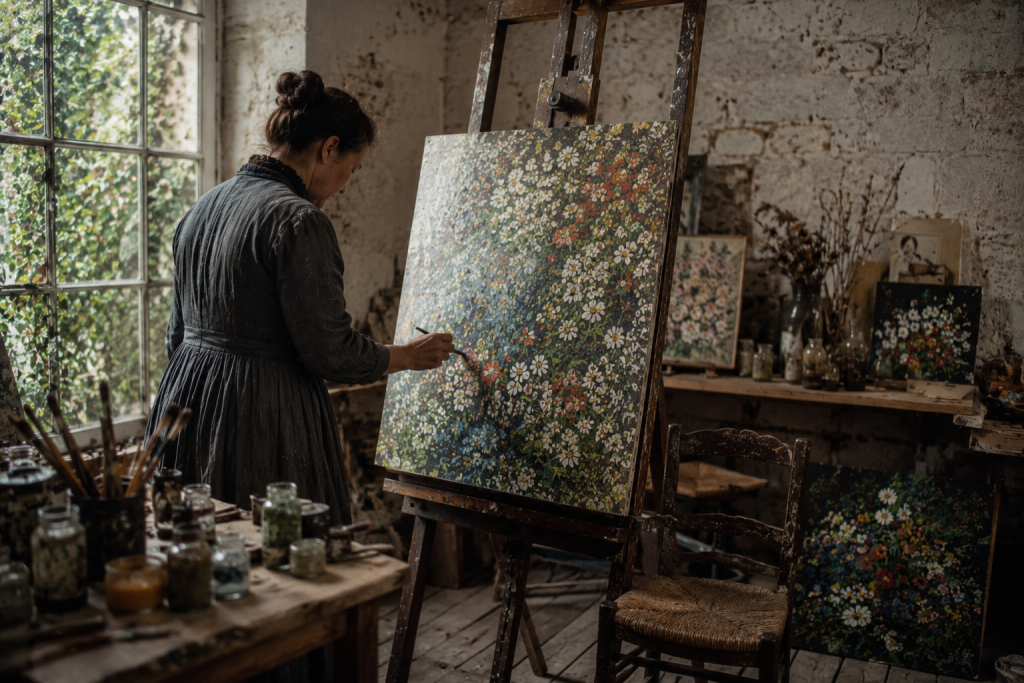
Working by candlelight, she filled canvases with lush leaves, flowers and dreamlike plants bursting with vivid color. She had never attended an art school, never studied under a famous painter and never expected recognition. Painting was simply part of who she was.
For years, almost no one saw what she created.
The Chance Meeting That Changed Everything
In 1912, Wilhelm Uhde came to Senlis. Already respected as one of the first collectors to support artists such as Pablo Picasso and Henri Rousseau, he had an exceptional eye for talent.
One day he noticed an unusual painting hanging in a nearby home. Its colors and composition immediately caught his attention, and he wanted to know who had painted it.
The answer stunned him.
The artist was Séraphine Louis, the woman who occasionally worked as his housekeeper.
Uhde bought the painting and encouraged her to continue. More importantly, he treated her work with the respect it deserved at a time when almost no one else believed in it.
History Interrupted Their Story
Their collaboration had barely begun when world events changed everything.
The outbreak of World War I in 1914 forced Uhde, a German citizen living in France, to leave the country. The two lost contact for more than a decade.
Séraphine remained in Senlis, continuing her quiet routine. She cleaned houses during the day and painted at night, often making her own pigments using secret mixtures that she never fully revealed.
Without patrons or recognition, she continued creating because she could not imagine doing anything else.
Success Arrived at Last
In 1927, Wilhelm Uhde returned to France and attended a local exhibition.
There, he immediately recognized Séraphine’s unmistakable style.
Her paintings had evolved dramatically. They were larger, more confident and filled with intricate botanical forms unlike anything else being produced at the time.
Uhde once again became her supporter, helping introduce her work to a wider audience through exhibitions in Paris. For the first time in her life, she experienced financial stability and the possibility of a genuine artistic career.
It seemed that years of quiet perseverance were finally being rewarded.
A Dream That Didn’t Last
Then came the Great Depression.
The economic collapse of 1929 devastated the art market. Collectors disappeared, sales slowed dramatically and Uhde could no longer provide the financial support that had allowed Séraphine to focus entirely on painting.
The loss affected her deeply.
Her mental health deteriorated, and in 1932 she was admitted to a psychiatric hospital. She never painted again.
Séraphine Louis died in 1942, during World War II, largely forgotten by the outside world.
The Recognition She Never Lived to See
Although her life ended in isolation, her work did not.
Art historians gradually recognized the originality of her paintings, and museums began preserving and exhibiting them. Today, Séraphine Louis is regarded as one of France’s most important self-taught artists, celebrated for a style that remains instantly recognizable more than a century later.
Her story is a reminder that extraordinary talent doesn’t always emerge from prestigious studios or famous academies. Sometimes it grows quietly in the background, unnoticed for years, waiting for someone willing to look a little closer.
Séraphine never became famous during her lifetime, but the paintings she created in silence continue to speak for her long after she was gone.