
On the morning of May 8, 2006, the headquarters of BBC in London was operating like any major live newsroom during a busy news cycle. Producers were moving quickly between control rooms, guests were waiting in reception areas, cameras were being prepared for live segments, and technical teams were coordinating every second of airtime with precision.
Nothing about that morning suggested that a simple misunderstanding would soon become one of the most recognizable live television mistakes ever captured on camera.
What began as an ordinary scheduling error would eventually turn into an internet phenomenon discussed for years across media outlets, journalism courses, and television retrospectives around the world.
The Unexpected Guest Nobody Intended to Put on Air
The man at the center of the story was Guy Goma, an IT professional originally from the Democratic Republic of Congo who had been living in the United Kingdom. That day, he had not come to the BBC as a commentator or media personality. He was there for a job interview related to a technical position.
According to reports later confirmed publicly by BBC representatives and multiple British news sources, Guy Goma arrived at the building and was asked to wait in a reception area before meeting with recruiters.
At nearly the same time, the BBC newsroom was preparing for a live technology segment involving journalist and technology commentator Guy Kewney.
The timing could not have been worse.
Both men shared the same first name.
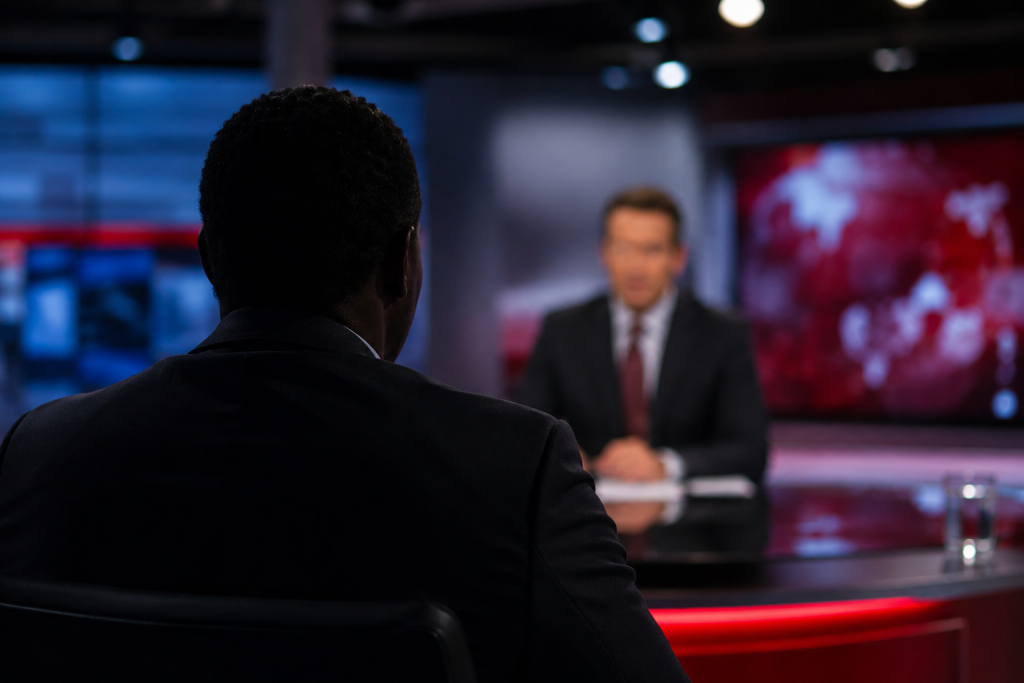
The Apple Dispute That Dominated Tech Headlines in 2006
The interview segment scheduled for that morning focused on a major legal dispute between Apple and Apple Corps, the multimedia company established decades earlier by members of The Beatles.
The conflict had existed in various forms since the late twentieth century. Apple Corps argued that Apple Computer’s expansion into digital music — especially through iTunes — crossed agreements previously made between the two companies regarding the use of the “Apple” name in music-related business activities.
At the time, the case attracted significant attention from technology journalists, financial analysts, and music industry observers. BBC News planned a live discussion explaining the implications of the ruling and its potential impact on digital media.
The invited expert expected to comment on the story was Guy Kewney.
But inside the building, there was another “Guy” waiting nearby.
How a Split-Second Assumption Led to Television History
Later explanations from the BBC described how a producer entered the reception area and asked staff to bring “Guy” to the studio for the live segment.
Reception personnel mistakenly directed the producer toward Guy Goma instead of Guy Kewney.
Because live television environments operate under intense time pressure, events moved extremely quickly from that point onward. Guests are often escorted rapidly through backstage corridors, fitted with microphones, briefly prepared for camera placement, and seated moments before broadcast.
Guy Goma was guided through this process without fully understanding what was happening.
By the time he entered the studio, there was little opportunity for anyone to stop and verify the mistake.
Media professionals later pointed out that fast-paced live production environments rely heavily on assumptions and routine patterns. Under pressure, people frequently process incomplete information automatically, especially when they believe they already understand the situation.
In this case, one incorrect assumption was enough to create one of television’s most unforgettable accidental moments.
The Facial Expression That Became Legendary
The clip became internationally famous largely because of Guy Goma’s reaction during the first seconds of the interview.
As the presenter began asking questions about the Apple legal dispute, his expression changed almost instantly. Viewers could clearly see confusion, surprise, and an attempt to process what was happening in real time.
Communication experts and psychologists later analyzed that reaction because of how authentic it appeared. Research involving facial microexpressions shows that genuine surprise often becomes visible before a person has time to consciously control their emotional response.
That split second of visible realization made the moment feel incredibly human.
Yet despite the obvious shock, Guy Goma did not panic or walk off set. Instead, he attempted to answer the questions as calmly and politely as possible.
Ironically, that decision made the situation even more remarkable.
Why the Interview Continued for Several Minutes
Although he was not a technology journalist and had not prepared for the segment, Guy Goma responded with broad, cautious comments about consumers, public interest, and digital music trends.
For a short period, the presenter appeared unaware that anything was wrong.
Behavioral psychologists later described the incident as an example of how people instinctively adapt to social pressure in formal environments. When unexpectedly placed into an official role — especially in front of cameras — many individuals attempt to cooperate rather than interrupt the situation.
This phenomenon is closely connected to what social scientists describe as role conformity. Human beings often unconsciously adjust their behavior to match the expectations of the environment around them.
Inside the BBC studio, Guy Goma suddenly found himself treated like an expert guest on live television, and part of his brain instinctively tried to fulfill that role.
The Internet Was Beginning to Change Television Forever
Shortly after the segment aired, the BBC realized the mistake.
The incident quickly spread across the internet during a period when online video culture was still in its early stages. Platforms like YouTube were only beginning to transform how audiences shared and consumed viral content.
That timing played a major role in the story’s lasting impact.
Before widespread online video sharing, many live television mistakes disappeared after broadcast unless they were replayed by traditional media outlets. But by 2006, internet forums, blogs, and emerging video-sharing websites allowed clips like this to circulate globally within hours.
The Guy Goma interview became one of the earliest examples of a truly international viral television moment.
BBC later acknowledged the error publicly and handled the situation with humor. Over time, Guy Goma appeared in additional interviews discussing the experience, while the clip itself became a permanent part of internet culture.
Why People Still Watch the Clip Today
Nearly two decades later, the footage continues to resurface online.
Part of the reason is obvious: the situation remains genuinely funny. But many media analysts believe the clip endured because it captured something far more universal than a simple broadcasting mistake.
Modern television is often carefully scripted, rehearsed, and controlled. The Guy Goma incident felt different because it exposed a completely unscripted human reaction in real time.
Viewers were not simply laughing at a production error. They were watching an ordinary person unexpectedly thrown into an extraordinary situation and trying, in the middle of confusion and pressure, to maintain composure in front of millions of people.
That authenticity is rare.
And perhaps that is why the moment never truly disappeared from public memory.