
In the winter of 1925, in one of the coldest and most isolated corners of Alaska, a Siberian Husky named Togo became part of a rescue mission that would later be remembered as one of the most remarkable endurance efforts in modern history. At the time, however, almost nobody imagined that this undersized, troublesome dog would one day lead a team through blizzards, unstable sea ice, and life-threatening temperatures while carrying medicine desperately needed by sick children.
For decades, the story of the Nome serum run was simplified into a single heroic image: a dog named Balto reaching the finish line with the antitoxin. Yet historians of the event, mushers, and Arctic researchers have long pointed out that the most dangerous and physically demanding section of the journey belonged to another team entirely — the one led by Norwegian musher Leonhard Seppala and his aging lead dog, Togo.
Today, nearly a century later, Togo is finally being recognized as one of the true heroes of the 1925 rescue mission.
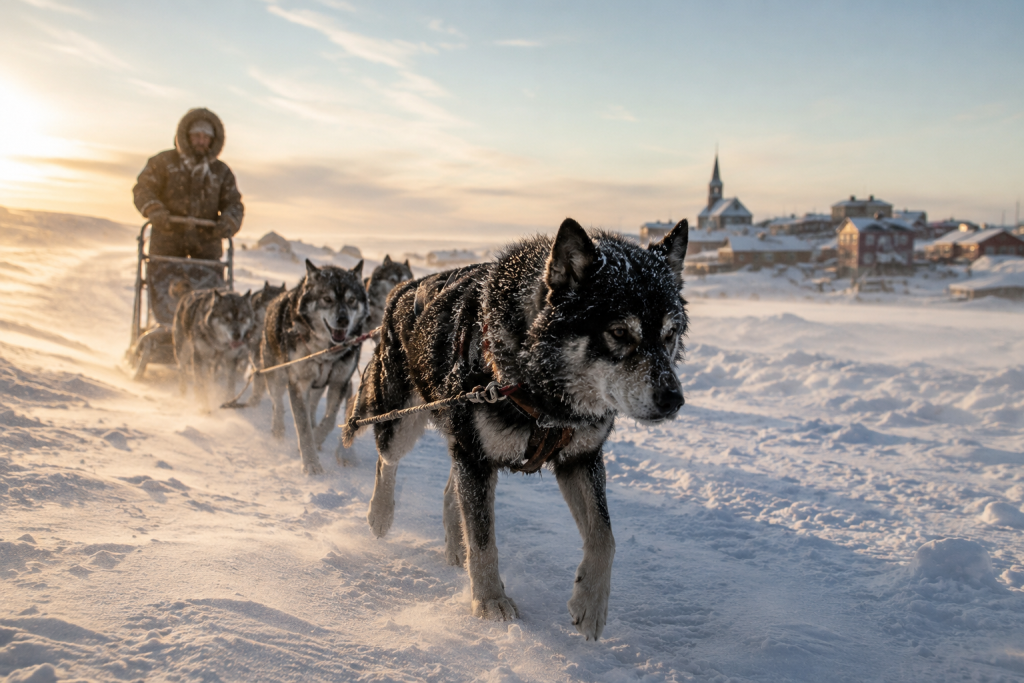
A Puppy Nobody Expected Much From
Togo was born in 1913 during a period when sled dogs were essential for survival across Alaska. Remote settlements depended on dog teams for transportation, deliveries, communication, and emergency travel during winters when ships could not sail and roads effectively disappeared beneath snow and ice.
Leonhard Seppala, already respected as one of Alaska’s most skilled mushers, bred Siberian Huskies specifically for endurance and intelligence. Early on, Togo did not appear particularly promising. Historical accounts describe him as smaller and physically weaker than the other puppies in the kennel, and Seppala reportedly doubted he would ever become a working sled dog.
Some stories claim the puppy was briefly given away as a pet because he seemed unsuited for trail work. Other versions describe Togo repeatedly escaping and returning to Seppala’s kennel. While certain details have likely been romanticized over time, what is well documented is that the dog eventually remained with Seppala and quickly began showing unusual determination and intelligence.
Unlike many sled dogs, Togo displayed an almost obsessive desire to lead. He constantly pushed against restraints, interfered with older dogs, and created chaos inside the kennel. At first, Seppala considered him difficult and exhausting to manage. Eventually, however, he realized the behavior came from something else entirely: the instinct of a born lead dog.
Why Diphtheria Terrified Entire Communities
By January 1925, the isolated town of Nome faced a growing medical emergency. The local doctor, Curtis Welch, began identifying symptoms consistent with diphtheria, a dangerous bacterial infection that once killed large numbers of children before vaccination became widespread.
Diphtheria is caused by the bacterium Corynebacterium diphtheriae, which releases a toxin capable of severely damaging the throat, respiratory system, heart, and nervous system. In serious cases, children could suffocate when thick membranes formed inside the airway.
At the time, treatment depended heavily on rapid administration of diphtheria antitoxin. Nome’s supply had either expired or become unusable, and winter conditions had cut the town off from normal transportation routes. Sea ice blocked ships from entering the harbor, and aviation in Alaska was still unreliable, especially during extreme cold.
Health officials feared that if the disease spread through the town, the consequences could become catastrophic.
The Desperate Race Across Frozen Alaska
A fresh supply of antitoxin was located hundreds of miles away. The medication was transported by train as far as Nenana, Alaska, but from there the only remaining option was a relay of sled dog teams crossing nearly 700 miles of frozen wilderness.
Roughly twenty mushers and more than one hundred dogs participated in the operation. Each team carried the serum across a section of the route before handing it to the next musher waiting farther west.
Leonhard Seppala and Togo were assigned what many later described as the most dangerous stretch of the entire mission. Instead of remaining near Nome, Seppala traveled eastward through worsening storms to intercept the incoming serum team and reduce overall delivery time.
At that point, Togo was already around twelve years old — considered elderly for a working sled dog expected to travel long distances in Arctic conditions.
Crossing Norton Sound in Near-Blizzard Conditions
One of the greatest risks involved crossing Norton Sound, a massive frozen inlet where sea ice could crack or drift apart without warning. Taking the shortcut across the Sound saved precious time, but it also exposed the team to moving ice, freezing seawater, and hurricane-force winds.
Meteorological records from that winter describe brutal conditions. Wind chill estimates reached levels capable of causing severe frostbite within minutes. Visibility often disappeared entirely during storms, leaving mushers dependent on the instincts of their lead dogs.
This was where Togo became indispensable.
Seppala later explained that during portions of the journey he relied almost completely on Togo’s ability to sense the safest direction across unstable terrain. A poor decision in those conditions could send an entire sled team into freezing water or leave them stranded on drifting ice.
Several historical accounts also describe a dangerous moment when the team became trapped on a floating ice floe. According to later retellings, Togo helped carry or retrieve a line that allowed Seppala to pull the sled closer to stable ice. Some details differ between sources, but the incident became one of the defining stories associated with the dog’s legendary reputation.
Why Balto Became Famous Instead
The serum ultimately reached Nome before the outbreak could spiral completely out of control. The final stretch into town was completed by another sled team led by Balto, whose arrival attracted enormous media attention across the United States.
Newspapers quickly transformed Balto into a national celebrity. He received public appearances, advertising deals, and eventually a famous statue in Central Park.
Meanwhile, many of the mushers involved in the relay believed the hardest and most dangerous work had been done earlier by Seppala and Togo. Their section covered far greater distance and included the hazardous crossings over Norton Sound.
Seppala himself spent years insisting that Togo was the finest dog he had ever worked with. He repeatedly praised the animal’s endurance, judgment, loyalty, and ability to lead in conditions where human visibility and navigation became nearly impossible.
The Scientific and Historical Importance of the Serum Run
Beyond its emotional legacy, the 1925 serum run highlighted the enormous challenges faced by remote Arctic communities before modern transportation and widespread vaccination programs.
The operation also demonstrated the importance of rapid response during infectious disease outbreaks. In the early twentieth century, diphtheria remained one of the deadliest childhood illnesses in many parts of the world. Vaccination campaigns later transformed public health outcomes dramatically, reducing mortality rates and making major outbreaks far less common in countries with routine immunization.
The serum run became a symbol not only of endurance and teamwork, but also of how fragile isolated communities could be when medicine and transportation failed to keep pace with emergencies.
Togo’s Final Years and His Delayed Recognition
After retiring from active trail work, Togo spent his later years in Maine, where he contributed to breeding programs that influenced future Siberian Huskies in North America.
He died in 1929 at approximately sixteen years old, an impressive age for a sled dog that had spent much of its life working in severe Arctic conditions.
For decades, his story survived mainly through musher communities, historical archives, and accounts from people connected to the serum run. Wider public recognition came much later. In recent years, books, documentaries, and the 2019 Disney film Togo helped introduce his story to a new generation.
Today, many historians consider Togo one of the greatest sled dogs in recorded history — not because of myth alone, but because the documented facts surrounding the 1925 rescue mission already speak for themselves.
The small puppy once dismissed as too fragile for the trail ended up leading one of the most dangerous medical rescue journeys ever attempted in the Arctic.