
When Maria Tallchief arrived in New York at just seventeen years old, she had one dream: to become a professional ballerina.
She quickly discovered that talent alone wasn’t what everyone was looking for.
Before her career had even begun, she was given advice that many young performers of the era accepted without question. Her name, she was told, didn’t sound right for the ballet world. It wasn’t elegant enough, and it certainly wasn’t Russian enough. Someone even suggested a new version that would sound more European to audiences.
Maria never considered it.
She had no intention of hiding her Native American heritage or pretending to be someone else simply to fit an industry built on tradition and expectations. If she succeeded, it would be under the name she was born with.
That single decision would become one of the defining moments of her remarkable life.
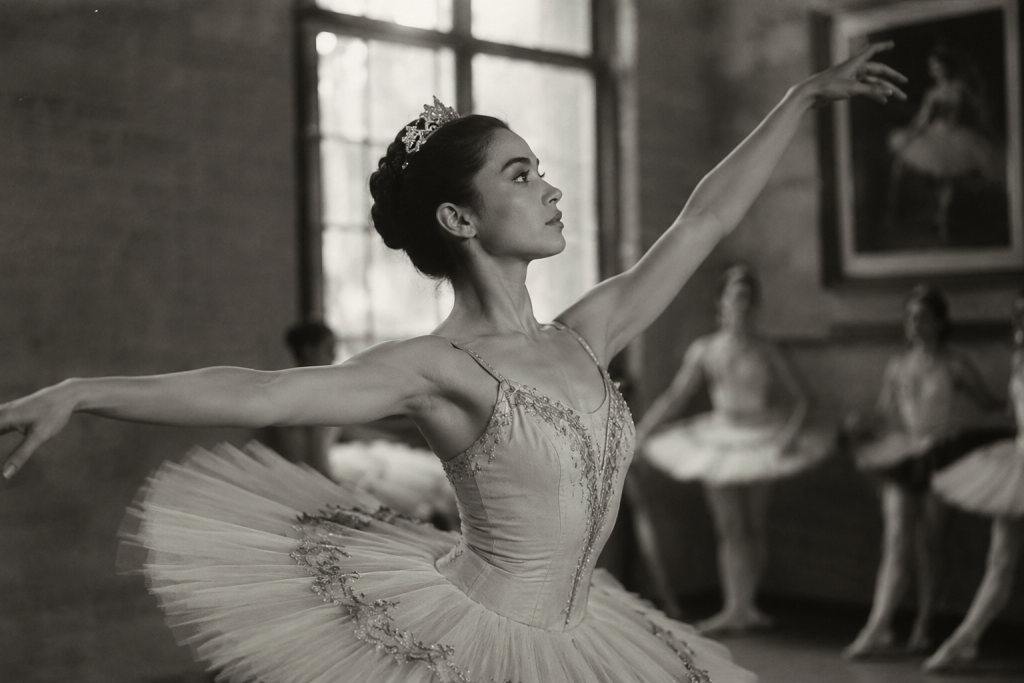
A Childhood Shaped by Two Different Worlds
Elizabeth Marie Tall Chief was born on January 24, 1925, in Fairfax, Oklahoma. Her father belonged to the Osage Nation, while her mother came from a Scottish-Irish family.
Growing up, Maria experienced two very different realities. Her family enjoyed financial security thanks to oil discovered beneath Osage lands, yet prejudice against Native Americans remained a part of everyday life.
Inside her home, she learned about the history of her people, their resilience, and the importance of preserving their identity. Outside, she entered a society where many believed success required blending in rather than standing out.
Those early lessons stayed with her for the rest of her life.
Chasing a Dream Few Americans Had Achieved
From an early age, Maria showed exceptional promise as both a pianist and a dancer. Recognizing her talent, her mother made the difficult decision to move the family to California so her daughters could receive world-class training.
Maria eventually studied under the legendary choreographer and teacher Bronislava Nijinska, whose demanding approach pushed her students to their limits.
At the time, becoming a leading ballerina as an American seemed almost impossible. The world’s greatest ballet companies were dominated by European traditions, particularly those rooted in Russia. Few people imagined that a young woman from Oklahoma could one day stand alongside the finest dancers in the world.
Maria focused on something much simpler.
She worked.
Hour after hour, class after class, she refined her technique until discipline became second nature.
The Mentor Who Saw Something Different
After joining the Ballet Russe de Monte Carlo, Maria steadily earned more prominent roles.
Her career changed forever when choreographer George Balanchine noticed her performances.
Unlike others, he wasn’t interested in turning her into another imitation of a European ballerina. He recognized qualities that made her unique—extraordinary speed, remarkable athleticism, musical precision, and a stage presence audiences couldn’t ignore.
Their artistic partnership helped shape what would become a distinctly American style of ballet.
One Performance That Changed Everything
In 1949, Maria took on the title role in Balanchine’s new production of The Firebird, set to Igor Stravinsky’s famous score.
She later admitted that she had been terrified before stepping onto the stage. Expectations were enormous, and critics were eager to see whether the young American dancer could carry such a demanding production.
She did far more than that.
Her performance captivated audiences and critics alike. Reviews praised not only her technical brilliance but also the energy and confidence she brought to the role.
Almost overnight, Maria Tallchief became one of the brightest stars in international ballet.
Success Without Compromise
The years that followed confirmed that her breakthrough had not been a matter of luck.
She became one of the defining artists of New York City Ballet, performed many of classical ballet’s most celebrated roles, and made history as the first American ballerina invited to perform at Moscow’s Bolshoi Theatre.
Her portrayal of the Sugar Plum Fairy also helped establish The Nutcracker as one of America’s most cherished holiday traditions, a legacy that continues every Christmas season.
After retiring from the stage in 1965, Maria devoted herself to teaching, mentoring young dancers, and strengthening ballet institutions in the United States.
Her contributions earned some of the nation’s highest cultural honors, including the Kennedy Center Honors and the National Medal of Arts. In 2023, she was further recognized when she appeared on a U.S. quarter as part of the American Women Quarters Program.
Why Her Story Still Matters
Maria Tallchief’s legacy extends far beyond ballet.
She proved that success doesn’t require abandoning your identity to meet someone else’s expectations.
At a time when many believed the world’s finest dancers had to come from Europe, she showed that excellence could emerge from anywhere—including Oklahoma—and that a Native American woman could stand at the very highest level of an art form long dominated by others.
The most important moment of her career wasn’t the standing ovations or the international awards.
It was the day she refused to become someone else.
History never remembered the name people wanted her to adopt.
Instead, it remembers Maria Tallchief—the dancer who proved that staying true to yourself can become your greatest strength.