
There are foods you eat because you’re hungry.
And there are foods you eat because you’re longing for something.
Chocolate, most of the time, isn’t about hunger. It’s about reward. About comfort. About childhood. About “I had a long day.” About that small moment when everything pauses for a few seconds.
But while you’re experiencing taste, texture, and comfort, something very real is happening inside your body. Chemical. Measurable. Minute by minute.
And like anything that offers quick pleasure, the difference between enjoyment and excess isn’t dramatic. It’s subtle. Repeated. Daily.
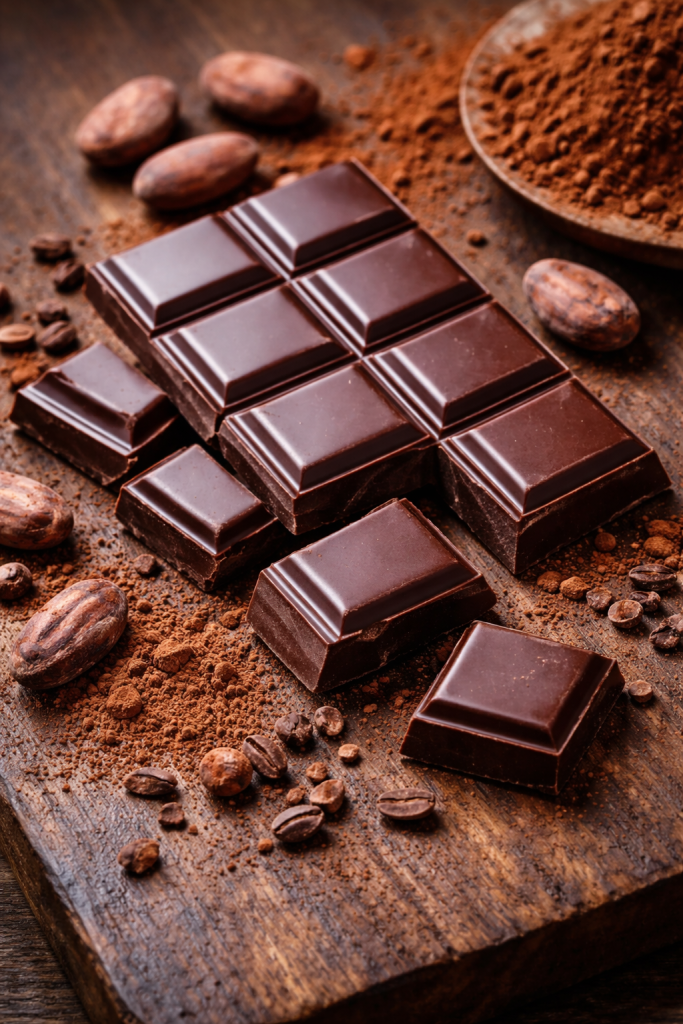
Minute 0–5: Your Brain Reacts
The moment chocolate touches your tongue, receptors for sweetness and fat send signals straight to the limbic system — the part of the brain responsible for emotion and reward.
Dopamine is released. Serotonin rises slightly. Endorphins follow.
If it’s dark chocolate, theobromine enters the picture — a compound related to caffeine that gently stimulates the central nervous system. It doesn’t jolt you like coffee, but it can create a subtle clarity, a quiet sense of “I feel a little better.”
Your brain registers it quickly: this feels good.
Not just physically. Emotionally.
Minutes 10–30: Blood Sugar Rises
If the chocolate contains sugar (and most do), glucose enters your bloodstream. Blood sugar levels begin to rise. Your pancreas releases insulin so your cells can absorb that glucose and convert it into energy.
You may feel slightly more energized. Maybe more optimistic. Maybe calmer.
For a healthy adult, this is a normal physiological response.
If you ate it on an empty stomach, the rise will be faster. If you have diabetes or insulin resistance, the spike may be more pronounced and harder to regulate.
This is when the pleasure peaks. And without realizing it, your brain starts linking emotion to food.
1–2 Hours Later: Balance or Crash
Insulin does its job. Glucose is absorbed into cells. If you consumed more energy than your body needs, the excess begins to be stored — primarily as fat.
Some people experience a mild drop in energy. Others feel a renewed craving for something sweet.
Not because the body “needs” it — but because the dopamine–sugar loop has been activated.
Not All Chocolate Is the Same
The biggest difference lies in cocoa content.
Dark chocolate — typically 70% cocoa or higher — contains flavonoids, antioxidant compounds that have been extensively studied. Research published in medical journals such as BMJ and analyses referenced by Harvard School of Public Health suggest that cocoa flavonoids may improve endothelial function — essentially how well your blood vessels expand and contract.
Some meta-analyses have associated moderate dark chocolate consumption with a lower risk of high blood pressure and stroke.
Important: we’re talking about moderate intake and high-cocoa chocolate.
Milk chocolate and white chocolate contain more sugar and fewer bioactive compounds. Their glycemic impact is higher, and their antioxidant benefit is significantly lower.
Science doesn’t claim chocolate is medicine. It does show that certain components of cocoa have measurable biological effects.
What Happens If You Eat Chocolate Every Day
One day doesn’t change much.
But the body is adaptive.
After several days of daily consumption, dopamine receptors begin adjusting to repeated stimulation. The same amount no longer produces the same intensity of pleasure.
Cravings may increase slightly.
After one to two weeks of higher intake — especially sugar-heavy products — you may notice:
- More noticeable energy fluctuations
- More frequent sweet cravings
- A slight decrease in insulin sensitivity in predisposed individuals
- Changes in gut microbiome balance
Emerging research shows the gut microbiome communicates continuously with the brain. Gut bacteria can influence cravings and food preferences indirectly.
This isn’t addiction in the same way nicotine is. But it is a repeated reward mechanism.
Chocolate at Different Life Stages
Children
In children, blood sugar rises more quickly, and fluctuations can affect behavior and energy levels. Frequent sugar exposure shapes taste preferences and emotional associations with sweetness.
The occasional piece isn’t the issue. Turning sweets into a daily reward can be.
Healthy Adults
In adults without metabolic concerns, moderate dark chocolate intake may support vascular function and reduce perceived stress.
Daily excess, however, contributes to calorie surplus and can promote visceral fat accumulation over time.
During Pregnancy
Chocolate contains small amounts of caffeine and theobromine. In moderate amounts, it’s generally considered safe. However, overall sugar intake should be monitored, especially in those at risk for gestational diabetes.
Adults Over 60
Flavonoids may support cerebral blood flow, and some studies suggest temporary improvements in certain cognitive functions due to increased circulation.
At the same time, if diabetes, metabolic syndrome, or acid reflux are present, excess intake may worsen symptoms.
Chocolate and Mood
Some studies show an association between moderate dark chocolate consumption and lower perceived stress levels.
But association does not mean direct causation. People who consume moderate amounts of dark chocolate often have other health-supporting habits.
Still, the reward-system effect is real.
Stress → chocolate → dopamine → temporary calm.
If this loop repeats frequently, the brain learns the pattern.
What Your Body Feels When You Eat Too Much
Frequent, high-quantity consumption over time may contribute to:
- Weight gain
- Insulin resistance
- Chronic low-grade inflammation
- Worsened acid reflux
- Mood fluctuations
The difference between pleasure and problem almost always comes down to quantity and frequency.
The Scientific Bottom Line — Without Exaggeration
Dark chocolate, in moderation, can be part of a healthy lifestyle and may offer mild cardiovascular benefits.
Sugar-heavy chocolate consumed frequently and in large amounts contributes to metabolic risk.
In your body, chocolate creates real hormonal, metabolic, and neurological responses.
In your mind, it creates equally real responses: comfort, reward, ritual.
Maybe the better question isn’t “Is chocolate good or bad?”
Maybe it’s: Is this a conscious choice, or a repeated reflex?
Because sometimes we don’t eat chocolate because we’re hungry.
We eat it because, for a few minutes, we want to feel better.