
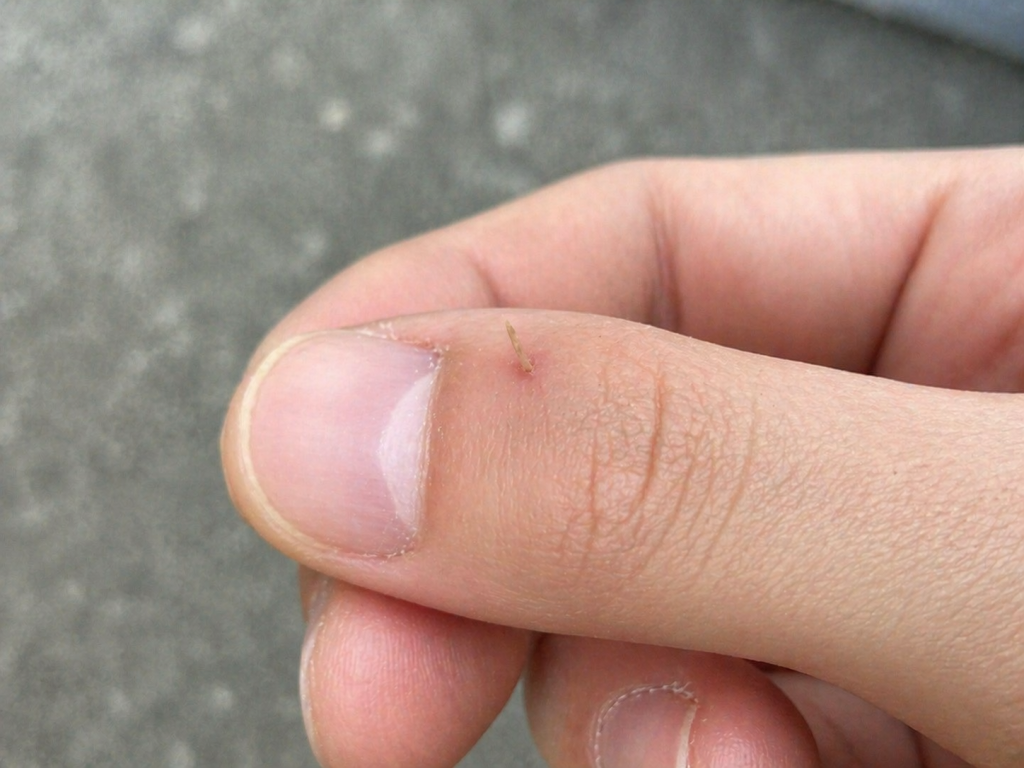
You’ve probably felt it before—that tiny sting in your finger, you glance down, notice the splinter, and hope it’s nothing. But over the next few hours, your body doesn’t ignore it at all. The area starts to hurt, turn red, maybe even swell slightly, as if something more serious is going on. For your body, that tiny fragment isn’t harmless—it’s an intruder.
The moment it enters: your body reacts instantly
As soon as a splinter or a rose thorn breaks the skin, nearby cells are damaged and nerve endings are triggered, which explains the sharp, immediate pain. At the same time, your body recognizes that this object doesn’t belong there.
There’s no delay. The immune system reacts almost instantly, treating the situation as a potential threat.
Inflammation: the reaction you can’t ignore
The area becomes red, slightly swollen, and sensitive to touch. Blood vessels widen, increasing blood flow and bringing immune cells to the site.
This is inflammation—a key defense mechanism. Your body is essentially surrounding the problem and preparing to deal with it.
What your body does with the splinter: remove it or seal it off
This is the question most people have: will your body push it out, or will it stay there?
If the splinter is small and close to the surface, your body may gradually push it out on its own. Skin constantly renews itself, and combined with local inflammation, this can slowly move the foreign object outward until it disappears.
If it’s deeper or harder to shift, your body may choose a different strategy. Instead of removing it, it isolates it. It forms a tiny capsule of tissue around the splinter, separating it from the rest of the body. In this case, it can remain there without causing noticeable problems.
Why pus sometimes appears
If bacteria enter the area, the immune response becomes stronger. White blood cells move in to fight the microorganisms, and the result of this process is pus.
Pus isn’t just a sign of infection—it’s evidence that your body is actively trying to clean the area and eliminate the threat.
Why a rose thorn can be more problematic
A rose thorn isn’t just sharp—it can carry bacteria or even fungi from the environment. Because of this, the body’s reaction can be more intense compared to a simple splinter.
The area may stay sensitive longer, and the risk of prolonged inflammation is higher.
When it comes out on its own—and when it doesn’t
If the splinter is small, shallow, and relatively clean, your body has a good chance of pushing it out naturally over time.
If it’s deeper, larger, or contaminated, it’s more likely to remain in place or cause ongoing irritation, which may require removal.
The key idea
A splinter may seem insignificant, but your body treats it seriously. It detects, reacts, isolates, and, when possible, removes anything that doesn’t belong.
Even in the smallest situations, your body is constantly working to protect you—quietly, efficiently, and without hesitation.