
Head lice are one of those topics people tend to whisper about, often associated with embarrassment or assumptions about hygiene.
In reality, things are much simpler — and far more common — than most people think.
Having head lice is not a sign of poor hygiene, and it is not limited to certain environments. It can happen to almost anyone, especially in group settings.
What head lice actually are
Head lice (Pediculus humanus capitis) are tiny parasitic insects that live on the human scalp and feed on small amounts of blood.
They do not live in clothing, they do not appear because of “dirt,” and they cannot survive long away from a human host.
Outside the scalp, they usually survive for less than 24–48 hours.
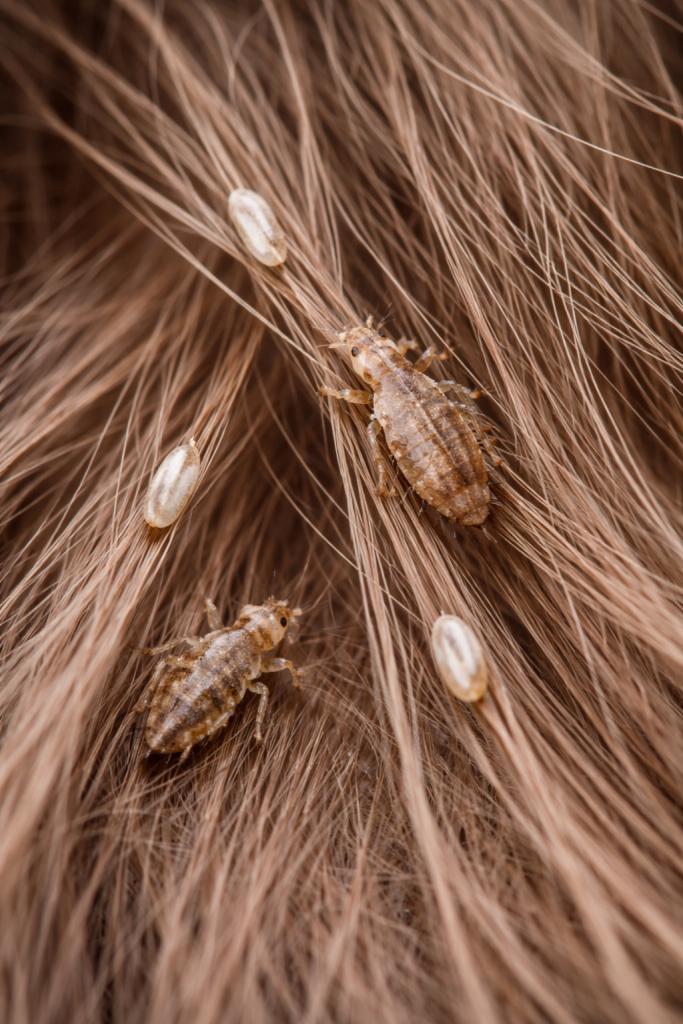
Why head lice appear
Head lice do not appear because hair is dirty.
They spread through contact with someone who already has them.
This is why they are commonly found in:
- schools
- daycare settings
- crowded environments
- households
Even brief head-to-head contact can be enough for transmission.
Who can get head lice
The simple answer: anyone.
There is no “protected” group.
However, they are more common in children, especially school-aged children, because they:
- interact closely during play
- spend time in groups
- may share personal items
Head lice infestations are common worldwide and are not unusual.
Are they easy to catch?
Yes, but not in the way many people think.
They spread mainly through direct head-to-head contact.
Transmission through objects such as:
- combs
- hats
- pillows
is possible, but much less common than often assumed.
Do lice jump onto you in public transport?
This is one of the most widespread myths.
Head lice:
- do not jump
- do not fly
They move by crawling from one hair strand to another.
So the idea that they can “jump” onto you in a bus or subway is inaccurate.
Close contact is usually required for transmission.
Do they prefer dirty or clean hair?
Another common misconception.
Head lice do not prefer dirty hair.
They can live just as easily in clean hair.
Some observations even suggest that clean hair may allow them to move more easily.
So infestation is not related to personal hygiene.
How they develop (life cycle)
Understanding their life cycle helps explain why treatment requires attention.
An adult louse lives for about 30 days and can lay several eggs each day.
These eggs, called nits, are attached firmly to the hair shaft close to the scalp.
- they hatch in about 7–10 days
- the young lice mature quickly
- the cycle continues if not interrupted
This is why treatment often needs to be repeated — to address newly hatched lice.
How to recognize them
The most common symptom is:
- an itchy scalp
This is caused by the body’s reaction to bites.
Other signs may include:
- scalp irritation
- small sores from scratching
- a tickling sensation
- visible nits attached to hair strands
Are they difficult to get rid of?
They are not dangerous, but they can be persistent.
The main challenge is not the adult lice, but the eggs.
Nits are:
- strongly attached to hair
- not easily removed
- capable of causing reinfestation if left behind
That’s why treatment requires consistency and attention.
What actually works
Effective treatment usually includes:
- pharmacy-approved lice treatments
- careful combing with a fine-tooth comb
- repeating the treatment after several days
It is also important to:
- check close contacts or family members
- clean personal items when needed
Do head lice spread diseases?
An important reassurance:
Head lice do not typically transmit diseases.
Most issues are related to itching and skin irritation from scratching.
One important thing to remember
Head lice are not a sign of poor hygiene.
They are not something to be ashamed of.
They do not appear because someone is “unclean.”
They are simply a common condition that spreads easily in certain situations.
Why this topic still feels uncomfortable
Perhaps because it is still incorrectly associated with neglect.
And because when it happens, the first reaction is often embarrassment rather than information.
But the reality is much simpler:
It is common, manageable, and usually easy to resolve with the right approach.
A question worth asking
If head lice can affect anyone, regardless of hygiene…
why do we still treat them as something embarrassing?