
You can be completely comfortable in the water and still feel an instant wave of unease when you see something man-made resting beneath the surface. A shipwreck, a statue, a metal structure half-hidden in the dark… nothing is moving, nothing is actively threatening, and yet the reaction is immediate.
That reaction is known as submechanophobia.
The term comes from the idea of “mechanical” objects located underwater, and it describes a very specific kind of discomfort triggered not by the water itself, but by human-made structures placed in an environment where they don’t seem to belong. It isn’t always formally listed as a separate condition in clinical manuals, but it fits within the broader category of specific phobias, where a clearly defined trigger can provoke a strong emotional response.
What makes this reaction unusual is that the objects involved are normally harmless. A boat, a sculpture, or a piece of machinery doesn’t feel threatening on land. But once it is submerged, surrounded by darkness and distortion, perception shifts dramatically.
Why your brain reacts to submerged objects
The human brain is built to recognize patterns quickly and to predict what comes next. Objects created by people are usually associated with structure, purpose, and control. They belong to environments that make sense.
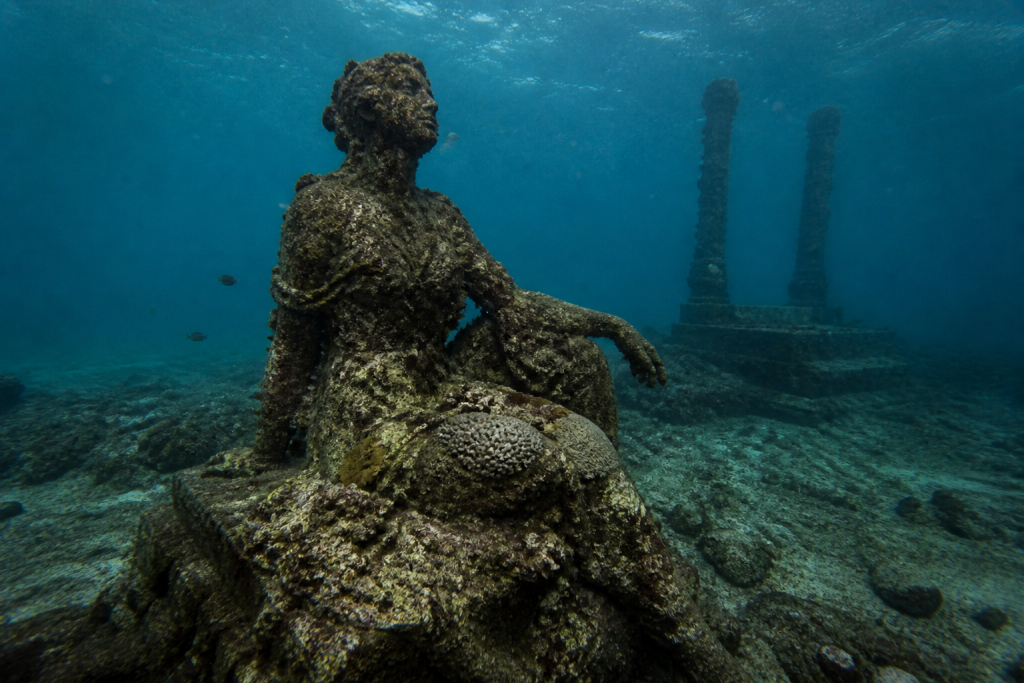
When those same objects appear underwater, especially in deep or unclear conditions, that sense of familiarity breaks. Something recognizable is suddenly placed in a setting that feels unpredictable, and the brain struggles to reconcile the two.
This mismatch creates tension.
Structures like the amygdala play a key role here, because they are responsible for rapidly evaluating potential threats. When information is incomplete or ambiguous, the brain tends to lean toward caution, activating protective responses even without a clear danger.
Physiologically, this can show up as a faster heartbeat, subtle muscle tension, or a feeling of unease that seems to come out of nowhere. It’s part of the fight or flight response, a system designed to prepare you for risk, even in safe conditions.
Why water makes everything feel more intense
Water, especially when it’s deep, changes how we perceive the world. Light fades quickly, colors disappear, and shapes become harder to interpret. Visibility drops, and distances are difficult to judge.
In that kind of environment, a submerged object can appear larger, closer, or more distorted than it really is. The lack of clear boundaries and reference points increases the sense of uncertainty.
From an evolutionary standpoint, humans are not naturally adapted to complex underwater environments. We rely heavily on vision and spatial awareness, both of which are limited in water. When something unfamiliar appears in that already uncertain space, the brain amplifies the signal.
Why even photos can trigger the same feeling
One of the most surprising aspects of submechanophobia is that it doesn’t require real-life exposure. Many people feel the same discomfort just by looking at images or videos.
This happens because the brain responds to visual cues rather than waiting for physical confirmation. If an image contains enough elements — depth, darkness, partial visibility, and a misplaced object — it can activate the same neural pathways involved in threat detection.
In other words, the brain reacts to the pattern, not the reality.
That’s why a still image can feel unsettling even when you fully understand that you’re safe.
Why some people feel it more strongly than others
Not everyone experiences this reaction in the same way, and that variation is completely normal. It depends on how sensitive a person’s nervous system is, how comfortable they are with uncertainty, and what kinds of experiences they’ve had in the past.
Some people are more tolerant of ambiguity and unfamiliar environments, while others have a more responsive internal alarm system that activates more easily. Personal exposure to water, past experiences, and even genetic factors can all play a role.
That’s why one person might find a shipwreck fascinating, while another feels immediate discomfort looking at the same image.
What this reaction actually means
At first glance, it can seem like an overreaction, but it’s not.
Submechanophobia reflects a protective mechanism doing its job. The human brain is designed to anticipate risk, and when it encounters something that doesn’t fit expected patterns — especially in an environment that is already difficult to interpret — it defaults to caution.
It’s not a flaw. It’s a bias toward safety.
In the end, this isn’t just about objects underwater.
It’s about what happens when something familiar appears in the wrong place, in a setting where visibility, control, and predictability are reduced.
And that uneasy feeling you get?
It’s your brain trying to make sense of something that doesn’t quite belong — and choosing to stay alert, just in case.