
I remember very clearly that this didn’t start as anything serious, and it definitely wasn’t meant to uncover something life-changing. I was still in school, somewhere between biology classes and early genetics lessons, at that point where everything suddenly starts to make sense and you feel the urge to test it in real life, just to see if what you learned actually holds up outside the textbook.
We had been learning about blood types, alleles, how traits are inherited, how combinations between parents determine what is possible and what isn’t, and for the first time it didn’t feel abstract anymore. It felt structured, logical, almost like solving a puzzle where every piece had its place.
Out of curiosity, I started with myself. It felt safe, almost obvious. I looked at my parents’ blood types and tried to map out what combinations could result in mine, what would have been possible, what wouldn’t, and everything lined up exactly as expected. It was neat, predictable, and reassuring in a way that only clear logic can be.
That’s where it could have ended.
But it didn’t.
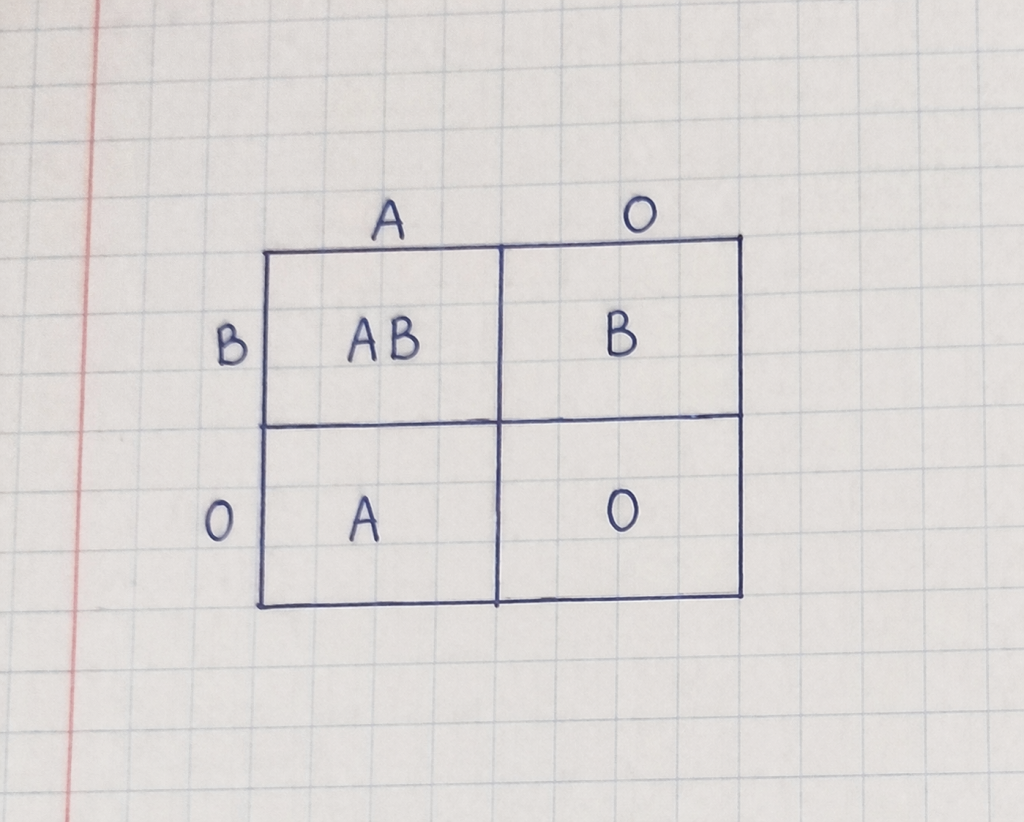
The moment curiosity becomes something else
One afternoon, I was at a classmate’s house, working on a completely unrelated project. At some point, the conversation drifted toward what I had been doing with blood types and genetics. There was no weight behind it, no hidden intention, just the kind of casual sharing that happens when something genuinely interests you.
She got curious almost immediately and asked if we could try the same thing for her.
So we did.
We wrote down her parents’ blood types, started mapping out the possible combinations, talking through dominant and recessive traits, how certain outcomes appear, how others don’t, everything still felt like a simple academic exercise.
Until it didn’t.
At first, I assumed I had made a mistake. That’s always the first instinct. You double-check, you go back, you recalculate, you try different combinations, just to make sure you didn’t miss something obvious.
But no matter how many times we went through it, the conclusion stayed the same.
Her blood type didn’t match what would be expected from her parents.
Not unlikely.
Not rare.
Just… not consistent with what we had learned.
When theory meets real life
We didn’t say it out loud right away, but we both understood what that meant. There are moments when silence carries more meaning than any explanation, and this was one of them.
There were only a few possible explanations.
Either the man she believed to be her father wasn’t her biological father, whether she knew it or not, or she had been adopted and never told.
Neither option felt light. Neither felt like something you casually “discover” during a school exercise.
And suddenly, what had started as curiosity turned into a question that couldn’t be ignored anymore.
What she chose to do
We didn’t push the conversation further that day. There’s a point where you realize it’s no longer your place to go deeper, even if you were there when the question first appeared.
A few days later, she came back to me.
She told me she couldn’t just forget it.
But she also knew this wasn’t something you confront impulsively.
She didn’t go to her father.
She didn’t create a scene or turn it into an accusation.
Instead, she chose to talk to her mother first.
Not with a detailed genetic explanation, not with charts or arguments, but simply by saying that something didn’t make sense and that she needed to understand why.
Sometimes, the answer isn’t in what people say.
It’s in how they react.
Her mother didn’t deny it.
Didn’t ask for clarification.
Didn’t try to correct her.
She broke down.
And in that moment, without any tests, without any formal confirmation, the truth was already there.
The kind of truth you can’t “unsee”
She didn’t tell me everything after that, and I didn’t ask for details, because some things cross a line where curiosity no longer feels right.
But she did say something that stayed with me far longer than anything we had learned in class.
She said she wasn’t sure she actually wanted to know.
Because once she asked the question, there was no way back to how things were before.
What school doesn’t prepare you for
In theory, genetics is clean, structured, and logical. You learn the rules, the combinations, the probabilities, and most of the time, those rules work.
But real life doesn’t exist in the same controlled environment as a classroom.
Because beyond alleles and blood types, there are relationships, trust, and histories that aren’t visible on paper.
There are also exceptions, rare cases where biology doesn’t follow the simplest patterns, but most people don’t think about those first.
They think about betrayal.
About secrets.
About things that go far beyond science.
The uncomfortable question that remains
Looking back, I don’t question the genetics. The logic was sound.
What I question is something else entirely.
Not whether we had the right to figure it out.
But whether every truth needs to be uncovered the moment you have the tools to do it.
Because sometimes, it’s not the discovery itself that changes everything.
It’s the fact that once you see the possibility, you can’t go back to not knowing.