
There’s an animal that shows up again and again in dark stories, movies, and myths that don’t really do it justice. We tend to associate it with fear, with the night, with things we don’t fully understand.
But the reality is very different.
Bats are not symbols of danger. They are among the most useful animals in the ecosystems we live in, even if most of the time we don’t even notice them.
They’re Not Blind—They Perceive More Than We Think
One of the most common myths is that bats are blind.
They’re not.
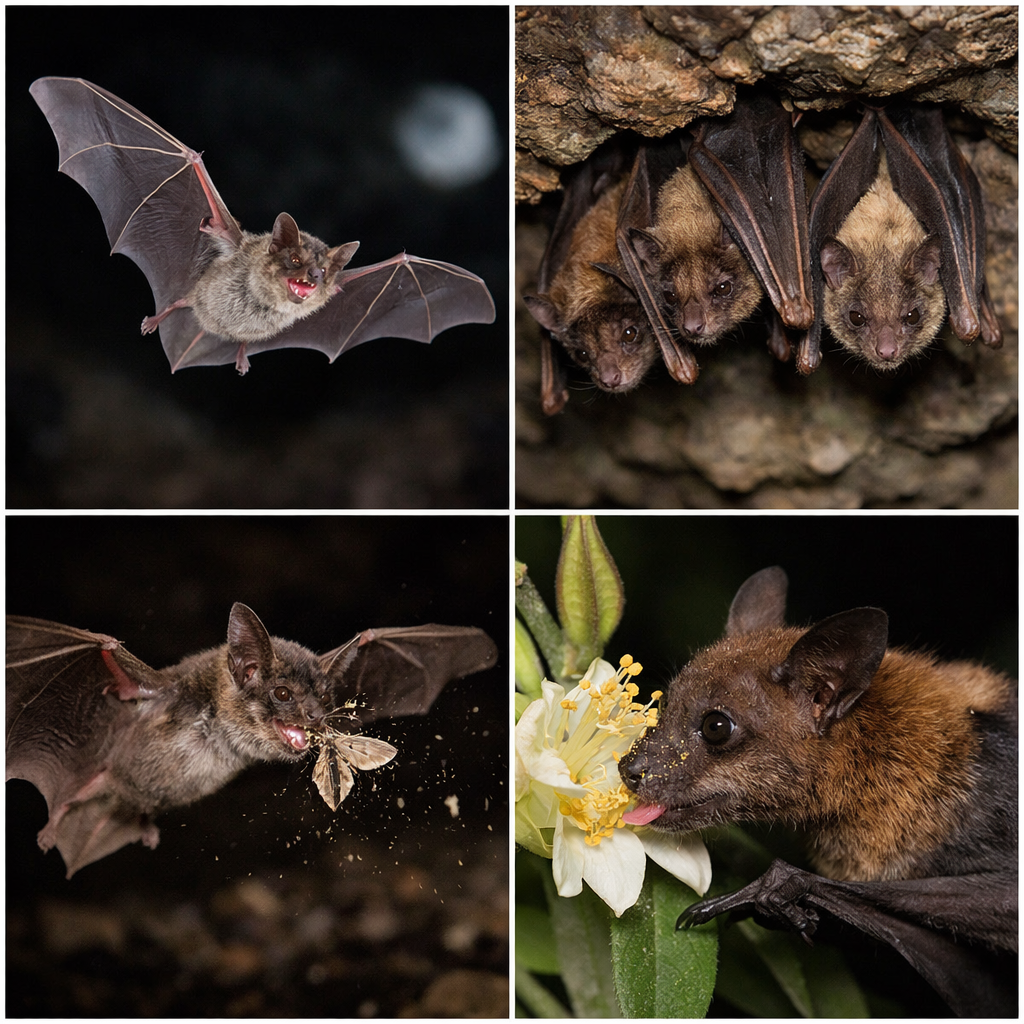
Most species can see, and some actually see quite well in low-light conditions. On top of that, they use echolocation—an incredibly precise system where they emit sounds and interpret the returning echoes to map their surroundings.
They can detect tiny insects in complete darkness, avoid obstacles we wouldn’t even notice, and move with remarkable accuracy.
They don’t lack vision.
They simply have more than one way of understanding the world.
Their Name and Image Say More About Us
In Romanian, the word for bat doesn’t carry a strong negative meaning, but the way we see these animals has been shaped by stories and cultural influences.
In other languages, early terms were used to describe small flying creatures of the night that people didn’t fully understand. Because bats didn’t fit neatly into familiar categories—not quite birds, not quite like other animals—they were seen as strange and difficult to define.
And what we don’t understand… we tend to mistrust.
From Dracula to Batman: How Fear Took Shape
The connection between bats and fear doesn’t come from science—it comes from storytelling.
The idea of vampires, popularized through European folklore and characters like Dracula, linked bats with danger and mystery. It’s true that a few bat species feed on blood, but they are rare and behave nothing like the dramatic versions seen in movies.
They don’t hunt humans. They don’t attack people in everyday life.
But the idea alone was powerful enough to shape perception.
In modern culture, the symbol continued. Batman, for example, chose the bat as his emblem precisely because it evokes fear.
Not because bats are dangerous in reality.
But because we’ve learned to see them that way.
They Control Insects Better Than Any Artificial Solution
A single bat can consume hundreds or even thousands of insects in one night.
At the level of an entire colony, the impact becomes significant. Bats help reduce insect populations, including those that damage crops.
In some regions, their contribution is so important that it noticeably reduces the need for pesticides.
Without bats, we would likely face more insects, more crop damage, and greater reliance on chemicals.
They Play a Key Role in Pollination
Not all bats eat insects.
Some species feed on nectar and are essential pollinators. Certain plants depend almost entirely on bats to reproduce.
This includes plants like agave and various tropical fruits.
Without bats, these ecosystems would struggle to function properly.
They Live Much Longer Than You’d Expect
For animals of their size, bats have surprisingly long lifespans.
Many species live over 20 years, and some can reach 30 or even 40 years. This is unusual among small mammals.
The Only Mammals That Truly Fly
Bats don’t glide—they fly.
Their wings are made of a thin membrane stretched over elongated finger bones, giving them flexibility and precise control in the air.
They can change direction quickly, avoid obstacles in fractions of a second, and navigate through very tight spaces.
They Care for Their Young—More Than You’d Think
Bats are not indifferent animals.
Females usually give birth to a single pup per year and care for it closely. In many species, females form nursery groups where they raise their young together.
Newborns are completely dependent at first. They either cling to their mother or stay within the colony until they are able to fly.
One of the most fascinating details is that a mother can recognize her own pup among hundreds or even thousands, using sound and scent.
It’s a much more complex bond than it might seem.
Why Do We Fear Them?
The fear of bats doesn’t come from real danger, but from the unknown.
They are active at night, they hide in hard-to-reach places, and they live in ways that are different from us. All of this makes them seem unfamiliar.
In reality, they avoid humans and don’t seek interaction.
Quiet, Unseen… and Essential
Bats are not visible during the day and rarely draw attention.
And yet, their impact is enormous.
Without them, natural balance would be affected. Insects could multiply unchecked, certain plants might disappear, and the effects would eventually reach our daily lives as well.
They may not be easy to understand.
They may not feel comforting.
But they are exactly the kind of animal the world depends on.
They are not what we think.
They are far more important than we imagine.