
Would you put something produced by a snail on your face?
It sounds unusual. And yet, millions of people use skincare products containing snail mucin every day. It has become one of the most talked-about ingredients in modern skincare, especially in Korean beauty routines.
But is it just a strange trend… or is there real science behind it?
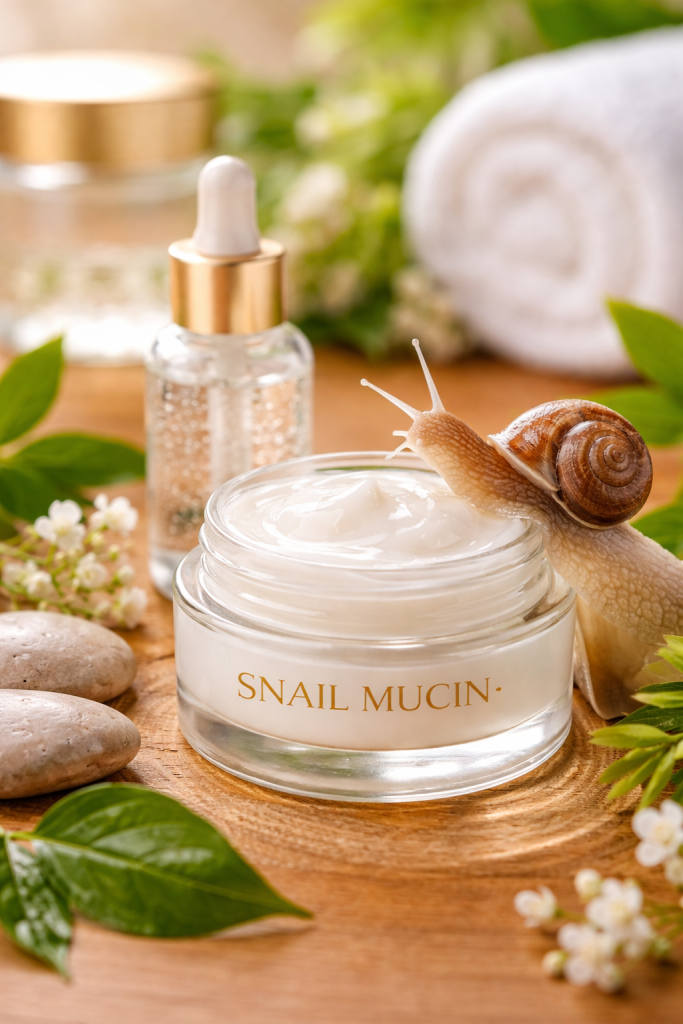
What Is Snail Mucin, Really?
Snail mucin—often listed on labels as snail secretion filtrate—is the substance snails produce to move and protect their bodies.
In nature, this secretion plays several important roles:
- protecting soft tissues
- preventing dehydration
- helping repair minor damage
- providing a barrier against microbes
These natural functions are what first attracted scientific and cosmetic interest.
What Does It Contain—and Why Is It Useful?
Snail mucin isn’t just a simple slime. It’s a complex mix of biologically active compounds, including:
- hyaluronic acid → helps retain moisture
- glycoproteins and proteins → support skin repair
- allantoin → promotes healing
- glycolic acid → supports gentle exfoliation and cell turnover
- antioxidants and peptides → help protect and maintain skin elasticity
In simple terms, the same mechanisms that help a snail protect and repair its body may also support the skin’s natural recovery process.
What Does the Research Say?
Interest in snail mucin isn’t based on marketing alone.
Some studies suggest that it may:
- support collagen-related activity in skin cells
- contribute to skin repair and regeneration
- have antibacterial and anti-inflammatory properties
- help improve hydration and overall skin condition
However, expectations should remain realistic. It is not a miracle ingredient, and results can vary depending on the product and individual skin type.
What Can It Realistically Do for Your Skin?
In practice, snail mucin is most valued for:
- hydration
- soothing irritated skin
- improving skin texture
- supporting recovery from minor skin concerns (such as acne marks)
It’s considered a multi-functional, gentle ingredient rather than a quick fix.
Is the Snail Itself Used?
No.
Modern skincare products use only the secretion, which is:
- collected from live snails
- filtered
- purified
This process helps ensure the ingredient is safe and suitable for use on the skin.
Are Slugs Used Too?
In cosmetic production, the mucus comes almost exclusively from snails, not slugs.
Although both produce mucus, snails are easier to farm, more consistent, and better studied in cosmetic research. For this reason, most commercial products rely on snail-derived extracts.
Do People Really Put Snails Directly on Their Face?
In some cases—mostly online—there have been trends where people place live snails directly on their skin and let them move across the face.
While this may seem like a “natural” alternative, it is not recommended. Snails can carry bacteria or environmental contaminants, and this method is not controlled or hygienic.
Formulated skincare products are designed to be stable, purified, and tested—making them a much safer option.
Why Has It Become So Popular?
Snail mucin gained popularity alongside Korean skincare, which emphasizes:
- hydration
- long-term skin health
- prevention rather than correction
Its rise is also due to a combination of:
- interesting origin
- visible results with consistent use
- strong word-of-mouth and online visibility
Is It Safe for Everyone?
In general, snail mucin is considered safe for most people.
However:
- a patch test is recommended before use
- rare allergic reactions are possible
- product quality matters
Final Thoughts
Snail mucin may sound unusual at first, but it’s not just a passing trend.
It has a scientific basis and contains compounds that can support hydration, skin repair, and overall skin health.
It is not a miracle in a jar, but it is a clear example of how natural processes can inspire modern skincare solutions.