
They look like a small detail.
Just two lines of hair above the eyes.
We pluck them, trim them, fill them in, analyze them.
But eyebrows are not just aesthetic.
They are protection, communication, biology, genetics — and sometimes a reflection of health.
They do far more than we think.
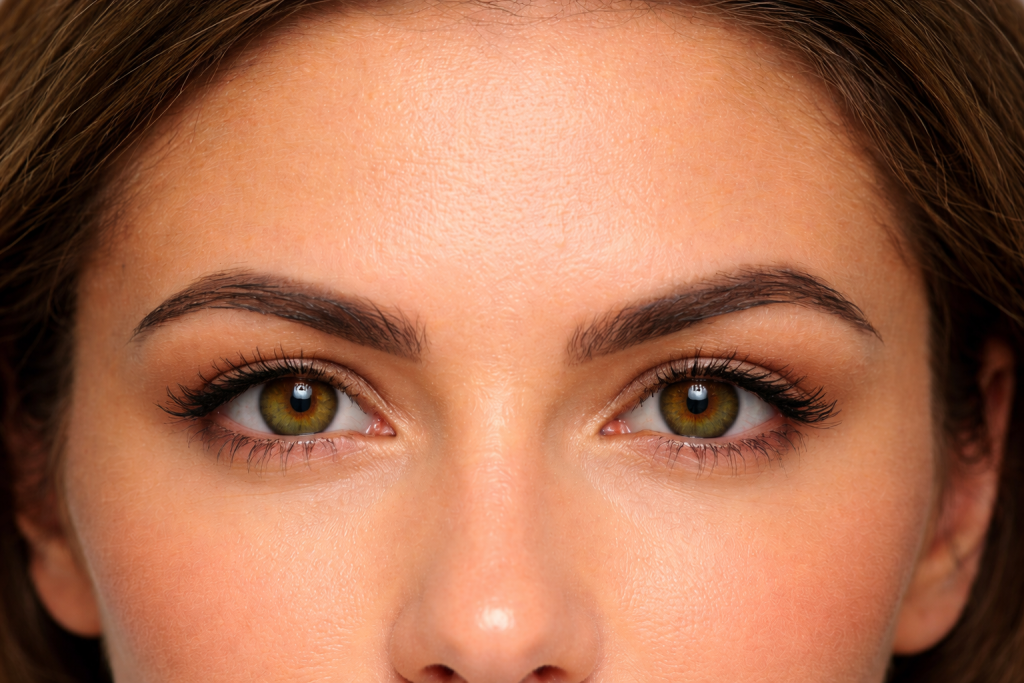
Why do we have eyebrows?
First: protection.
Their arched shape helps redirect:
- sweat
- rain
- dust
away from the eyes and toward the sides of the face.
Without eyebrows, sweat and debris would reach the eyes much more easily and cause irritation.
A functional anatomy study published in the Journal of Anatomy suggests that eyebrow shape and the brow ridge help channel moisture away from the eye area, especially during physical activity or heat.
But their role isn’t only physical.
Eyebrows and face recognition
Eyebrows are essential for identity.
A well-known MIT study (Sadr, Jarudi & Sinha, 2003) found that people have more difficulty recognizing faces without eyebrows than without eyes.
Removing eyebrows from photos significantly reduced recognition accuracy.
Why?
Because eyebrows provide contrast, structure, and emotional expression.
They help communicate subtle emotions:
- surprise
- tension
- empathy
- skepticism
- sadness
They are central to nonverbal communication.
Eyebrow color
Eyebrow color is determined by melanin — the same pigment that colors skin and hair.
Two main types:
- eumelanin (brown/black)
- pheomelanin (red/blonde tones)
Eyebrows can be darker or lighter than scalp hair because each hair follicle produces pigment differently.
With age, melanin production decreases.
This is why eyebrows may:
- turn gray or white
- become lighter
- appear thinner
A dermatology review in the International Journal of Trichology notes that aging reduces pigment production and shortens the hair growth phase, contributing to eyebrow thinning after midlife.
If you trim or pluck them, do they grow back?
Usually, yes.
Eyebrows have their own growth cycle:
- growth phase (about 4–8 weeks)
- transition phase
- resting and shedding phase
They grow more slowly than scalp hair.
Trimming does not affect the root.
The hair will grow back normally.
Repeated plucking over many years can weaken the follicle.
Dermatology studies show that long-term repeated trauma to a follicle can lead to:
- thinner regrowth
- slower growth
- sometimes permanent loss in specific areas
But this typically happens after years of frequent over-plucking.
Thick eyebrows in women or thin eyebrows in men
This is normal variation.
Eyebrow density is influenced by:
- genetics
- sensitivity of hair follicles to androgens
- age
Androgens (hormones present in all sexes) stimulate thicker, more pigmented hair growth.
On average:
- men tend to have thicker brows
- women often have finer ones
But genetics plays a bigger role than hormone levels alone.
You can have:
- women with naturally thick, full eyebrows
- men with very fine or sparse brows
without any medical issue.
An endocrinology review published in Endocrine Reviews notes that local follicle sensitivity to hormones often matters more than hormone levels in the bloodstream.
When eyebrow changes can signal something medical
It’s worth paying attention only if changes are sudden and significant, especially with other symptoms:
- noticeable thinning
- loss of the outer eyebrow
- scalp hair loss
- extreme fatigue
- menstrual or hormonal changes
Possible causes can include:
- thyroid disorders
- iron deficiency
- menopause
- chronic stress
- hormonal imbalances
Without other symptoms, most differences are simply genetic and age-related.
The “unibrow” (joined eyebrows)
Medically called synophrys.
This is a genetic trait where hair follicles between the brows are active.
It’s more common in certain populations but exists worldwide.
It is not a medical condition.
One of the most famous examples is artist Frida Kahlo, whose joined eyebrows became part of her distinctive visual identity.
Eyebrows across the lifespan
Children:
- lighter and finer
- density increases during puberty
Adults:
- peak density between roughly 20–40
After 40–50:
- growth phase shortens
- gray hairs appear
- density may decrease
In some older men, increased follicle sensitivity to androgens can actually make brows appear thicker with age.
What eyebrows can reflect
Eyebrows may reflect:
- genetics
- aging
- hormonal balance
- nutrition
- stress levels
Two small lines of hair.
But essential for eye protection, facial identity, and emotional expression — and sometimes subtle signals from the body itself.