
Take a look at these two photos.
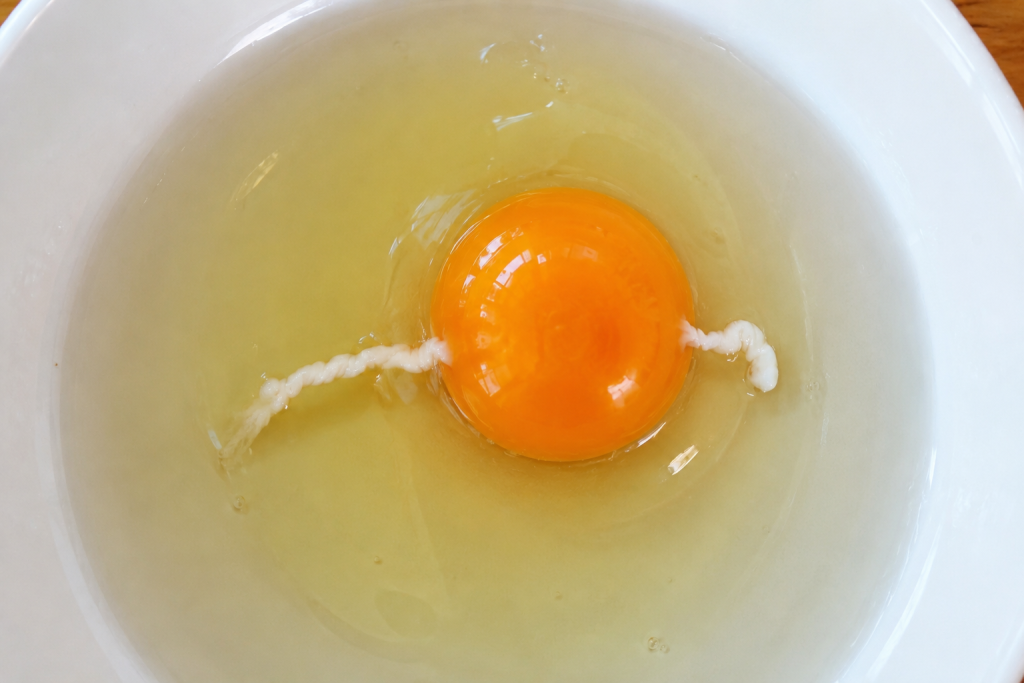
In the first image, a cracked egg contains strange white strands near the yolk. The person who shared the picture claimed that someone in their family wanted to throw away the entire carton after seeing them.
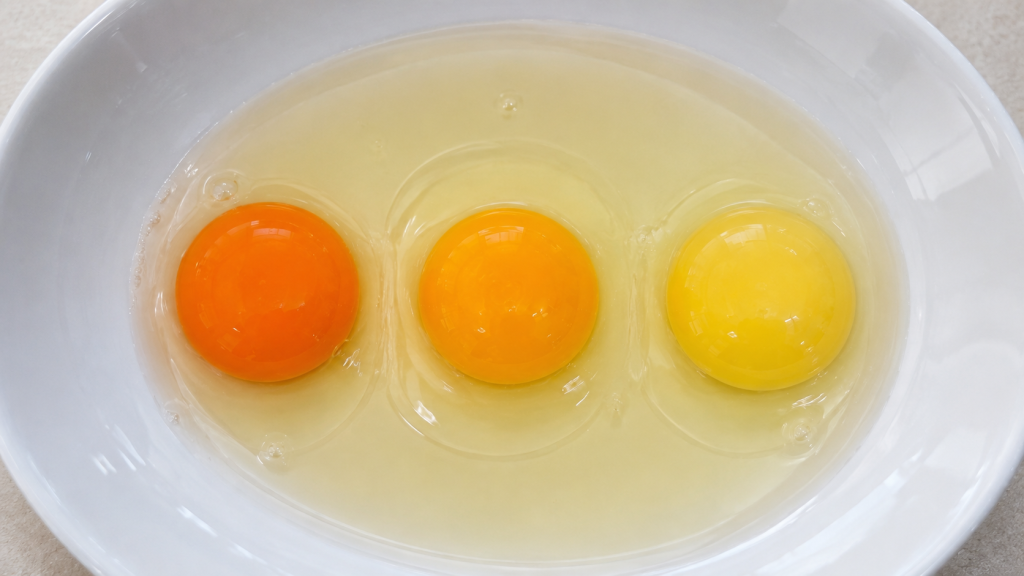
In the second image, three egg yolks sit side by side, each with a noticeably different color. The question seems simple: which one came from the healthiest hen?
Most people answer both questions almost instantly.
The white strands must mean something is wrong.
The darkest orange yolk must be the healthiest.
It sounds reasonable.
It feels obvious.
And that is exactly why these photos are so effective.
Both images take advantage of one of the oldest tendencies of the human mind: our habit of making quick judgments based on appearance. Sometimes that instinct helps us. Other times, it leads us in the wrong direction.
What makes these photos fascinating is not that they are about eggs. It is that they reveal how easily our intuition can be misled.
The Little Test Millions of People Take Without Realizing It
Before reading further, ask yourself a simple question.
If you had cracked open the first egg in your own kitchen, would you have kept it or thrown it away?
If you were choosing between the three yolks in the second photo, which one would you have considered the best?
Most people select the answers that seem obvious.
There is a good reason for that.
For thousands of years, humans relied heavily on sight when deciding whether food was safe to eat. Long before laboratories and food testing existed, appearance was often the first clue that something might be wrong.
A strange color could signal danger.
An unusual texture might suggest spoilage.
Over time, our brains became extremely good at spotting visual differences.
The problem is that nature does not always follow our assumptions.
The Remarkable Story Hidden Inside Every Egg
An egg may look simple from the outside, but biologically it is an incredibly sophisticated structure.
Every part serves a purpose.
The shell protects the contents from physical damage.
The membranes provide additional barriers.
The egg white contains water, protein, and compounds that help limit microbial growth.
The yolk stores most of the nutrients.
Nothing is accidental.
Even the mysterious white strands that alarm so many people exist for a very important reason.
The White Strands That Cause Perfectly Good Eggs to Be Thrown Away
Photos of eggs with white strands regularly appear on social media, discussion forums, and food-related groups.
The reactions are often similar.
Some people assume they are parasites.
Others believe they are the beginning of an embryo.
A few suspect contamination or spoilage.
In reality, these structures have a scientific name: chalazae.
They are natural protein cords that help keep the yolk suspended in the center of the egg.
Think of them as built-in stabilizers.
Without them, the yolk would move around much more freely and would be far more vulnerable to damage.
What looks suspicious is actually one of the features that helps protect the egg.
The Surprising Fact Most People Never Learn
This is where things become especially interesting.
Many consumers assume that prominent white strands are a sign that an egg is old.
In many cases, the opposite is true.
Fresh eggs often have firmer and more visible chalazae.
As the egg ages, its internal structure gradually changes, and those strands become less noticeable.
Ironically, the very feature that makes some people question an egg can sometimes be a sign of freshness.
The Yolk Color Debate That Never Seems to End
If the first photo makes people think an egg has gone bad, the second creates a completely different argument.
Most eyes are immediately drawn to the darkest orange yolk.
People instinctively assume it must be the healthiest option.
This belief is so widespread that it has influenced consumer behavior for decades.
But the science tells a more complicated story.
Why Egg Yolks Have Different Colors
The primary factor behind yolk color is diet.
Natural pigments called carotenoids and xanthophylls enter the yolk through the foods a hen eats.
Corn, alfalfa, grasses, and many other plants can affect yolk pigmentation.
The more pigment-rich the diet, the deeper the color may become.
That does not automatically mean the hen is healthier.
It does not automatically mean the egg is superior.
It simply means the bird consumed more of those naturally occurring pigments.
A Secret the Egg Industry Has Known for Years
Producers have long understood that consumers judge eggs visually.
In fact, yolk color is important enough that standardized color scales have been developed to measure it.
Different countries often have different preferences.
Some markets strongly favor deep orange yolks.
Others prefer lighter shades.
Because of this, feed formulas can be adjusted to influence yolk color and meet consumer expectations.
This illustrates an important point: appearance often affects purchasing decisions far more than most people realize.
Does a Darker Yolk Offer Nutritional Advantages?
Sometimes, yes.
Certain carotenoids that contribute to deeper coloration, such as lutein and zeaxanthin, have been studied for their role in eye health.
However, yolk color alone cannot reveal the complete nutritional profile of an egg.
Protein content, vitamin levels, mineral composition, and overall quality depend on many factors.
Two eggs that look very different may be nutritionally quite similar.
What Experts Actually Look For
Food scientists and quality inspectors do not judge an egg solely by its appearance.
They evaluate factors such as shell integrity, egg white consistency, yolk structure, storage conditions, and microbiological safety.
These measurements provide far more useful information than color alone.
In other words, the details that catch a consumer’s attention are not always the details that matter most.
Why These Photos Keep Going Viral
Perhaps because they are not really about eggs at all.
They are about human nature.
We like quick answers.
We trust our eyes.
We enjoy believing that we can spot the truth immediately.
And when we discover that an apparently obvious conclusion is wrong, we are surprised.
That surprise is what turns an ordinary photograph into a post shared thousands of times.
So, Would You Have Chosen Correctly?
If you thought the white strands meant the egg was spoiled, you are far from alone.
If you assumed the darkest orange yolk automatically came from the healthiest hen, you made the same assumption that millions of others make.
Neither conclusion is as simple as it appears.
Perhaps that is the real lesson hidden inside these viral photos. They do not just teach us something about eggs. They remind us how often appearances can be convincing, and how rarely they tell the entire story.