
A morning that didn’t feel different
On June 4, 2010, at Skyline Elementary School, the day started like many others, with one small difference: the school was hosting a science fair.
Parents were walking through the hallways, stopping at classroom doors, taking photos, talking to teachers. It was one of those mornings where everything felt open, familiar, almost relaxed.
Kyron Horman was seven years old. He had brought a project about tree frogs and, like many kids that day, he was proud to show it. There are photos from that morning—him standing next to his display, smiling, completely at ease.
He had been dropped off by his stepmother, Terri Horman, around 8:00 a.m. According to her account, they spent some time walking through the science fair before she left. She later said she saw him near his classroom around 8:45.
That is the last moment anyone can place him with any certainty.
The gap no one can fully explain
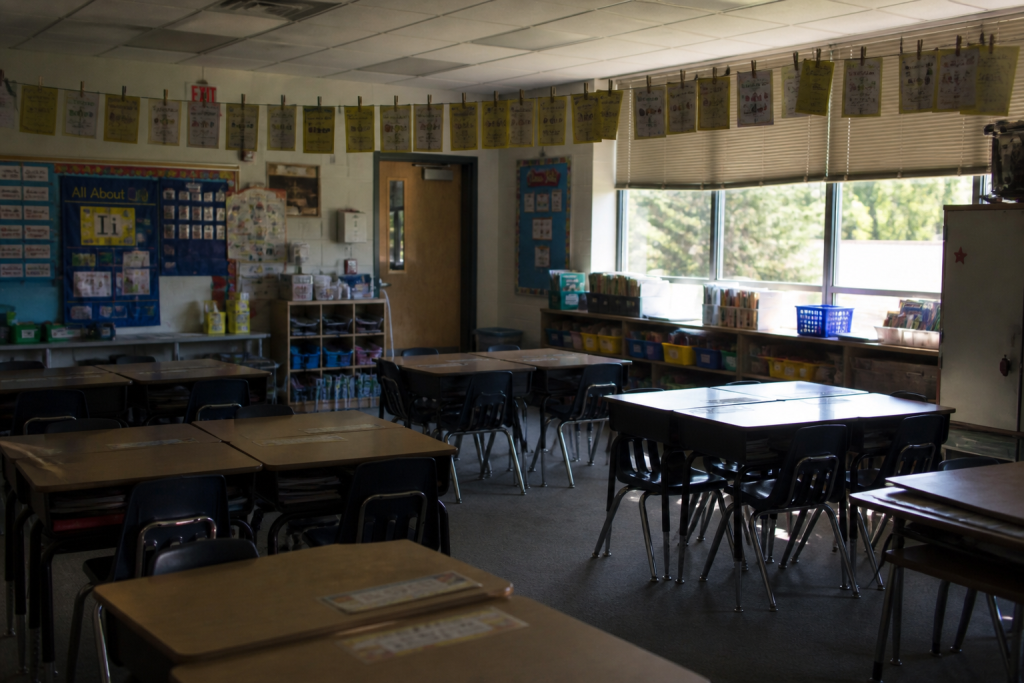
Classes were about to begin, but there’s no confirmed record that Kyron ever made it inside his classroom. No teacher marked a clear moment when he was present, and no one noticed him leaving.
What makes this case especially difficult is that there isn’t a single point where everything clearly goes wrong. Instead, there is a window of time—somewhere between the end of the science fair visit and the start of class—where his movements are unknown.
In busy environments like schools, especially during events, there are brief periods where supervision shifts and responsibility isn’t fixed to one person. Most of the time, nothing happens. In rare cases, those small gaps matter more than anyone realizes.
After she left the school
After dropping Kyron off, Terri Horman went on with what appeared to be a normal day. She reported going to the gym, running errands, and spending time with her younger child.
Investigators later examined this timeline in detail, looking at receipts, locations, and possible witnesses. While parts of her account raised questions, there was never enough evidence to bring criminal charges against her.
That distinction is important. In legal terms, suspicion does not equal proof.
When the routine breaks
Kyron’s absence wasn’t noticed right away. He wasn’t marked absent that morning, and it wasn’t until later in the day—when he didn’t return home on the school bus—that something was clearly wrong.
At first, there was confusion. A possible mix-up. A misunderstanding.
But very quickly, it became clear: no one knew where he was.
By mid-afternoon, authorities were notified, and the situation shifted from uncertainty to a full-scale search operation.
That delay—those few hours between when he was last seen and when the alarm was raised—became one of the most critical factors in the case.
The search that found no clear trace
In the days that followed, the area around the school was searched extensively. The location itself made things more complicated. The school sits near wooded terrain, with uneven ground and areas that are difficult to access.
Search teams included law enforcement, volunteers, and specialized units with tracking dogs. Large sections of land were covered.
But no definitive trace was found. No clear evidence pointing in a single direction. No discovery that could explain what happened.
An investigation without a clear path
As time passed, the investigation focused more on reconstructing movements and analyzing behavior than on physical evidence.
Terri Horman remained a central figure in the case, largely because she was one of the last people known to have seen Kyron. Even so, despite years of investigation, she has never been charged in connection with his disappearance.
Other possibilities were also explored, including the involvement of an unknown third party. None led to a confirmed conclusion.
Cases like this are among the most difficult in criminal investigations, precisely because they lack both direct witnesses and physical evidence.
Why this case still unsettles people
What makes Kyron’s disappearance especially hard to process is not only the lack of answers, but the setting.
A school is supposed to be one of the safest places a child can be. It operates on structure, supervision, routine. Parents trust that once their child is inside, they are protected.
When something happens in that kind of environment, it challenges a basic assumption people rely on.
Psychologists often refer to this as a “breach of safe space”—when a place associated with security becomes the setting for something unexplained.
Years later, still no closure
More than a decade has passed, and the case remains open. There have been legal actions, ongoing reviews, and renewed attention over the years, but no final explanation.
For the family, that means living without a clear ending. Not knowing what happened, not having a point where the story resolves.
From a psychological perspective, this kind of uncertainty is one of the hardest forms of loss to process, because it doesn’t allow for closure.
A story that never fully ends
The disappearance of Kyron Horman is not a case with a clear conclusion. It’s a documented morning, a missing stretch of time, and years of searching that never led to a definitive answer.
And maybe that’s what makes it stay with people.
Not just what happened—but the fact that, even now, no one can fully explain how it happened.