
In the closing decades of the nineteenth century, in a small farming village south of Moscow, a child was born into circumstances that offered little reason for optimism. Her family struggled financially, opportunities were scarce, and life in rural Russia was often defined by hardship. For a child born with a severe disability, the future appeared even more uncertain.
Yet the story of Matrona Dmitrievna Nikonova would unfold in a way few could have imagined.
Over time, she became one of the most recognized spiritual figures in Russian Orthodox Christianity. Decades after her death, pilgrims would continue traveling great distances to honor her memory, seek inspiration from her life, and reflect on the legacy she left behind. Today, Saint Matrona of Moscow remains one of the most widely venerated saints in the Orthodox world, admired not only for her religious significance but also for the remarkable resilience she displayed throughout her life.
Growing Up in Imperial Russia
To understand why Matrona’s life continues to attract attention, it is important to understand the era into which she was born.
Russia in the 1880s was still overwhelmingly rural. Most families relied on agriculture, literacy rates were relatively low, and access to healthcare was limited outside major cities. Many villages had no resident physician, and infectious diseases such as tuberculosis, pneumonia, and typhoid fever claimed countless lives each year.
Religious faith played a central role in everyday life. Churches often served not only as places of worship but also as centers of community identity. In difficult times, people frequently turned to spiritual leaders and local traditions for comfort and guidance.
It was within this environment that Matrona entered the world.
A Rare Medical Condition from Birth
Historical and religious sources differ slightly on the exact year of her birth, with some placing it in 1881 and others in 1885. What is generally accepted is that she was born in the village of Sebino in the Tula region and was the youngest child in a poor peasant family.
From birth, Matrona was blind.
Descriptions preserved in biographies suggest that her eyes never developed normally. Modern medical specialists would likely associate such accounts with severe congenital eye disorders, including conditions such as anophthalmia, a rare developmental abnormality in which one or both eyes fail to form during pregnancy.
Even today, these conditions are uncommon. In nineteenth-century rural Russia, however, there were no effective treatments available, and children with significant disabilities often faced enormous challenges throughout their lives.
Despite her blindness, Matrona reportedly demonstrated an exceptional memory and a strong ability to understand and remember conversations, stories, and people around her.
Early Reports of Spiritual Insight
According to Orthodox traditions and accounts preserved by those who knew her, people began noticing unusual qualities in Matrona while she was still a child. Visitors traveled from nearby villages seeking prayers, advice, and encouragement.
Stories about her gradually spread beyond her local community. Some believed she possessed unusual spiritual insight, while others simply viewed her as a compassionate listener during difficult times.
From a historical perspective, these claims are impossible to verify objectively. Most accounts originate from personal testimonies and religious writings compiled years later. Nevertheless, the consistent appearance of such stories across multiple sources suggests that her reputation was already growing long before she became known throughout Russia.
Another Major Challenge
Blindness was only the first of the hardships Matrona faced.
As a teenager, she reportedly lost the ability to walk and remained physically disabled for the rest of her life. Sources generally place this development around the age of sixteen or seventeen.
The exact medical cause remains unknown. No clinical records survive that would allow modern physicians to reach a definitive diagnosis. It may have resulted from a neurological disorder, an inflammatory condition, or another illness that could not be identified at the time.
Whatever the cause, the loss of mobility dramatically increased her dependence on others. Yet rather than withdrawing from society, Matrona continued interacting with visitors and became increasingly well known among those seeking spiritual support.
A Nation in Turmoil
The Russia Matrona knew would soon change dramatically.
The Russian Revolution of 1917 brought an end to the Romanov dynasty and ushered in a new political system that often viewed organized religion with suspicion. Churches were closed, religious property was confiscated, and many clergy members faced persecution.
Like millions of others, Matrona’s life was affected by these upheavals. Eventually, she left her native region and settled in Moscow.
Life there was far from comfortable. She never owned a home and depended on the hospitality of friends, relatives, and supporters. Throughout the years, she moved frequently, living in various apartments and temporary accommodations.
The Growing Number of Visitors
Despite the political climate, people continued seeking her out.
Accounts from those who knew her describe a steady flow of visitors arriving with personal concerns, family problems, health struggles, and questions about the future. Some came looking for guidance, while others simply wanted reassurance during uncertain times.
Witnesses recalled long lines of people waiting patiently for an opportunity to speak with her.
From a modern psychological perspective, this phenomenon is not surprising. Periods of social instability often lead individuals to seek trusted figures who can provide emotional support, meaning, and hope. Throughout history, many communities have gravitated toward spiritual advisers during times of war, political upheaval, and economic uncertainty.
Twentieth-century Russia experienced all of these conditions.
Reports of Healing and the Scientific Perspective
One of the most widely discussed aspects of Matrona’s legacy involves claims of healing.
Many visitors later reported improvements in their health or emotional well-being after meeting her. Others believed her prayers had helped them through serious personal challenges.
From a scientific standpoint, such claims are difficult to evaluate. Most cases lack detailed medical documentation, making independent verification impossible.
At the same time, modern medicine recognizes the powerful influence that emotional support, hope, belief, and reduced stress can have on a person’s overall well-being. Researchers have repeatedly shown that psychological factors can affect pain perception, resilience, and recovery experiences.
This does not prove miraculous healing, but it does highlight the complex relationship between mind, body, and belief.
The Prophecies That Became Part of Her Legacy
Matrona is also associated with numerous predictions and warnings that circulated after her death.
Many of these accounts concern personal advice allegedly given to visitors, while others involve broader statements about society, morality, and the future of Russia.
Historians approach such claims cautiously. In many cases, the stories were recorded years after the events they describe, making independent verification difficult.
For believers, these accounts represent evidence of spiritual gifts. For researchers, they form part of a larger cultural tradition surrounding revered religious figures.
Both perspectives continue to shape discussions about her life today.
Her Final Years
According to religious sources, Matrona reportedly spoke about her approaching death before it occurred and continued receiving visitors until the end of her life.
She died on May 2, 1952, during a period when religious practice in the Soviet Union still faced significant restrictions.
Even so, respect for her memory continued to grow.
Her grave gradually became a destination for pilgrims who believed her prayers and example remained a source of comfort and inspiration.
Canonization and Lasting Influence
Following the collapse of the Soviet Union, public interest in Matrona’s life expanded dramatically.
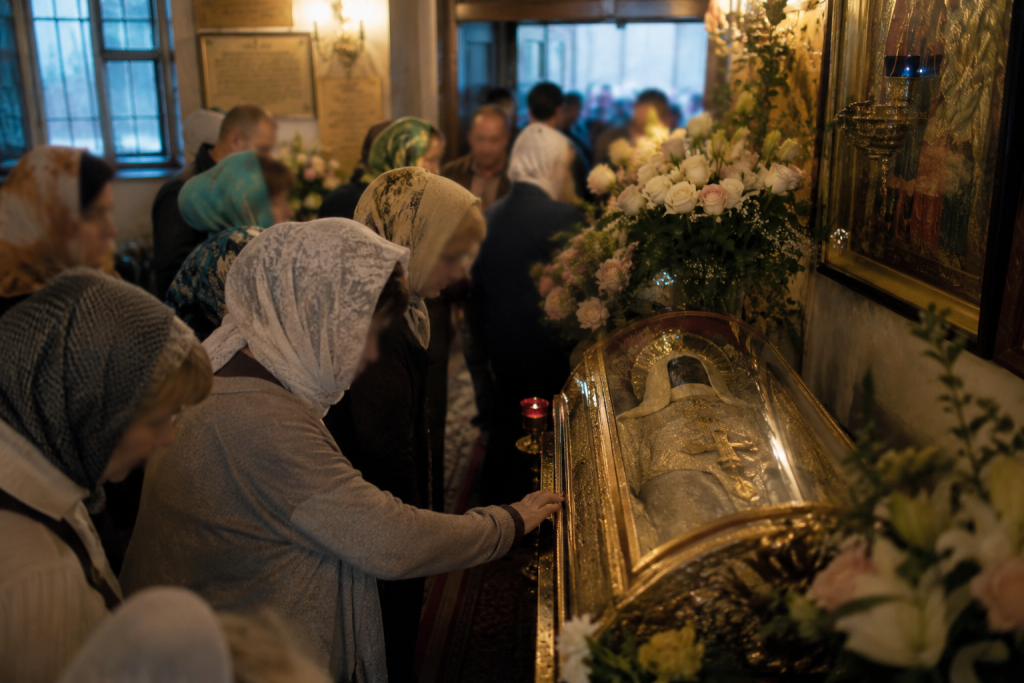
Her remains were transferred to Pokrovsky Monastery in 1998, and the following year she was officially canonized by the Russian Orthodox Church.
Today, the monastery is among the most visited pilgrimage sites in Russia. Thousands of people continue to travel there each year to honor her memory and reflect on her life.
Her recognition has also expanded beyond Russia. In 2018, she was included in the calendar of the Romanian Orthodox Church, reflecting her growing importance across the wider Orthodox world.
A Life That Continues to Inspire
More than seventy years after her death, Saint Matrona of Moscow remains a figure who occupies a unique place between documented history, religious tradition, and personal faith.
The verified facts alone are remarkable: a woman born blind into poverty, later confined by paralysis, who lived through revolution, war, and political repression before becoming one of the most respected spiritual figures in modern Russian Orthodoxy.
Whether viewed through the lens of faith, history, or human resilience, her story speaks to something universal. It is the story of a person who faced extraordinary limitations yet became a source of hope for countless others. That enduring message may explain why her name continues to be remembered by generations long after the world in which she lived has disappeared.