
In the early hours of February 4, 2026, residents of a high-rise apartment complex in Ghaziabad, just outside New Delhi, were awakened by an unimaginable tragedy. Three sisters, only 16, 14, and 12 years old, lost their lives after falling from the ninth floor of the building where they lived with their family. What investigators discovered inside their bedroom in the days that followed transformed the case into one of the most heartbreaking conversations about adolescence, isolation, and life in the digital age.
At first glance, many headlines focused on smartphones, online games, and the girls’ fascination with South Korean pop culture. Their room was decorated with K-pop posters, they had adopted Korean nicknames, and much of their free time revolved around music, television dramas, and online entertainment. It was an easy narrative to understand—but it was also incomplete.
As investigators examined the family’s circumstances more closely, it became clear that the tragedy could not be explained by a single hobby or a single decision. The evidence pointed instead toward a much deeper combination of prolonged social isolation, emotional struggles, and an increasingly fragile connection with the outside world.
A Life That Slowly Moved Behind Closed Doors
According to information released during the investigation, the three sisters—Nishika Kumar, Prachi Kumar, and Pakhi Kumar—had not attended school for nearly two years. Their daily lives had gradually become confined to their apartment, where most of their time was spent together.
Their shared interests centered on Korean entertainment. Music, television series, online games, and digital communities became a significant part of their routine and identity. They even began referring to one another by Korean names, creating a world that felt increasingly separate from everyday reality.
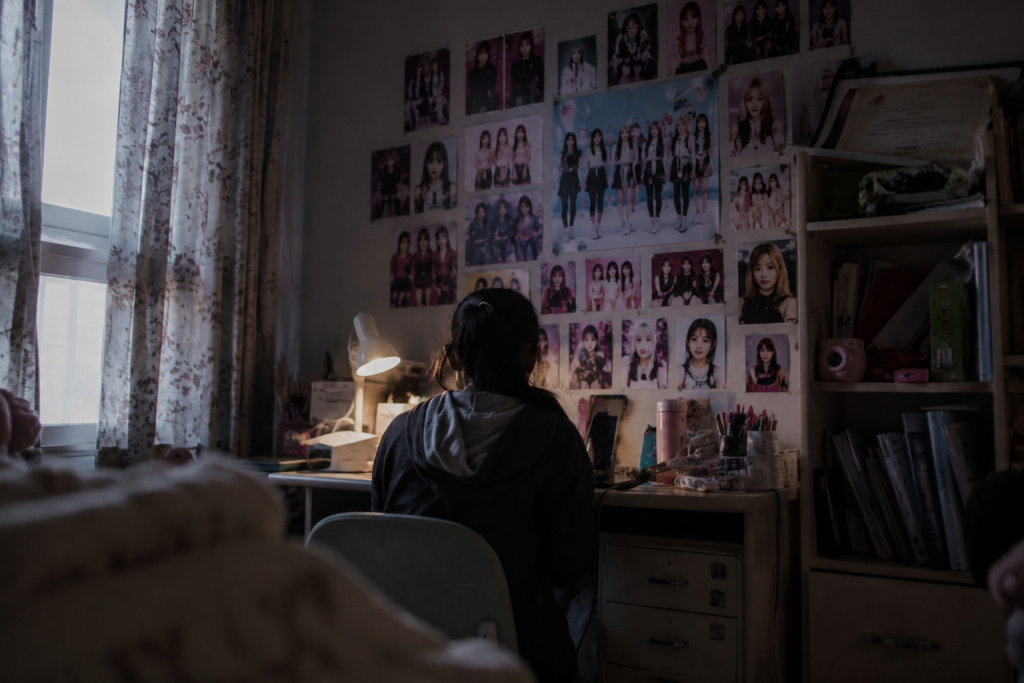
Experts have emphasized that enjoying K-pop or any other cultural phenomenon is not inherently harmful. Millions of teenagers across the world share the same interests without experiencing serious mental health problems. In this case, investigators believe those interests existed alongside something far more concerning: profound social withdrawal.
A Father’s Attempt to Reconnect His Daughters With Everyday Life
Their father, Chetan Kumar, had become increasingly worried about the amount of time his daughters spent online. Hoping to encourage them to return to school and reconnect with daily life, he reportedly confiscated their mobile phones only days before the incident. Some reports also stated that the devices had been sold in an effort to reduce their dependence on them.
From a parent’s perspective, the decision seemed understandable. There was no indication that he anticipated the devastating events that would soon follow.
The Letter That Changed the Investigation
After the tragedy, police recovered an eight-page handwritten letter and a personal journal from the apartment.
The writings did not accuse family members of abuse or describe violent conflict inside the home. Instead, they revealed the emotional distance the girls felt from the world around them. They apologized to their father while describing how deeply connected they had become to the online universe they had created for themselves.
Investigators treated the documents as important evidence but not as a complete explanation. Mental health professionals later noted that tragedies of this nature rarely stem from a single trigger. They are often the result of multiple factors developing quietly over months or even years, including isolation, emotional vulnerability, anxiety, and the gradual loss of meaningful social connections.
The Final Hours
Around 2:15 a.m., a resident of a nearby building noticed movement at one of the apartment windows. According to witness statements, the three sisters were seen together shortly before the fall.
Their younger sister, Devu, was also inside the apartment but survived. Various media outlets have reported different versions of what happened during the final moments, and authorities have not confirmed every detail that later circulated on social media. As a result, some widely shared claims remain unverified.
Following a detailed investigation, police found no evidence suggesting that a single event alone could explain what had happened.
Digital Addiction Is Rarely the Whole Story
The case reignited discussions about excessive digital engagement among adolescents. The World Health Organization recognizes Gaming Disorder as a medical condition when gaming behavior becomes persistent, difficult to control, and severe enough to disrupt education, relationships, or everyday functioning.
However, psychologists consistently warn against oversimplifying these situations. Excessive screen time is often a symptom rather than the root cause. It may coexist with depression, anxiety, loneliness, sleep disturbances, or other emotional difficulties that remain hidden from family and friends.
Investigators concluded that the sisters’ prolonged absence from school, limited social interaction, and increasing dependence on their online environment formed a pattern that deserved far greater attention than any single interest or hobby.
Looking Beyond the Headlines
Cases like this often encourage people to search for one clear explanation. Smartphones. Social media. Online games. K-pop.
Reality is rarely that simple.
Millions of young people around the world enjoy the same music, movies, games, and online communities while leading healthy, balanced lives. The difference often lies not in the technology itself but in the emotional circumstances surrounding the individual using it.
Perhaps the most heartbreaking aspect of this story is not the posters covering a bedroom wall or the phones that were taken away. It is the possibility that three sisters, living under the same roof as the people who loved them most, had gradually retreated into an emotional world that no one fully recognized until it was too late.
For parents, educators, and communities everywhere, the tragedy serves as a painful reminder that emotional isolation is not always visible. A quiet teenager who spends most of the day behind a screen may not simply be avoiding the outside world—they may be silently struggling in ways that deserve compassion, conversation, and professional support long before a crisis unfolds.