
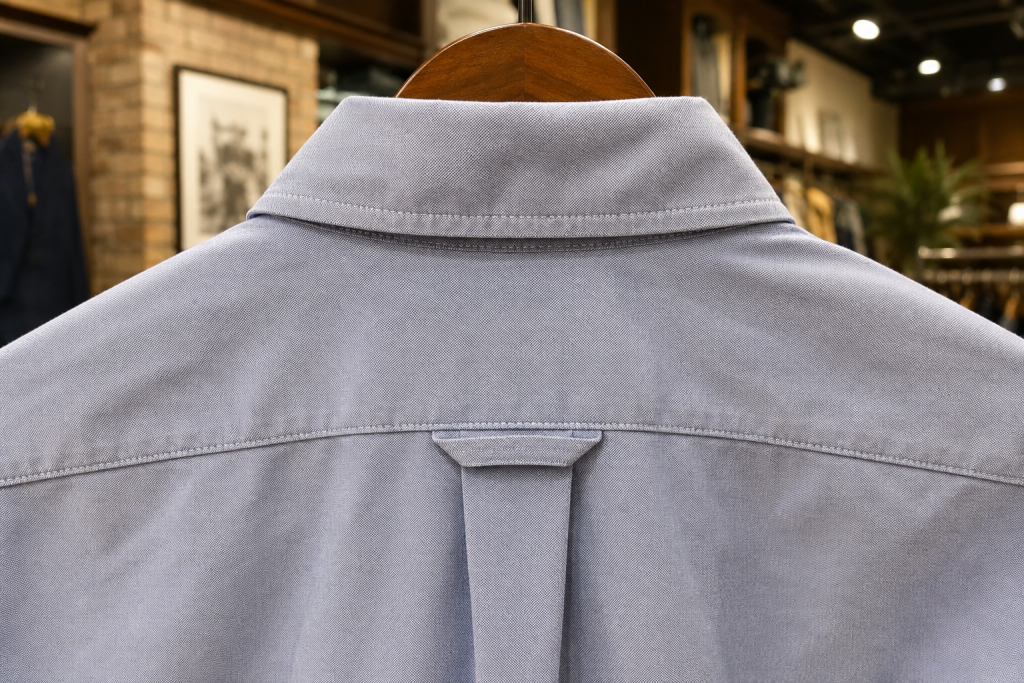
At first glance, it looks like nothing more than a small strip of fabric sewn beneath the collar on the back of a shirt.
Most people have seen it countless times without giving it a second thought. Others assume it is decorative, part of the manufacturing process, or simply a leftover detail that somehow survived changing fashion trends.
Yet that modest little loop has a name, a documented history, and a purpose that dates back decades. What seems like an insignificant design feature is actually a fascinating example of how clothing evolves to solve everyday problems, and how practical innovations can remain long after their original purpose has faded.
A Small Detail With Roots in Mid-Century America
The feature is commonly known as a locker loop, a term that originated in the United States during the mid-twentieth century.
Its rise in popularity is closely connected to American college culture during the 1950s and 1960s. At the time, university students often stored their belongings in campus lockers that did not always contain hangers or dedicated clothing racks.
A simple challenge emerged: how could students keep their shirts from ending up crumpled inside a crowded locker?
The answer was remarkably straightforward. Clothing manufacturers began adding a small fabric loop to the upper back portion of certain shirts, allowing them to be hung directly from a hook. The solution required almost no additional material, added virtually no weight, and significantly improved convenience.
What began as a practical innovation soon became a recognizable feature of classic American menswear.
The Connection to Ivy League Fashion
The locker loop became especially associated with the iconic Oxford button-down shirt, a staple of what would later become known as the Ivy League style.
During the postwar years, the fashion choices of students attending prestigious American universities gained widespread influence. Clean lines, durable fabrics, and understated elegance defined the look.
Manufacturers embraced details that combined functionality with refined simplicity, and the locker loop fit perfectly within that philosophy.
As these shirts grew in popularity beyond college campuses, the feature traveled with them, becoming familiar to generations of consumers who often had no idea why it existed.
Why the Loop Was Actually Useful
The original purpose of the locker loop was surprisingly practical.
Instead of folding a shirt or draping it awkwardly over a hook, the wearer could hang it directly by the loop. This helped keep the garment relatively smooth and reduced unnecessary wrinkling.
From a structural standpoint, the location of the loop was important. Positioned near reinforced seams at the upper back, it distributed weight more effectively than hanging the shirt by the collar itself. This reduced stress on vulnerable areas and helped preserve the garment’s shape over time.
For students, athletes, and professionals who frequently changed clothes throughout the day, such a small feature could make a noticeable difference.
More Than Just a Fashion Quirk
Although many people today assume the loop serves no purpose, historical records from clothing manufacturers and fashion historians consistently point to its original role as a hanging aid.
Over time, however, the feature took on additional cultural significance.
By the 1960s, locker loops had become so common on college campuses that they inspired a variety of traditions and urban legends. One widely repeated story suggested that some students would remove or tear off the loop to indicate they were in a committed relationship.
While evidence suggests such customs existed in certain social circles, historians generally view them as localized traditions rather than universal practices.
Nevertheless, the stories helped transform a practical design element into a recognizable symbol within campus culture.
Why Many Shirts Still Include It Today
Modern wardrobes look very different from those of the 1950s.
Most people now store shirts on hangers, use larger closets, and rarely rely on locker hooks for everyday clothing storage. As a result, the original need for a locker loop has diminished considerably.
Yet many brands continue to include it.
Part of the reason is tradition. The feature has become associated with classic Oxford shirts and timeless American style.
Another reason is aesthetics. Designers often retain historical details because they contribute character and authenticity to a garment. Even when their original function becomes less relevant, such elements help preserve the visual identity of a particular style.
In some cases, the loop remains genuinely useful, offering a convenient way to hang a shirt temporarily while traveling, changing clothes, or storing garments in limited spaces.
The Hidden Stories Inside Everyday Objects
The locker loop serves as a reminder that many ordinary items contain traces of the past.
Much like the small watch pocket on a pair of jeans or the metal rivets originally designed to strengthen workwear, this tiny strip of fabric reflects the practical needs of an earlier era.
What appears to be a decorative flourish is actually a surviving piece of design history, carried forward through decades of changing fashion trends.
Its continued presence illustrates an interesting reality about everyday objects: even the smallest details are often there for a reason. Long before they became style statements, they were solutions to real-world problems.
So the next time you notice that little loop beneath the collar of a shirt, you are looking at more than a simple piece of fabric. You are seeing a small but enduring reminder of how thoughtful design can outlive the circumstances that first inspired it.