
In late December 2010, Iain Avery Bryson says he hugged his three-year-old daughter before she left home with her mother.
He believed they were going to the library.
They did not come back.
More than fifteen years later, Bryson is still telling the story publicly. It has appeared in podcasts, conference talks, social media clips and videos with emotionally charged titles suggesting that an American father unknowingly married into a cult, lost his daughter to that family and later ended up in a Polish prison while trying to save her.
The story is compelling because it sounds almost cinematic.
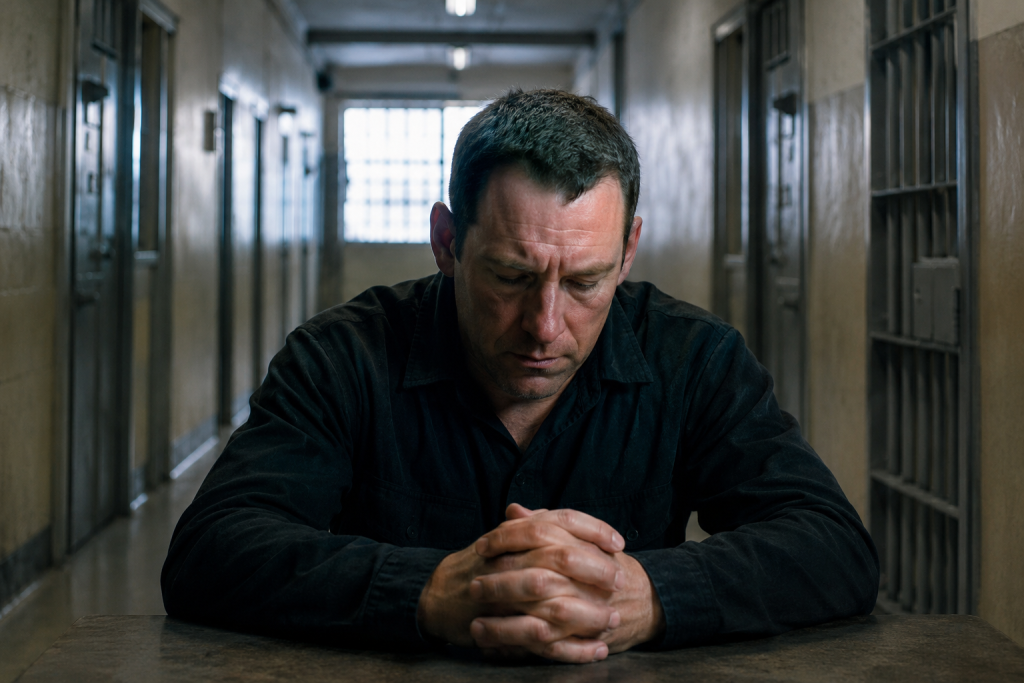
It is also much less straightforward than the viral version suggests.
There is a documented family conflict behind it. There was a child who left the Netherlands with her mother. There was a father who says he never saw her again. There was also a violent assault committed by that father and a long prison sentence in Poland.
What remains far harder to establish independently are the allegations that turned the case into internet folklore: claims involving a cult, ritual abuse, mind control and trafficking.
That distinction matters.
A marriage that crossed countries
According to the account Bryson has published over the years, he met Polish citizen Agata Makowska in the United States in 2004, when she was there on a J-1 visa.
They married the following year.
Their daughter, Adelle Avery Bryson, was born in Connecticut in 2007. The family later relocated to the Netherlands, a move Bryson has said was partly intended to bring them closer to his wife’s relatives in Poland.
For several years, the outline of their life was not especially unusual: an international marriage, a young child and a family living far from where both parents had grown up.
The allegations that define the story today emerged later.
Bryson says he became concerned about his daughter’s behavior
Bryson has said that after visits to Poland in 2010, he noticed changes in his daughter that deeply alarmed him.
In his own account, he describes nightmares, bed-wetting, panic, bruising and other behavior that led him to suspect abuse. He has also made much more serious allegations involving sexual abuse.
These claims have been repeated in interviews and in material published on websites connected to his story.
But repetition is not the same as independent verification.
Publicly available material does not appear to include medical records, child-protection findings or court documents that independently establish that the alleged abuse occurred.
That does not prove that Bryson’s suspicions were false.
It means they should be described for what they are: serious allegations made by one parent in the middle of a bitter international family dispute.
The allegation that changed the entire story
The element most likely to capture attention online is the claim involving a cult.
Bryson has said that in December 2010 his wife made disturbing statements about her own family. According to his version, she described them as a cult and said she was under their psychological influence.
Over time, the language surrounding the case became even more extreme. In later appearances, terms such as occult family, ritual abuse, trauma-based control and trafficking have been attached to the story.
Those descriptions are now central to the way the case is marketed online.
Yet they remain one of the least independently substantiated parts of it.
Bryson has spoken at events and conferences where his allegations were included in descriptions of his presentation, but an invitation to speak does not amount to an official finding that the allegations are true.
No publicly accessible court ruling, police conclusion or independent investigation appears to establish that his former wife’s family was in fact a cult or that it carried out the abuses he describes.
That is why the responsible version of the story is not that “his daughter was taken by a cult.”
It is that Bryson believes and publicly alleges that this is what happened.
The day his daughter left
Bryson places the pivotal moment on December 27, 2010.
He says his wife told him she was taking Adelle to the library.
He says he hugged his daughter goodbye.
She never returned to the home.
According to Bryson, he later learned that mother and child had gone to Poland. He has repeatedly said that he never saw his daughter again after that day.
At the time, she was three years old.
What happened next became an international legal dispute.
Was this legally a parental abduction?
This is where viral storytelling often becomes misleading.
In everyday language, a parent may understandably describe a situation as an abduction when the other parent takes a child abroad and does not return.
International family law is more precise.
The Hague Convention on the Civil Aspects of International Child Abduction is designed to address wrongful removal or retention of children across borders. But a case is not resolved simply because one parent uses the word “abduction.”
Authorities must examine issues such as the child’s habitual residence, custody rights, parental authority, consent and the circumstances of the removal.
The Netherlands and Poland both operate within the Hague Convention framework.
A parent can apply for the return of a child, but filing an application does not automatically mean that a court will order the child returned. The Convention also contains exceptions, including situations in which return may create a grave risk for the child.
Bryson says he pursued a Hague Convention case.
The critical document would therefore be the actual judicial ruling showing what the court decided and why.
That ruling has not surfaced clearly in the public record around the viral story.
Without it, sweeping claims that Poland knowingly protected an illegal abduction go beyond what the publicly available evidence supports.
Four months later, Bryson made a decision that changed everything
This part of the story is often softened online.
Bryson eventually went to Poland and assaulted his father-in-law.
By his own account, the act was deliberate.
He has said he believed that provoking a criminal case would force authorities to pay attention to the allegations involving his daughter.
Instead, he was arrested.
Bryson later spent roughly 50 months in the Polish prison system.
This distinction matters because the simplified version — “a father tried to rescue his daughter and was jailed” — creates a very different impression.
He was not imprisoned merely for asking authorities to return his child.
He was imprisoned after intentionally attacking another person.
Whatever his motivation, the violence remains a separate and significant part of the case.
Why the story appears to have so many “sources”
Today, the case looks extensively documented because Bryson has appeared repeatedly in podcasts, interviews and public discussions.
He has also published a book, I Love You Like One: A Letter to My Daughter, Abducted by a Cult, which was released in 2024.
The book title itself presents the cult allegation as part of the central narrative.
Bryson has since been interviewed on long-form podcasts, including episodes that frame his experience as a fight to recover a daughter taken by a cult.
But this creates an important source problem.
Ten podcasts interviewing the same person do not provide ten independent confirmations.
They provide ten versions of the same primary account.
That difference is easy to miss when a story spreads widely across different platforms.
Conference appearances do not settle the question either
Bryson has also appeared at events dealing with trafficking, abuse and survivor testimony.
Some conference descriptions have used language referring to alleged intergenerational occult families or ritual abuse when summarizing his story.
Those appearances show that Bryson continues to advocate publicly for his interpretation of what happened.
They do not establish that courts, police or independent investigators reached the same conclusion.
This is especially important when allegations are as serious as child abuse, trafficking or organized ritual violence.
Such claims require more than personal testimony before they can responsibly be presented as established fact.
Where is the mother’s side of the story?
This may be the largest gap in the entire case.
Bryson has spoken for hours across books, interviews and podcasts.
His former wife’s perspective is far harder to find.
There does not appear to be a widely available, detailed and verifiable public interview in which Agata Makowska explains why she left, how she viewed the custody dispute, what happened in the relationship or how she responds to the accusations against her family.
Her absence from the public narrative does not make Bryson right.
It does not make him wrong either.
It means that the story circulating online is overwhelmingly told from one side.
That should make any reader cautious.
Silence is not proof.
What can reasonably be said with confidence
There is a real man behind the story, and his account did not suddenly appear with a viral social media clip.
Bryson has been telling it publicly for years.
The basic chronology he presents has remained broadly consistent: he married a Polish woman, they had a daughter, the family lived in the Netherlands, the mother and child went to Poland in 2010, and he says he never saw the child again.
He also openly describes traveling to Poland, assaulting his father-in-law and serving approximately 50 months in prison.
Those are central elements of his own long-standing public account.
The much more dramatic allegations — that the maternal family formed a cult, that ritual abuse occurred, that the child was trafficked or that authorities knowingly ignored such crimes — remain far less independently substantiated in the public material available.
That is the point where certainty should stop.
The little girl at the center of the story is now an adult
There is another detail that changes the way this story looks today.
Adelle was reportedly born in 2007.
That means the three-year-old child who appears frozen in the public narrative would now be around nineteen.
She is no longer the toddler described in accounts from 2010.
Yet her own voice is almost entirely absent from the public story.
We do not know what she remembers.
We do not know how she understands what happened between her parents.
We do not know what relationship she has with the family who raised her, what she was told about her father or whether she wants any part of this story discussed publicly.
That absence matters.
A child can easily become a symbol in an adult conflict long after she has grown into a person with her own memories, loyalties and choices.
So is the viral story true?
Not in the simple way social media presents it.
The story is not merely invented.
There appears to be a genuine international family breakdown, a child who left one country with her mother, a father who says he lost contact with her, an act of violence and years spent in a Polish prison.
Those are substantial events.
But the explanation that gives the story its most sensational title — that a cult took his daughter — remains an allegation rather than a publicly established conclusion.
The difference is not a technicality.
It is the difference between reporting what one person says and declaring that person has proven his case.
The internet tends to erase that boundary because certainty is more shareable than ambiguity. Stories perform better when they have a clear villain, a clear victim and a shocking explanation.
Real family disputes are rarely that clean.
The case of Iain Bryson may contain genuine tragedy, genuine loss and unanswered questions.
What the public record does not yet offer is enough independent evidence to turn every part of his account into fact.
And perhaps that is the most important lesson in the entire story: when only one person is telling the public version of a family conflict, the responsible approach is not to dismiss him — but neither is it to mistake testimony for a final verdict.