
A Method That Emerged Far From the Medical Mainstream
A few years ago, almost nobody outside a small corner of northern Romania had heard the name Joolizara.
It was not part of medical textbooks, academic conferences, or international discussions about health and wellness. The method was quietly developing in Rădăuți, a town near Romania’s northern border, far from the country’s major research institutions and medical centers.
Today, that situation has changed dramatically.
Videos showing unusual reactions during Joolizara sessions have attracted hundreds of thousands of views online. Supporters describe profound personal experiences and a unique approach to understanding the body. Critics question the lack of scientific evidence and call for rigorous research. Between those two perspectives lies one of the most fascinating alternative health phenomena to emerge in Romania in recent years.
To understand how it happened, it is necessary to begin with the person behind the method.
The Therapist Behind the Movement
Joolizara was created by Iulian-Lorin Juravle, a therapist from the Romanian town of Rădăuți. According to information published by the organization promoting the method, Juravle spent years working in massage therapy and related manual disciplines before gradually developing his own therapeutic approach.
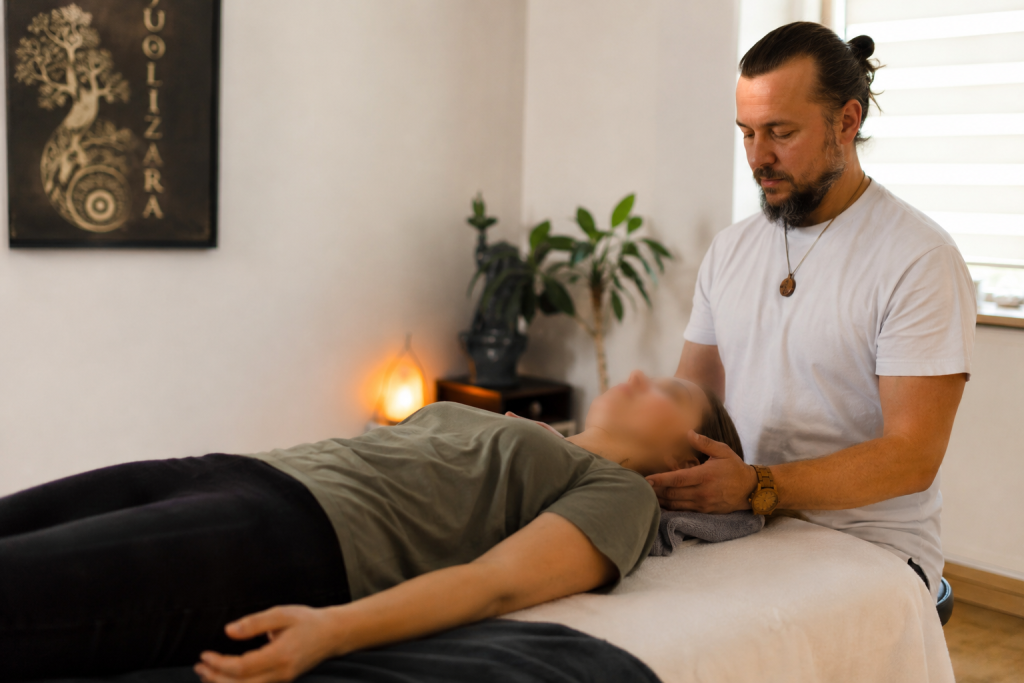
Official accounts describe a long process of observation, experimentation, and refinement. The organization states that the method evolved over more than a decade of practical work with clients rather than emerging from a single breakthrough or discovery.
Like many origin stories associated with alternative therapies, Joolizara also includes personal narratives that are difficult to verify independently. One frequently repeated account describes an experience from Juravle’s childhood that he later interpreted as an early indication of his sensitivity to subtle bodily processes. While this story forms part of the method’s public narrative, it remains a personal recollection rather than a documented historical event.
What can be verified is that after spending time in Spain, Juravle returned to Romania, established a therapeutic practice, and began developing what would eventually become the Joolizara method.
Twelve Years in the Making
One of the most consistent claims made by the organization is that Joolizara was developed over approximately twelve years.
That detail is significant because many alternative therapies appear suddenly and disappear just as quickly. Joolizara followed a different path. According to its creators, the method evolved gradually through years of practical work, observation, and adjustment before gaining wider public attention.
For most of that period, it remained largely unknown outside a relatively small local community.
Then the internet changed everything.
When Social Media Turned a Local Practice Into a National Phenomenon
The rise of Joolizara illustrates how dramatically the internet has transformed the spread of ideas.
In previous generations, therapeutic methods often expanded through word-of-mouth recommendations. Today, a single viral video can reach more people in a week than traditional advertising could reach in years.
The videos associated with Joolizara quickly captured public attention because they showed something unusual. During some sessions, clients appeared to experience involuntary movements, tremors, muscular contractions, or strong emotional reactions.
Whether viewers interpreted those reactions as evidence of healing or as something requiring further explanation, they all tended to ask the same question:
What exactly is happening here?
That question became the driving force behind the method’s growing popularity.
The Mystery of the Physical Reactions
The visible responses observed during some sessions remain the most discussed aspect of Joolizara.
Supporters view these reactions as signs that the body is releasing accumulated tension and activating natural self-regulation processes. Within the framework of the method, such responses are often interpreted as indicators that the body is reorganizing itself and restoring balance.
From a scientific perspective, however, the situation is more complex.
The existence of a reaction does not automatically confirm the explanation given for that reaction.
This distinction lies at the heart of the debate.
A person may genuinely experience tremors, involuntary movements, emotional release, or changes in muscle tension. These reactions are observable and real. The question is whether they occur for the reasons proposed by the therapy or whether other physiological and psychological mechanisms may be involved.
A Concept With Historical Roots
Although Joolizara is presented as a Romanian-developed method, some of its core ideas resemble concepts that have appeared in other forms of manual therapy over the past century.
One example is cranial osteopathy, a discipline developed in the United States during the early twentieth century. Practitioners proposed that subtle movements within the body could be perceived and used therapeutically.
Those ideas attracted both followers and critics. While some practitioners considered them fundamental, many researchers argued that the proposed mechanisms had not been demonstrated through objective, reproducible scientific measurements.
A similar debate continues today around concepts promoted by Joolizara, including what practitioners describe as the “Primary Respiratory Movement” (PRM), a subtle rhythm they believe can reveal information about the body’s condition.
Supporters regard this concept as central to the method. Critics argue that it remains insufficiently validated by scientific research.
What Science Can—and Cannot—Say
One of the challenges in evaluating any alternative therapy is separating observations from interpretations.
There is little debate about the fact that people report meaningful experiences during and after Joolizara sessions. Many describe reduced discomfort, greater relaxation, improved mobility, or a stronger sense of well-being.
The larger question is whether these outcomes can be reliably linked to the specific mechanisms proposed by the therapy.
At present, there is no substantial body of independent clinical research published in major international medical journals that validates the core claims of Joolizara or demonstrates its effectiveness for treating specific medical conditions.
This does not necessarily mean the experiences reported by clients are invalid. It simply means that the explanations offered for those experiences have not yet been confirmed according to the standards used in evidence-based medicine.
That distinction is often lost in public debates but remains essential to understanding the controversy.
More Than a Therapy
Perhaps the most interesting aspect of the Joolizara story has less to do with the method itself and more to do with the society in which it emerged.
Around the world, interest in topics such as trauma, stress, emotional health, and the relationship between mind and body has grown dramatically over the past decade. Books exploring these subjects have become international bestsellers. Discussions about nervous system regulation, emotional resilience, and holistic health have moved from specialist circles into mainstream culture.
Against that backdrop, it is not surprising that a therapy promising to explore the connection between physical and emotional experiences would attract attention.
Joolizara may be a uniquely Romanian creation, but the questions surrounding it are universal.
Why do some people seek alternatives to conventional healthcare?
How much of healing is physical, and how much is psychological?
Where is the line between personal experience and scientific evidence?
These questions extend far beyond a single therapy.
A Story Still Unfolding
Today, Joolizara occupies a unique position within Romania’s alternative therapy landscape.
It has a recognizable founder, a growing network of practitioners, a large online following, and thousands of people who have experienced the method firsthand. At the same time, it remains the subject of ongoing debate regarding its mechanisms and scientific validity.
What is already clear is that Joolizara has accomplished something rare.
A therapeutic approach that began in a small Romanian town has evolved into a national conversation about healing, evidence, and the enduring search for answers when it comes to human health.
Whether future research ultimately supports or challenges its underlying claims, the phenomenon itself offers a revealing glimpse into how modern societies navigate the space between personal experience and scientific certainty.
And in that sense, the story of Joolizara is about far more than a therapy. It is about the timeless human desire to understand why we suffer—and how we heal.