
Every year, millions of people around the world seek experiences that push them beyond their comfort zones. Some choose skydiving. Others try climbing, white-water rafting, zip-lining, or jumping from significant heights in pursuit of adrenaline and unforgettable memories.
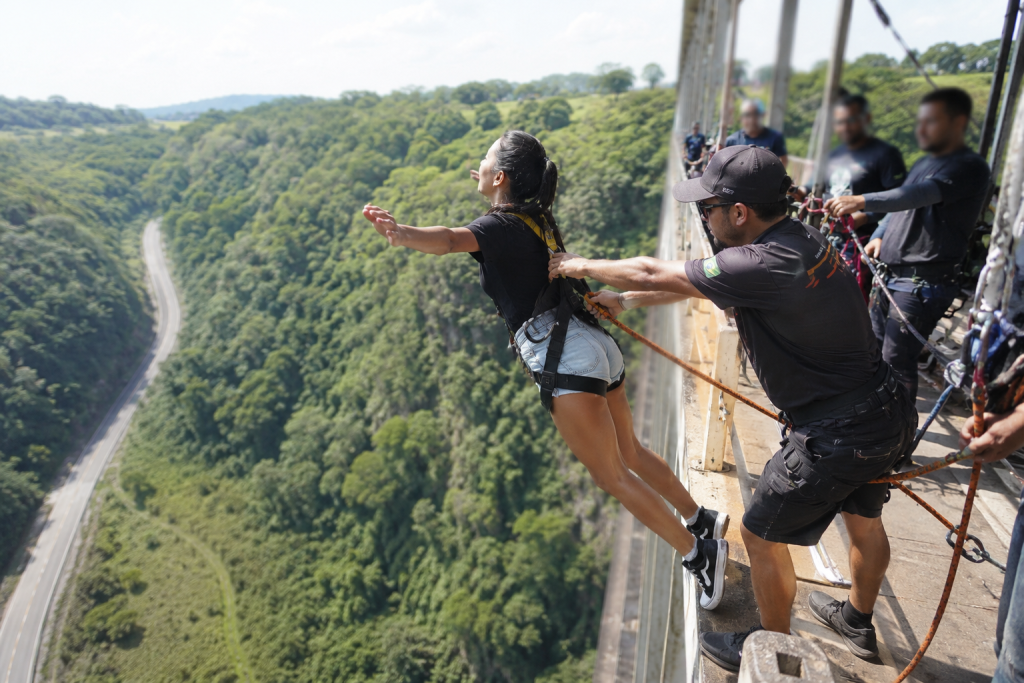
Although these activities are often described as extreme, the reality is that they are usually supported by carefully designed safety systems, trained personnel, and procedures intended to reduce risk as much as possible.
That is why certain accidents capture global attention. They force people to confront an uncomfortable question: what happens when a system designed to prevent disaster appears to fail at a critical moment?
In June 2026, a fatal incident in Brazil became the focus of international headlines after a 21-year-old woman lost her life during an organized rope-jumping activity near the city of Limeira in São Paulo state. As investigators began examining the circumstances surrounding the tragedy, discussions quickly expanded beyond the accident itself and toward broader questions about safety, human error, and accountability in high-risk recreational activities.
A Young Woman Looking Forward to an Adventure
The woman at the center of the story was Maria Eduarda Rodrigues de Freitas, a 21-year-old student whose interests reportedly included sports and physical activity.
Like many young adults who participate in adventure experiences, she approached the event with excitement and anticipation. Friends and acquaintances described her as energetic and enthusiastic, someone who enjoyed embracing new experiences.
On the morning of the activity, she arrived at a location popularly known as Skeleton Bridge, a structure that had become associated with adventure tourism and adrenaline-focused events.
For participants, the attraction was obvious. The height, scenery, and sensation of freefall combined to create an experience that many people seek specifically for the rush it provides.
What should have been an exciting memory instead became the beginning of a tragedy that would draw worldwide attention.
The Final Social Media Posts
Shortly before taking part in the activity, Maria Eduarda shared photographs and updates on social media.
The images showed the atmosphere surrounding the event, including access wristbands and views of the bridge itself.
One lighthearted comment she posted reflected the nervous excitement many people experience before a challenging activity.
At the time, it appeared to be nothing more than a playful remark about stepping outside her comfort zone.
After the accident, however, those posts were widely circulated by news organizations and social media users, becoming part of the public narrative surrounding the tragedy.
What Investigators Believe Happened
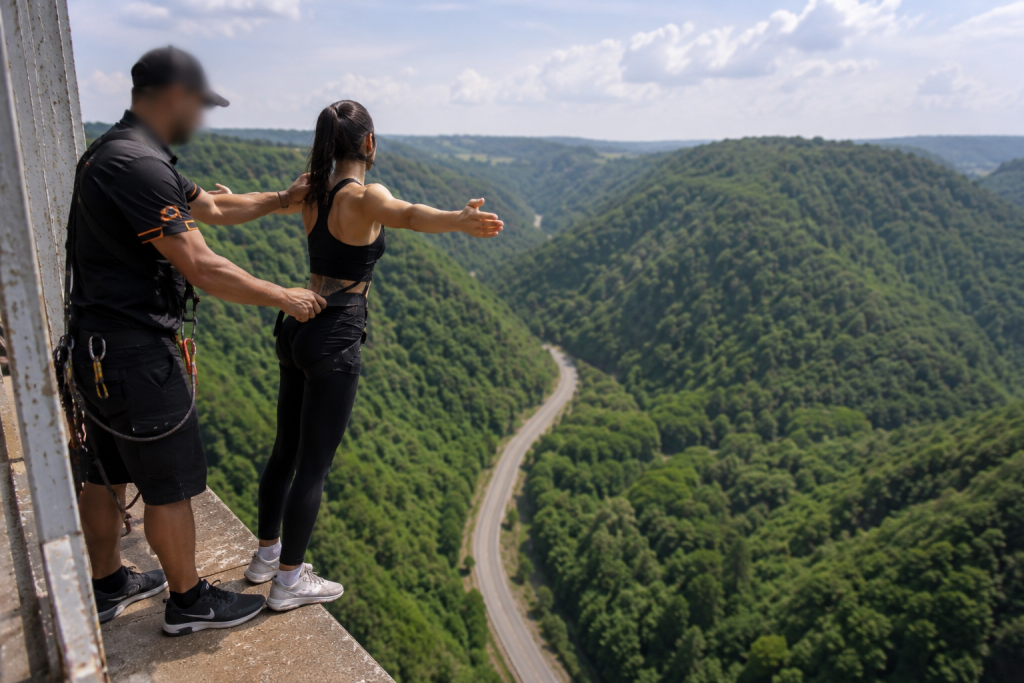
According to information released by authorities and witness accounts reported by multiple media outlets, Maria Eduarda was escorted to the launch area and prepared for the jump.
Video footage that later spread online appeared to show the moments leading up to the launch.
Within seconds, observers realized something was terribly wrong.
Witnesses reportedly began shouting that the primary safety line had not been attached.
Emergency responders were called immediately, but the fall resulted in catastrophic injuries.
Authorities subsequently launched a formal investigation to determine exactly how the incident occurred and whether established safety procedures had been followed.
Several individuals connected to the operation were reportedly detained and questioned as investigators began reviewing video evidence, equipment, operational practices, and witness testimony.
At the time of writing, officials continue to examine the circumstances surrounding the event.
Understanding Rope Jumping and Its Safety Systems
Many people use the terms rope jumping and bungee jumping interchangeably, but they are not identical activities.
Traditional bungee jumping relies on a specially designed elastic cord that stretches and rebounds during the fall.
Rope jumping typically uses a combination of climbing-style ropes, harnesses, anchor systems, and carefully calculated rigging designed to control and stop the descent.
Regardless of the specific method, both activities rely on a network of interconnected safety measures rather than a single piece of equipment.
A properly fitted harness, secure attachment points, reliable anchors, trained personnel, and multiple verification steps all work together to create layers of protection.
Modern safety philosophy assumes that people can make mistakes. As a result, systems are designed so that one overlooked detail does not automatically lead to disaster.
Why Multiple Checks Matter
One of the most important concepts in risk management is redundancy.
Redundancy means that critical steps are confirmed more than once and often by more than one person.
In many adventure sports operations, equipment is inspected by one staff member and then independently verified by another.
Participants may also be asked to visually confirm key connections before the activity begins.
These procedures may seem repetitive, but their purpose is simple: reducing the possibility that a single oversight will go unnoticed.
Industries such as aviation, medicine, and engineering have relied on similar approaches for decades because they have proven remarkably effective at preventing accidents.
The Science of Human Error
When people hear about incidents like this, their first reaction is often disbelief.
How could something so important be missed?
Researchers who study human performance have spent decades examining exactly this question.
One of the most influential theories in safety science was developed by British psychologist James Reason and is widely known as the Swiss Cheese Model.
The idea is that accidents rarely result from a single mistake.
Instead, organizations create multiple layers of protection. Each layer is designed to stop problems before they reach a participant, passenger, patient, or worker.
Every layer, however, has weaknesses.
A distraction, a communication breakdown, fatigue, complacency, or an incomplete check can create small gaps within the system.
Most of the time these gaps do not align.
But when several weaknesses occur simultaneously, a path can open through every layer of protection.
That is when serious accidents become possible.
This model is used worldwide in aviation, healthcare, transportation, and many other industries because it reflects how real-world incidents often develop.
Are Adventure Sports Actually Dangerous?
Media coverage can sometimes create the impression that activities such as rope jumping, bungee jumping, skydiving, or climbing are inherently unsafe.
Statistics tell a more nuanced story.
Millions of participants engage in these activities each year without experiencing serious injury.
While risk can never be eliminated completely, professional operators invest heavily in training, equipment maintenance, supervision, and procedural controls.
Investigations into serious accidents frequently point toward procedural failures, communication breakdowns, or lapses in oversight rather than fundamental flaws in the equipment itself.
This is why the reputation and professionalism of an operator often matter more than the activity alone.
What Participants Can Do to Improve Their Own Safety
Although responsibility ultimately rests with event organizers, participants are not powerless.
Experts recommend paying attention to how a team operates before taking part in any high-risk activity.
Professional staff typically follow structured routines and do not rush through safety briefings.
Participants should feel comfortable asking questions about equipment checks, staff training, emergency procedures, and verification processes.
Clear, confident answers generally indicate a culture that prioritizes safety.
Visual observation can also be valuable.
While most people are not equipment specialists, they can still pay attention to whether harnesses appear properly fitted, whether attachment points are visibly connected, and whether multiple staff members are involved in the final verification process.
A reputable operator will usually welcome questions rather than discourage them.
Warning Signs Worth Taking Seriously
Certain behaviors should encourage caution.
Staff who appear rushed.
Incomplete explanations.
Visible damage to equipment.
Pressure to participate before understanding the procedure.
Unclear answers regarding safety protocols.
None of these factors automatically indicate danger, but together they can suggest an environment where safety may not be receiving the attention it deserves.
Trust is important, but informed trust is far more valuable.
More Than a Single Tragic Incident
The death of Maria Eduarda Rodrigues de Freitas is ultimately about far more than one accident at one location.
It highlights a reality that safety experts have emphasized for decades: preventing tragedy depends on countless small actions performed correctly, consistently, and without shortcuts.
Most of the time, these precautions are invisible. Participants never notice the inspections, cross-checks, and confirmations happening behind the scenes.
That invisibility is actually a sign that the system is working.
When a tragedy occurs, however, it reminds us why those procedures exist in the first place.
Adventure sports will continue to attract people seeking challenge, excitement, and unforgettable experiences. For the overwhelming majority, those experiences end safely.
Yet cases like this serve as a sobering reminder that safety is not created by equipment alone. It is created by people, procedures, attention to detail, and a commitment to verification at every stage.
Sometimes the difference between an extraordinary memory and a devastating outcome can be measured by a single check that should never be overlooked.